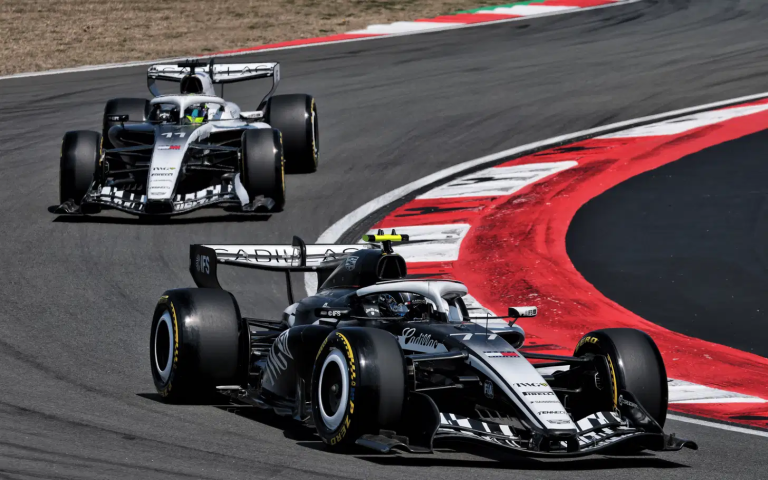
Formula 1’s newest team has not even started its first Grand Prix weekend, yet Cadillac is already confronting one of the biggest strategic questions in modern F1. As the American manufacturer prepares to enter the championship in 2026, uncertainty surrounding the sport’s future engine regulations threatens to complicate plans that were once considered straightforward.
Cadillac and parent company General Motors entered Formula 1 with a long-term vision: begin as a Ferrari-powered customer team before transitioning into a full works operation powered by a GM-built engine. However, recent comments from FIA President Mohammed Ben Sulayem regarding a possible return to naturally aspirated V8 engines have introduced a new layer of complexity to those ambitions.
CADILLAC’S ORIGINAL MASTER PLAN
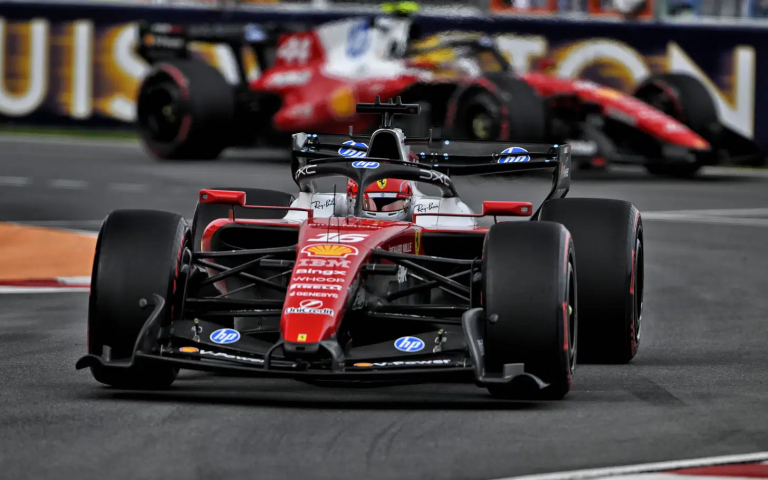
When Cadillac secured its place on the Formula 1 grid, the roadmap appeared clear. The team would rely on Ferrari power units during its early years while GM developed its own engine program behind the scenes. The goal was to become a fully independent manufacturer by 2029, joining the ranks of Ferrari, Mercedes, Honda, Audi, and Red Bull Powertrains.
Such a transition would allow Cadillac to establish itself gradually while avoiding the enormous challenge of launching both a new team and a new power unit project simultaneously. It was a sensible strategy that mirrored successful approaches seen elsewhere in motorsport.
The plan, however, was built around the expectation that Formula 1’s next-generation hybrid power units would remain in place for a lengthy period beyond 2030.
THE FIA’S V8 VISION CHANGES EVERYTHING
The situation shifted dramatically when discussions emerged about Formula 1 potentially moving toward naturally aspirated V8 engines by 2031 or even earlier. While no final decision has been made, the possibility alone creates a significant dilemma for Cadillac.
Developing a modern Formula 1 hybrid power unit requires billions of dollars in infrastructure, research, and engineering resources. If Cadillac introduces its own engine in 2029 only for the sport to abandon that technology a few seasons later, the return on investment becomes far less attractive.
Instead of enjoying a decade of engine development stability, Cadillac could find itself investing heavily in one powertrain project before immediately needing to redirect resources toward an entirely different V8 concept.
For a newcomer still establishing itself within Formula 1, that scenario represents a major financial and operational challenge.
GRAEME LOWDON’S MESSAGE: BE READY FOR ANYTHING
Cadillac team principal Graeme Lowdon has made it clear that flexibility is now essential.
According to Lowdon, the team has spent much of its journey adapting to uncertainty. From gaining entry into Formula 1 to planning facilities, staffing, and technical partnerships, Cadillac has already learned that long-term success requires preparation for multiple outcomes.
His comments suggest that Cadillac is not panicking over potential regulation changes. Instead, the organization is maintaining a pragmatic approach by keeping its options open while awaiting greater clarity from Formula 1’s governing bodies.
That attitude could prove valuable in a sport where political discussions often reshape technical regulations faster than expected.
WHY REGULATION STABILITY MATTERS IN FORMULA 1
One of the most overlooked factors in Formula 1 success is regulatory stability.
Teams perform best when they can plan years ahead, invest with confidence, and optimize development cycles around known targets. Frequent rule changes increase costs, create uncertainty, and often widen competitive gaps rather than reducing them.
Lowdon highlighted an important point: stable regulations generally help produce closer racing. When teams work under a consistent framework for several seasons, performance tends to converge naturally.
Fans often benefit as well. Tight competition, unpredictable races, and championship battles usually emerge after regulations have remained unchanged long enough for teams to maximize their understanding of the rules.
WHAT THIS MEANS FOR FERRARI
Ironically, Ferrari could emerge as one of the biggest beneficiaries if uncertainty persists.
Cadillac’s initial partnership with Ferrari already provides the Italian giant with a valuable customer relationship. Should Cadillac decide that developing its own engine no longer makes economic sense under a shortened regulatory cycle, extending the Ferrari partnership would become the logical option.
Such an outcome would strengthen Ferrari’s influence while reducing the risks associated with launching an entirely new power unit program.
For Ferrari, maintaining Cadillac as a long-term customer could provide both financial benefits and additional technical data that helps improve future engine development.
THE BIGGER PICTURE FOR FORMULA 1
Cadillac’s situation highlights a broader challenge facing Formula 1 as it attempts to balance innovation, sustainability, cost control, and entertainment.
Manufacturers need clear direction before committing hundreds of millions of dollars to engine programs. At the same time, the FIA wants to ensure future regulations remain attractive to fans and relevant to the automotive industry.
The introduction of Audi in 2026 and Cadillac’s arrival shortly afterward were viewed as major victories for Formula 1’s growth strategy. Any regulatory uncertainty that discourages manufacturer investment could undermine some of that momentum.
This is why discussions surrounding future engines will likely become one of the most important political battles in Formula 1 over the next two years.
PREDICTION: CADILLAC WILL KEEP ITS OPTIONS OPEN
At this stage, Cadillac appears unlikely to rush into a final commitment regarding its long-term engine strategy.
The most probable outcome is that General Motors continues developing its power unit program while closely monitoring negotiations between the FIA, Formula 1, and existing manufacturers. If regulatory stability is confirmed, Cadillac will likely proceed with its planned works engine debut.
However, if the V8 proposal gains significant momentum, extending its Ferrari partnership beyond 2029 could become the smarter business decision.
Either way, Cadillac’s response to this uncertainty may ultimately shape not only its own future but also influence how Formula 1 approaches its next generation of engine regulations. As the American giant prepares for its debut season, the battle over the sport’s future power units is already underway—and Cadillac finds itself right at the center of it.
About the Author