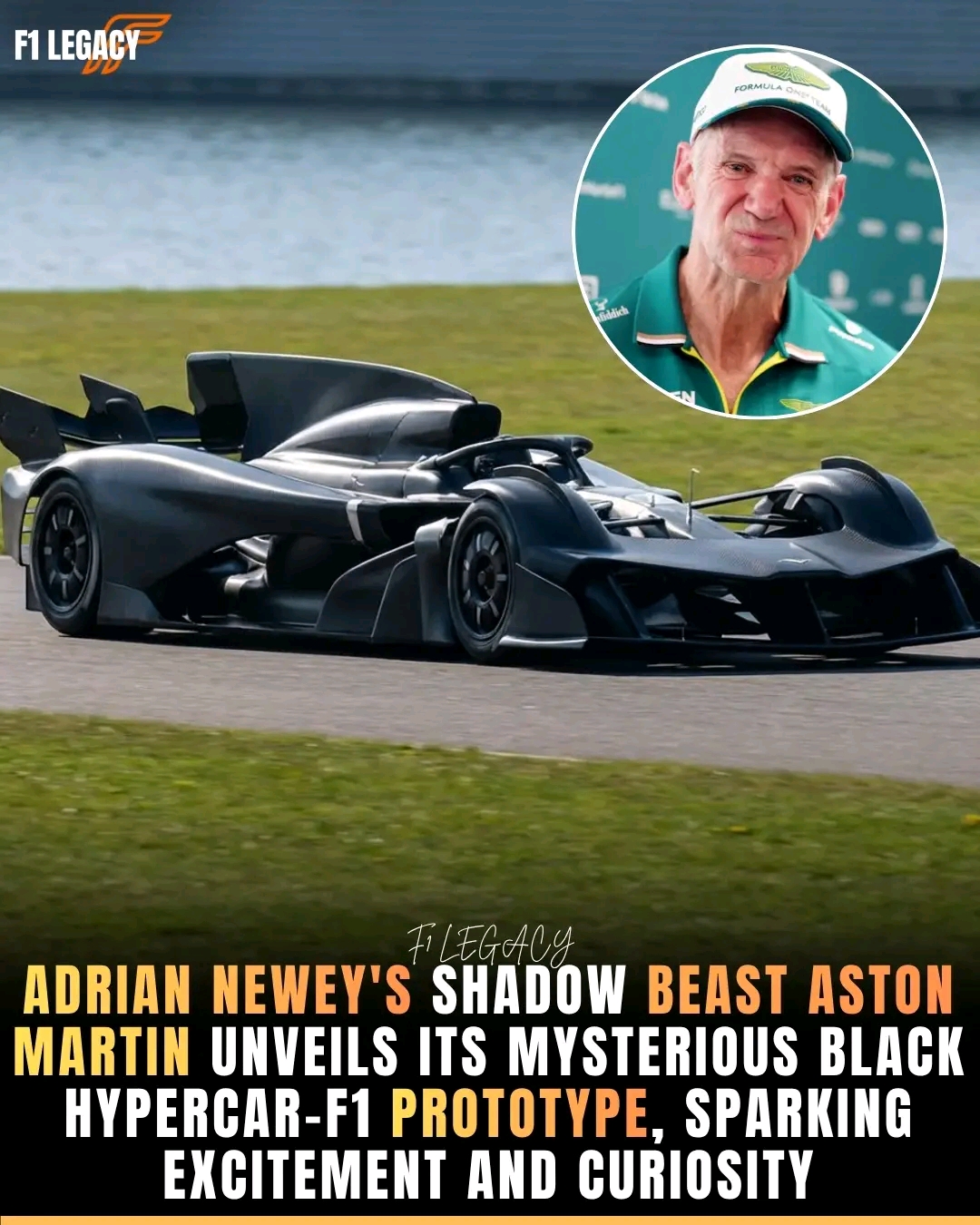
Aston Martin Shadow Beast Prototype Sparks FIA Warning Over Formula 1 Legality
The motorsport world has been thrown into a frenzy following the dramatic reveal of a mysterious prototype from Aston Martin—a machine that has already earned the nickname “Shadow Beast.” With its aggressive blacked-out design and futuristic silhouette, the car immediately captured attention, not just for how it looks, but for what it represents. However, just as excitement began to build, FIA stepped in with a firm stance, making it clear that a machine like this would not be permitted under current Formula 1 regulations. That response alone has only intensified curiosity, turning the Shadow Beast into one of the most talked-about concepts in recent memory.
Behind this bold creation is the influence of Adrian Newey, a figure widely regarded as one of the greatest engineering minds in the sport. Known for pushing boundaries and redefining performance standards, Newey’s involvement adds a layer of credibility and intrigue to the project. The Shadow Beast appears to merge the precision and aerodynamics of a Formula 1 car with the raw power and design philosophy of a hypercar, creating something that feels both familiar and entirely new. It’s this hybrid identity that has sparked debate about where the future of motorsport design might be heading.
What makes the prototype so compelling is not just its appearance, but the questions it raises. Could a concept like this influence future regulations? Is it a glimpse into what racing machines might eventually become, or simply a bold experiment designed to challenge conventional thinking? While the FIA has already ruled out its use in official Formula 1 competition, the fact that such a car exists suggests that innovation within the sport is far from slowing down. Instead, it highlights the ongoing tension between creativity and regulation—a balance that has always defined Formula 1.
For Aston Martin, the Shadow Beast represents more than just a concept vehicle—it’s a statement. It signals a willingness to explore new ideas, to step outside traditional boundaries, and to redefine what performance and design can look like. The collaboration between the brand’s craftsmanship and Newey’s technical vision hints at a future where lines between categories could blur, even if current rules prevent such concepts from reaching the grid. This approach keeps the conversation alive, ensuring that Aston Martin remains at the center of innovation discussions.
As the story continues to unfold, one thing is certain: the Shadow Beast has already left a lasting impression. Whether it ever evolves beyond a prototype or remains a symbol of what could be, it has succeeded in capturing the imagination of fans and industry insiders alike. With the FIA drawing a clear line on its eligibility, the focus now shifts to what comes next. Will this concept inspire future developments, or will it remain a fascinating “what if” moment in motorsport history? Either way, the Shadow Beast has ensured that Aston Martin’s vision is impossible to ignore.
About the Author