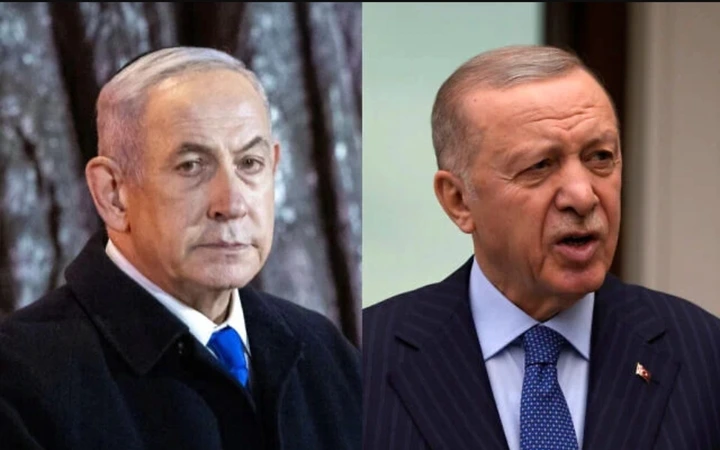
A fierce war of words has erupted between Israel and Turkey, with Israeli Prime Minister Benjamin Netanyahu launching a direct and explosive attack on Turkish President Recep Tayyip Erdogan.
 According to a report published by The Times of Israel on Saturday, April 11, 2026, Netanyahu accused Erdogan of “massacring” Kurdish citizens, escalating tensions between the two leaders amid an already fragile geopolitical climate.
In a strongly worded post on X, Netanyahu declared that “Israel under my leadership will continue to fight Iran’s terror regime and its proxies,” contrasting his stance with Erdogan, whom he accused of accommodating such groups while allegedly targeting his own Kurdish population.
The sharp remarks appear to be a response to reports from Turkey indicating that prosecutors are seeking an extraordinary cumulative prison sentence of up to 4,596 years against Netanyahu and other Israeli officials. The charges reportedly include crimes against humanity, genocide, and actions linked to stopping the Sumud flotilla from reaching Gaza in 2025.
Trade Without Limits With Valetax App
Navigate the markets effortlessly with a clean interface, smart tools, and real-time updates designed to keep you one step ahead.
The development marks a dramatic escalation in diplomatic tensions between the two countries, as both sides exchange serious allegations that could further strain already uneasy relations.
While Turkey has not officially confirmed the full details of the reported charges in international forums, the scale of the alleged sentence has drawn widespread attention and raised questions about the political motivations behind the move.
Netanyahu’s response signals that Israel is unlikely to remain silent in the face of such accusations, instead choosing to counterattack with equally serious claims against the Turkish leadership.
As tensions rise, observers warn that this deepening rift could have broader implications for regional stability, especially at a time when multiple conflicts and sensitive negotiations are already underway across the Middle East.
With both leaders standing firm and rhetoric intensifying, the situation underscores how quickly diplomatic disputes can spiral into full-blown political confrontations on the global stage.
A fresh war of words has erupted in the Middle East as Benjamin Netanyahu publicly accused Recep Tayyip Erdoğan of carrying out violent campaigns against Kurdish populations, further straining already fragile relations between Israel and Turkey.
In a strongly worded statement, Netanyahu alleged that Turkey’s military operations in Kurdish regions amount to systematic violence, claiming that Ankara’s actions have led to significant civilian suffering. His remarks come amid heightened regional tensions and ongoing disputes over security and territorial control.
Turkey swiftly rejected the accusations, with officials condemning Netanyahu’s comments as politically motivated and misleading. Ankara maintains that its operations target militant groups it classifies as terrorist organizations, not civilians, and insists that its actions are necessary for national security.
The diplomatic clash coincides with reports that Turkish prosecutors are pursuing extremely severe legal penalties against individuals accused of links to Kurdish militant movements. According to sources, cumulative charges in ongoing cases could amount to sentences totaling thousands of years in prison, reflecting the scale and seriousness with which Turkish authorities are approaching the issue.
Human rights groups have long expressed concern over Turkey’s handling of Kurdish-related cases, raising questions about due process, freedom of expression, and the proportionality of sentencing. Meanwhile, Turkish officials argue that the country faces genuine security threats that require firm and decisive action.
The exchange between Netanyahu and Erdoğan is likely to deepen geopolitical divisions, as both leaders position themselves firmly on opposing sides of regional conflicts. Analysts warn that such rhetoric could complicate diplomatic efforts and increase tensions across an already volatile region.
As the situation develops, international observers are calling for restraint, dialogue, and adherence to international law, emphasizing the need to avoid further escalation in both rhetoric and action.
About the Author