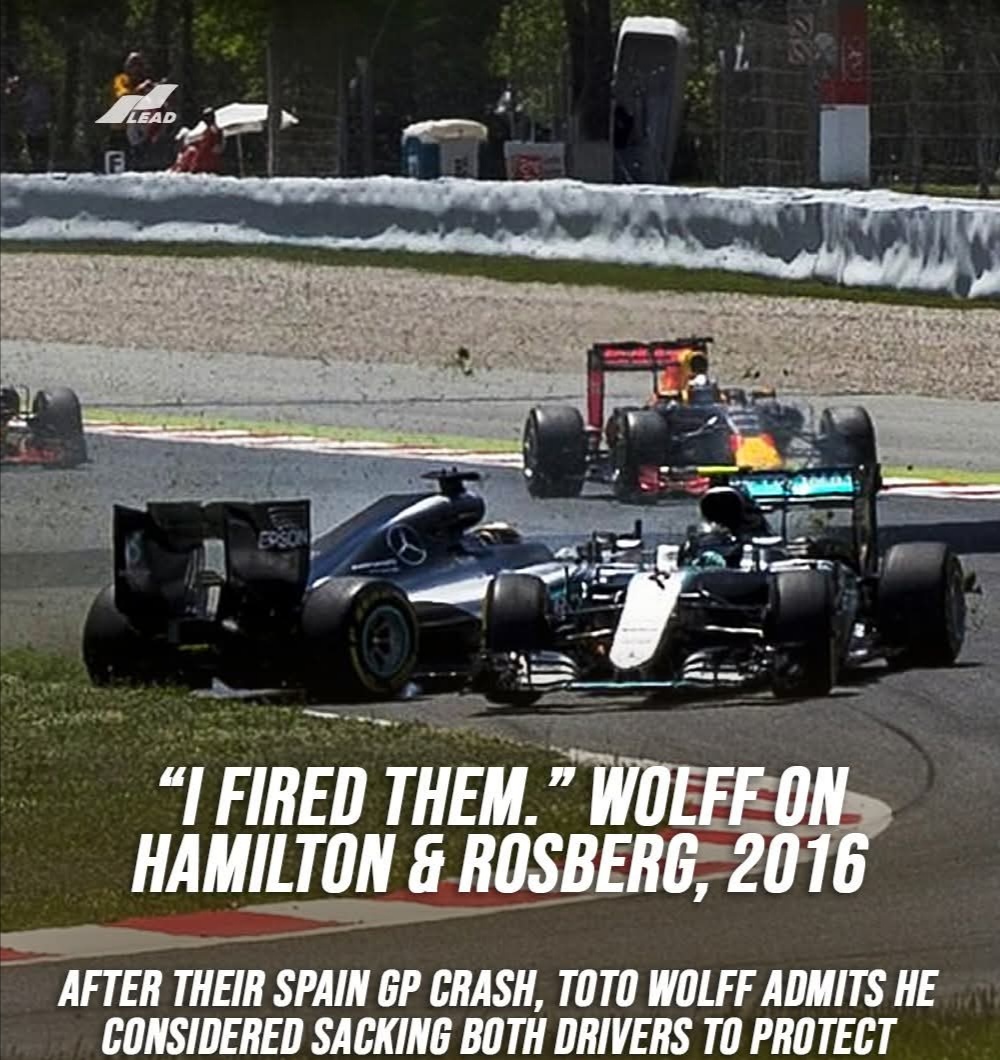
Toto Wolff Reveals Real Reason Behind Lewis Hamilton Split from Mercedes
In motorsport, some moments happen so quickly that they almost blur into the chaos of competition. A sudden move, a split-second decision, and everything changes before anyone fully understands what just unfolded. Yet, long after the engines go silent, those moments tend to linger—not because of the incident itself, but because of the emotions they leave behind. Sometimes, it’s not the crash that matters most, but the reaction that follows.
There’s a unique tension that exists at the highest level of racing. Behind the polished interviews and composed appearances, there are raw emotions, unspoken frustrations, and decisions made in the heat of the moment. These are not always visible to the public eye, but they shape relationships in ways that can’t easily be undone. In a sport where trust and communication are everything, even a single moment can quietly shift the balance.
For years, the partnership between Toto Wolff and Lewis Hamilton stood as one of the most successful collaborations in Formula 1 history. It was built on mutual respect, shared ambition, and a relentless drive to win. Together, they created a legacy that redefined dominance in the sport. From the outside, it seemed unbreakable—a perfect alignment of vision and execution.
But even the strongest partnerships can face moments of strain. Pressure builds over time, expectations grow heavier, and the smallest cracks can begin to widen. What appears to be a single incident is often the result of a deeper, more complex story. And in this case, it all seemed to trace back to one particular moment—a crash that carried more weight than anyone initially realized.
According to Wolff, that instant triggered something far beyond a racing incident. His reaction was immediate, driven by the intensity of the situation. Emotions took over, words were exchanged, and the atmosphere shifted in a way that couldn’t simply be reset. What followed wasn’t an overnight fallout, but a gradual unraveling. The trust that had once defined their partnership began to feel different, shaped by lingering tension and unresolved feelings.
Wolff later reflected that the issue wasn’t just the crash itself, but how both sides processed it afterward. In a high-stakes environment like Mercedes AMG Petronas Formula One Team, every reaction carries significance. The incident exposed underlying differences in perspective—how pressure was handled, how accountability was viewed, and how communication unfolded in critical moments. These differences, once revealed, became difficult to ignore.
As time went on, it became clear that the partnership was evolving in a new direction. Not necessarily broken, but no longer aligned in the same way it once was. Decisions had to be made, not out of conflict alone, but out of an understanding that both sides needed something different moving forward. What had once been a seamless collaboration gradually transitioned into a respectful separation.
In the end, the story isn’t just about a crash or a disagreement—it’s about how even the most successful relationships can be shaped by moments of vulnerability. For Wolff and Hamilton, that moment served as a turning point, redefining what came next. And while their shared history remains one of the greatest in Formula 1, it also stands as a reminder that behind every legacy, there are human emotions that can change everything in an instant.
About the Author