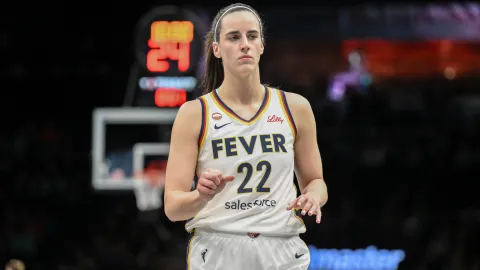
They didn’t hesitate, and that’s the part that matters most. After a season where injuries limited her to just 13 games and broke any real momentum she had, the Indiana Fever still stepped forward and picked up Caitlin Clark’s fourth-year option like there was never a doubt in the room. That kind of move tells you exactly how the franchise sees her, not as a question mark, but as the center of everything they’re building.
 But belief like that is never neutral, because once a team shows you that level of trust after a disrupted season, it stops being about what you did before and becomes about what you are expected to do next. Clark isn’t walking back into a fresh start, she’s walking into a situation where the standard has already been set, and anything below it will feel like a step back.
The contract decision itself is simple on the surface, because rookie-scale options are usually formalities, the kind of moves teams make without needing long discussions or second thoughts. What makes this different is the timing, because the WNBA’s new collective bargaining agreement has changed how quickly elite players can move from potential to top-tier money.
That is where the EPIC clause comes in, and it’s the reason this situation carries more weight than it looks. Clark qualifies because of what she did in 2024, and that opens the door for her to earn significantly more and negotiate a major extension sooner than expected, especially with the Fever already showing they are willing to invest heavily in their core after extending Aliyah Boston.
So this isn’t just Indiana securing Clark through 2027, it’s Indiana positioning itself for a much bigger financial decision that is coming fast. If Clark returns healthy and performs at the level that made her a first-team All-WNBA player, then the conversation around her deal changes immediately, because at that point she isn’t just a young star on a rookie contract, she becomes one of the most valuable players in the league.
And once that shift happens, the power moves in her direction, because the team is no longer evaluating whether she deserves a major deal, they are reacting to how big that deal needs to be. The option year simply buys time, but it doesn’t reduce the pressure, it increases it, because now there is a clear expectation tied to every game she plays.
The decision is done, but the real test starts now, because this season will decide whether Caitlin Clark cashes in on belief or forces Indiana to pay even more for it.
About the Author