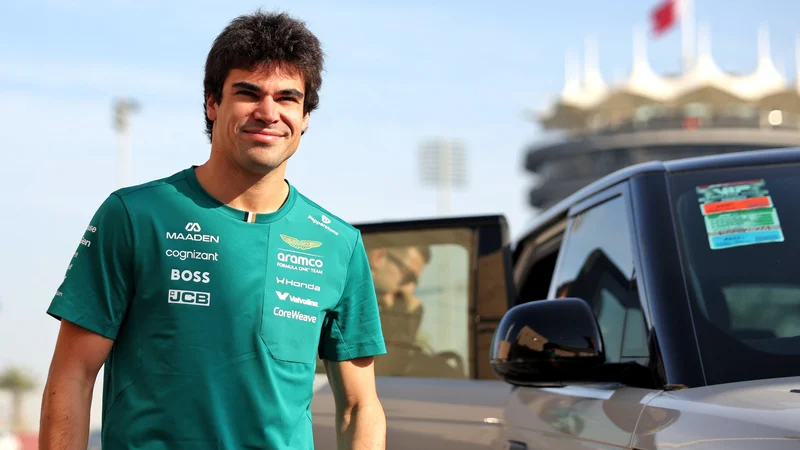
Lance Stroll is stepping into a new chapter of his racing career with confidence, as he prepares for his GT racing debut with a firm belief that victory is within reach.
Best known for his career in Formula One, Stroll’s move into GT racing has sparked curiosity among fans and analysts alike. While transitioning between racing disciplines is never easy, the Canadian driver appears unfazed by the challenge ahead.
 Speaking ahead of his debut, Stroll highlighted the transferable skills he brings from Formula One. Years of competing at the highest level have sharpened his racecraft, consistency, and ability to perform under pressure—qualities he believes will serve him well in endurance-style GT competition.
One of the key reasons behind his optimism is preparation. Stroll has reportedly spent significant time adapting to the nuances of GT machinery, which differs greatly from F1 cars in terms of weight, handling, and race strategy. Testing sessions and simulator work have helped him build confidence quickly.
Another factor fueling his belief is the strength of the team around him. In GT racing, success is often a collective effort, with drivers relying heavily on engineers, strategists, and co-drivers. Stroll has emphasized that he is joining a well-organized setup capable of competing at the front.
Unlike Formula One, where individual performance is often the primary focus, GT racing requires a more collaborative approach. Stroll acknowledged this shift, noting that working closely with teammates and managing longer race stints will be crucial to achieving strong results.
Track familiarity is also playing a role in his confidence. While GT racing presents new challenges, many circuits overlap with those used in Formula One. Stroll believes his previous experience on these tracks will give him an early advantage as he adapts to the new format.
Importantly, Stroll appears to be embracing the change rather than viewing it as a risk. He described the move as an opportunity to broaden his racing skill set and explore a different side of motorsport, which may ultimately enhance his overall performance as a driver.
Critics, however, remain cautious. Transitioning to GT racing involves mastering tire management, traffic navigation, and endurance pacing—elements that differ significantly from the sprint nature of Formula One races. Success on debut is far from guaranteed.
Nevertheless, Stroll’s confidence is rooted in a belief that preparation, experience, and team support can close that gap quickly. His mindset reflects a driver determined not just to participate, but to compete at the highest level from the outset.
As the debut approaches, attention will be firmly on how Stroll performs in this new environment. Whether his optimism translates into immediate success remains to be seen, but his ambition has already set the tone for an intriguing new chapter
in his racing journey.
About the Author