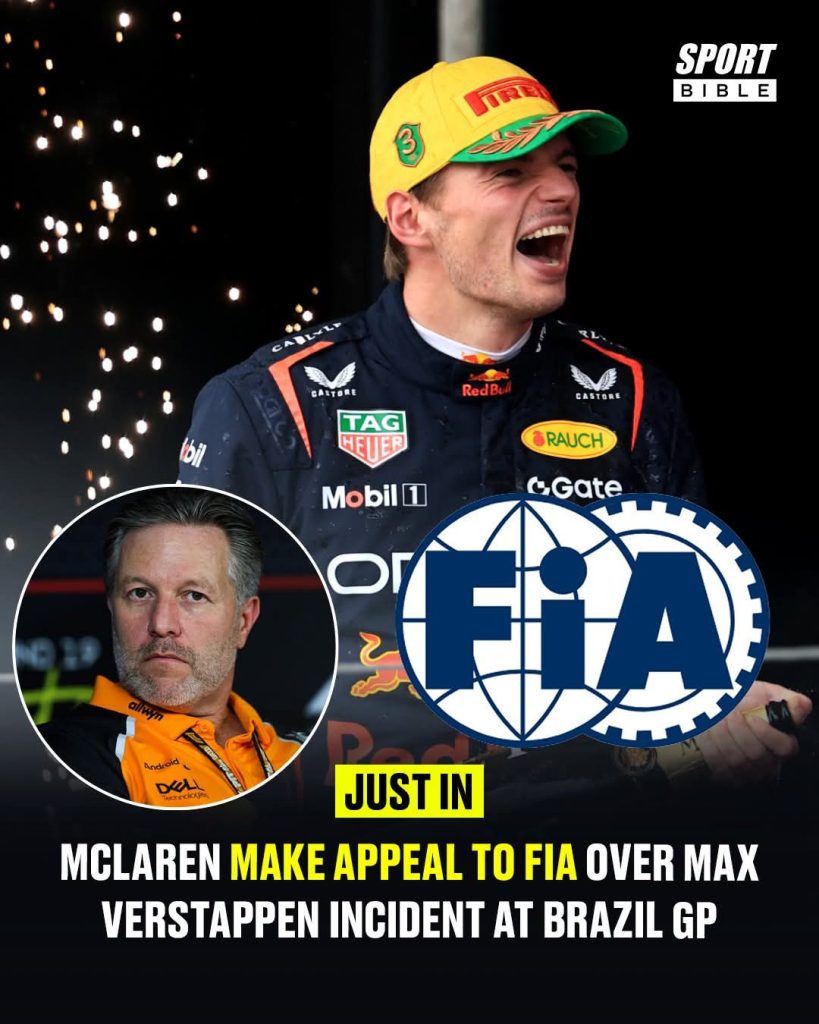
McLaren have formally lodged an appeal with the FIA concerning Max Verstappen’s controversial third-place finish at the Brazilian Grand Prix, seeking clarification on the intersection of technical regulations and the cost cap. The Dutchman endured a turbulent weekend, eliminated in Q1 and relegated to start from the pit lane after Red Bull installed a new power unit that exceeded the season allocation, yet still mounted an extraordinary recovery drive to secure a podium.
Verstappen’s performance, which included overcoming an early-race puncture and pitting under the virtual safety car, has reignited debate about whether engine swaps made purely for performance, rather than necessity, should be counted under the FIA’s cost cap regulations. McLaren contend that any non-essential power unit changes should financially count toward the team’s expenditure limit, highlighting potential inconsistencies in enforcement.
Andrea Stella, McLaren’s team principal, emphasized the need for transparency, stating that if Red Bull’s swap was motivated solely by competitive advantage, the associated costs should be incorporated into the cost cap. Although there is no current evidence to suggest Red Bull breached the limit, the Woking-based squad is keen to clarify the FIA’s interpretation, citing the principle of equitable competition and regulatory compliance.
Beyond the regulatory dispute, the technical ramifications of Verstappen’s modifications remain ambiguous. Red Bull also executed substantial setup changes following his complaints about car balance on Saturday, with the Dutchman describing the vehicle as “sliding around a lot,” complicating the analysis of how much the new power unit contributed to his podium finish. McLaren’s appeal seeks to disentangle the performance benefits from potential regulatory loopholes.
As the championship intensifies with three Grands Prix and a sprint race remaining, Verstappen sits 49 points behind leader Lando Norris, keeping his title hopes alive despite McLaren’s contention. The FIA’s forthcoming guidance on cost cap accounting and engine swaps could set a critical precedent for end-of-season disputes, potentially reshaping strategic decisions for teams vying for both the Drivers’ and Constructors’ Championships.
About the Author