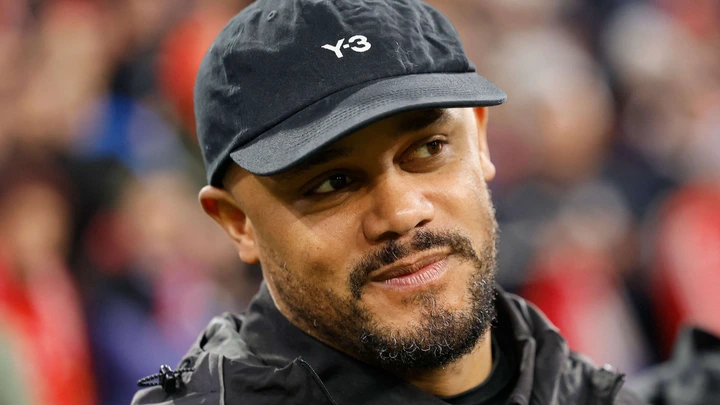
Vincent Kompany’s recent remarks about Jamal Musiala have sparked both amusement and reflection across the football world, as the Bayern Munich coach humorously recalled a striking demand once made by legendary goalkeeper Oliver Kahn. In a moment that blended admiration with disbelief, Kompany burst into laughter while describing Kahn’s expectation that Musiala would have pushed himself to extraordinary limits—even in the face of serious injury.
 The comment, though delivered with humor, sheds light on the intense culture of commitment that has long been associated with elite football institutions like Bayern Munich. According to Vincent Kompany, Kahn’s mindset reflects a bygone era of football where resilience and sacrifice were often pushed to extremes, sometimes beyond what would be considered reasonable in today’s game.
Kompany’s laughter came as he recounted the notion that Jamal Musiala would have “flown to the World Cup with a broken arm and a broken foot.” While clearly exaggerated, the statement underscores the high expectations placed on top players, particularly those representing both club and country at the highest level. Musiala, widely regarded as one of football’s brightest young talents, has already shown remarkable composure and dedication on the pitch.
The anecdote also highlights the evolving nature of player welfare in modern football. In contrast to Kahn’s hardline stance, clubs today are increasingly cautious about managing injuries and protecting long-term player health. Kompany, known for his thoughtful and progressive approach to management, subtly emphasized this shift through his reaction, suggesting that such expectations, while admirable in spirit, may no longer align with current standards.
For Bayern Munich, Musiala represents not just a key player but a symbol of the club’s future. His technical brilliance, creativity, and maturity have made him indispensable, and the idea of risking his career for a single tournament—even one as prestigious as the FIFA World Cup—would likely be met with strong resistance from both medical staff and management.
Kahn, who served as a senior figure at Bayern and remains an iconic personality in German football, has always been synonymous with mental toughness and uncompromising standards. His comments, as interpreted by Kompany, reflect a mentality forged during a different era—one where players were often celebrated for playing through pain, regardless of the consequences.
Kompany’s reaction, however, brought a refreshing sense of balance to the discussion. By laughing at the idea, he acknowledged its absurdity while also paying respect to the passion and intensity that figures like Kahn brought to the game. It was a moment that bridged two generations of football thinking—one rooted in sheer grit, the other in calculated care and sustainability.
The story has resonated with fans and analysts alike, prompting conversations about how far players should go in representing their teams. While dedication remains a cornerstone of professional football, the line between bravery and recklessness has become increasingly clear in recent years.
Ultimately, Kompany’s lighthearted response serves as a reminder that football is constantly evolving. The game still celebrates commitment and courage, but it now does so with a deeper understanding of the physical and mental demands placed on players like Musiala. And while the idea of playing through multiple injuries may draw laughter today, it also highlights just how much the sport has changed—and continues to change—for the better.
About the Author