For much of the 2026 Formula 1 season, Mercedes has looked untouchable. The Silver Arrows have collected every race victory so far, Kimi Antonelli has emerged as the championship favorite, and the team appears to hold the strongest package on the grid.
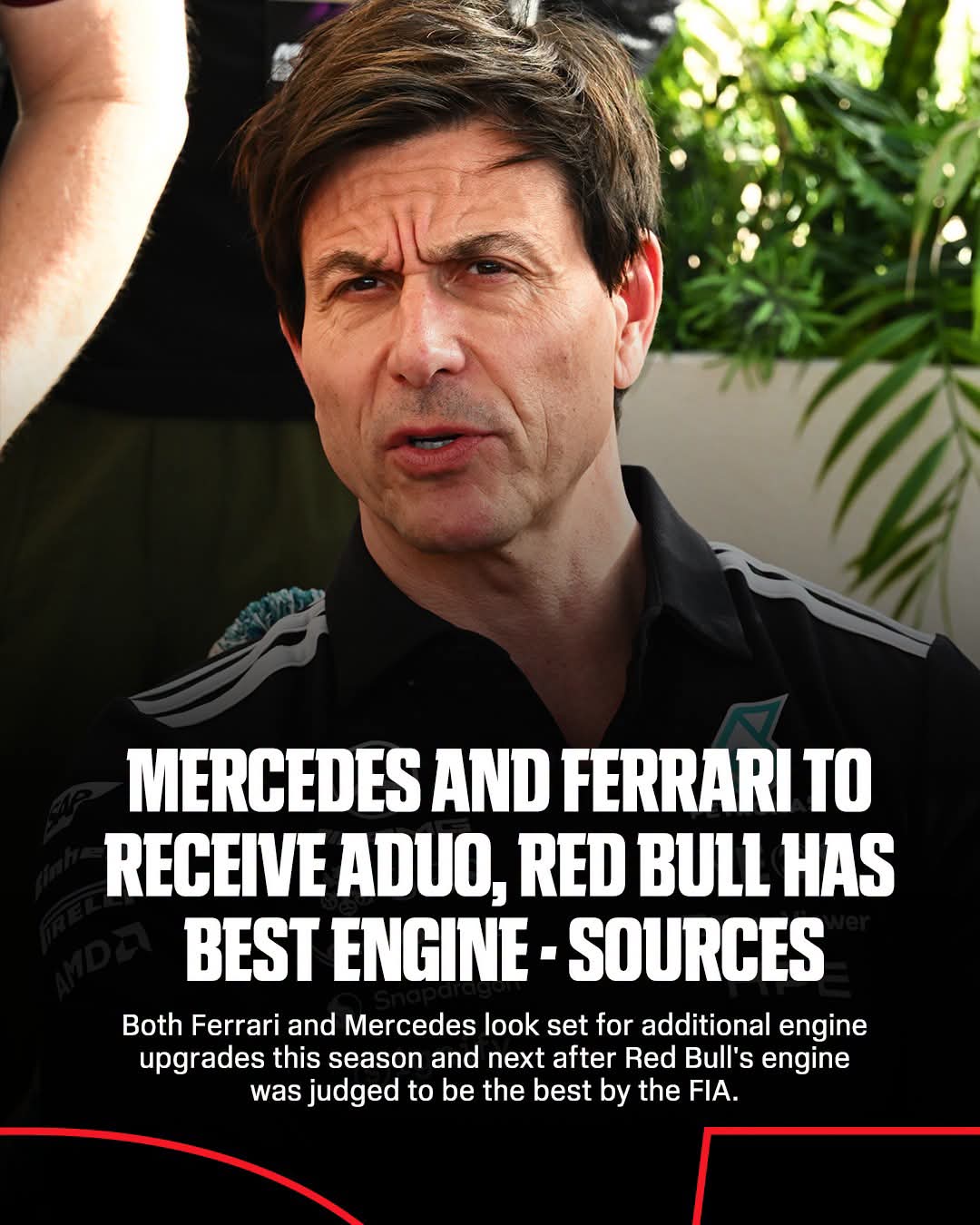
However, fresh information surrounding Formula 1’s new Additional Development and Upgrade Opportunities (ADUO) system has revealed a surprising reality: according to FIA performance assessments, Red Bull currently possesses the strongest internal combustion engine on the grid.
The revelation could have major consequences not only for the remainder of 2026 but also for the sport’s next competitive cycle as manufacturers prepare for the future.
WHAT THE FIA’S ENGINE ASSESSMENT ACTUALLY MEANS
Under Formula 1’s new engine regulations, manufacturers are being monitored closely to prevent one power unit supplier from gaining an overwhelming long-term advantage.
The FIA introduced the ADUO mechanism as a balancing tool. Instead of freezing performance gaps for years, the system allows manufacturers judged to be behind their rivals to receive additional development opportunities and financial allowances.
According to reports from the paddock, Red Bull Powertrains topped the FIA’s Internal Combustion Engine Performance Index, with Mercedes ranked second. Ferrari, Audi and Honda were reportedly placed in lower categories, making them eligible for extra development opportunities in the coming seasons.
The ranking does not necessarily mean Red Bull currently has the fastest overall car. It specifically focuses on engine performance metrics such as power delivery, torque, efficiency and other technical measurements.
That distinction is important.
WHY MERCEDES IS STILL WINNING EVERYTHING
At first glance, the FIA assessment seems contradictory.
If Red Bull has the strongest engine, why has Mercedes dominated the season?
The answer highlights how modern Formula 1 is about much more than raw horsepower.
Mercedes currently possesses one of the most complete packages in the sport. The team has combined a highly efficient power unit with outstanding aerodynamics, tire management, race strategy, reliability and arguably the strongest driver pairing on the grid.
Kimi Antonelli’s remarkable run of victories has demonstrated how complete the Mercedes package has become.
Even when rivals have shown flashes of speed, Mercedes has consistently executed race weekends better than anyone else.
This suggests that Red Bull’s engine advantage is being offset by weaknesses elsewhere in the car.
LEWIS HAMILTON’S COMMENTS OFFER A CLUE
Lewis Hamilton appeared to acknowledge the situation after Monaco.
The Ferrari driver suggested that Ferrari now has development opportunities available under the ADUO framework to help close the performance gap.
While Hamilton was careful not to overstate the impact of the system, his comments highlight a key reality: engine manufacturers are already thinking about medium-term gains rather than immediate fixes.
These upgrades are not quick solutions.
Developing a Formula 1 power unit is a lengthy process involving months of engineering work, simulation, testing and validation.
Any benefits from ADUO are likely to be felt gradually rather than transforming the competitive order overnight.
RED BULL’S ENGINE PROJECT IS FINALLY SHOWING ITS POTENTIAL
Perhaps the biggest winner from this revelation is Red Bull Powertrains.
When Red Bull announced plans to create its own engine operation, many questioned whether the project could realistically compete against established giants such as Mercedes and Ferrari.
Building a Formula 1 engine division from scratch is one of the most ambitious projects in modern motorsport.
Yet early indicators suggest the investment may already be paying dividends.
Despite Red Bull’s inconsistent season, the FIA’s assessment appears to confirm that the engine department has delivered a highly competitive product.
For Christian Horner and the leadership team, that validation could be just as important as race results.
It demonstrates that Red Bull may have built a foundation capable of challenging for championships for years to come.
WHAT THIS MEANS FOR MAX VERSTAPPEN
The timing of this news is particularly significant for Max Verstappen.
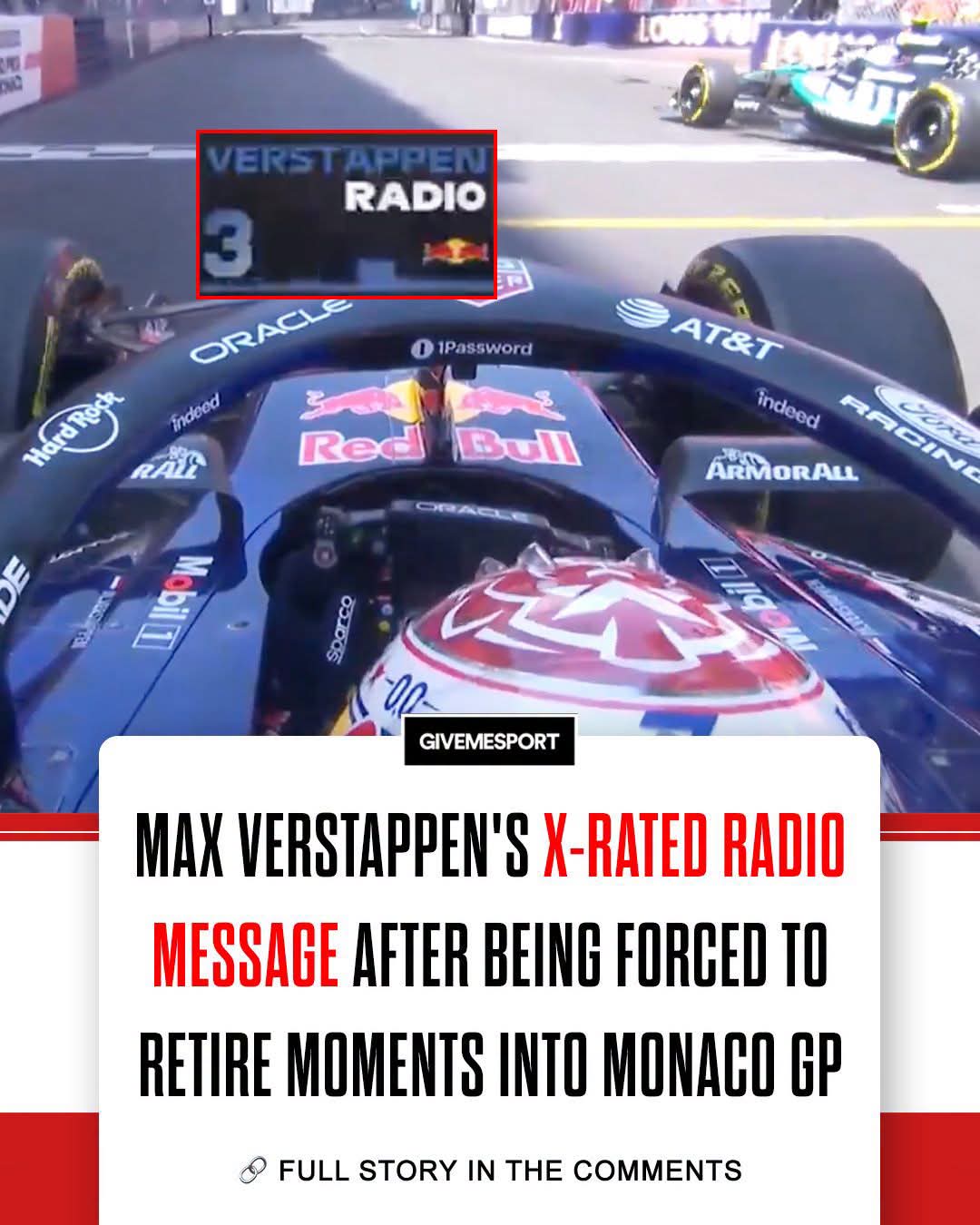
The four-time world champion has endured a frustrating campaign filled with missed opportunities, reliability issues and an inability to consistently challenge Mercedes.
Questions about Verstappen’s future have intensified throughout 2026, with persistent speculation linking him to Mercedes.
However, the FIA rankings introduce an interesting twist.
If Red Bull truly possesses the strongest engine platform, Verstappen may see greater long-term potential in staying with the team than many outsiders assume.
Much will depend on whether Red Bull can improve its chassis and operational execution.
If those areas improve, the engine advantage could become a powerful weapon in future title fights.
FERRARI’S OPPORTUNITY TO FIGHT BACK
For Ferrari, the ADUO allocation may provide a much-needed lifeline.
The Scuderia has shown encouraging pace at several events but has struggled to consistently match Mercedes over a full race weekend.
Additional development opportunities could help narrow the gap and give Hamilton and Charles Leclerc a stronger platform to challenge for victories.
Ferrari’s challenge remains balancing short-term improvements with long-term planning.
The team cannot afford to focus exclusively on the current season if it wants to build a sustainable championship contender.
The ADUO system provides flexibility, but success will still depend on how effectively Ferrari uses those opportunities.
HONDA AND ASTON MARTIN FACE A CRITICAL PERIOD
Among all manufacturers, Honda may have the most to gain from additional support.
The Japanese manufacturer has endured a difficult start to the new regulations, with Aston Martin frequently struggling for performance compared to the front-runners.
Extra development opportunities could help close the gap, but time is becoming increasingly valuable.
Every race that passes without significant progress increases the pressure on both Honda and Aston Martin to deliver meaningful improvements.
WHY THIS STORY COULD SHAPE THE FUTURE OF FORMULA 1
The biggest takeaway is that Formula 1’s competitive picture may be very different from what the championship standings suggest.
Mercedes may be winning races today, but the FIA’s engine data indicates Red Bull possesses a crucial technical advantage beneath the surface.
Meanwhile, Ferrari, Audi and Honda are being handed opportunities to close the gap through the ADUO framework.
The result could be a far more competitive future than many expected.
If the system works as intended, Formula 1 could avoid the long periods of domination that have defined previous eras and instead create a tighter fight between manufacturers.
PREDICTION: THE CHAMPIONSHIP BATTLE MAY LOOK VERY DIFFERENT IN 2027
Mercedes remains the benchmark in 2026 and deserves its position at the top.
However, the FIA’s findings suggest the long-term battle is far from settled.
Red Bull’s engine project appears stronger than many realized, Ferrari is receiving pathways to improve, and Honda has opportunities to recover lost ground.
The current standings tell one story.
The technical data may be telling another.
If the development opportunities are used effectively, the power balance across Formula 1 could shift dramatically over the next 18 months, setting up one of the most fascinating engine battles the sport has seen in years.