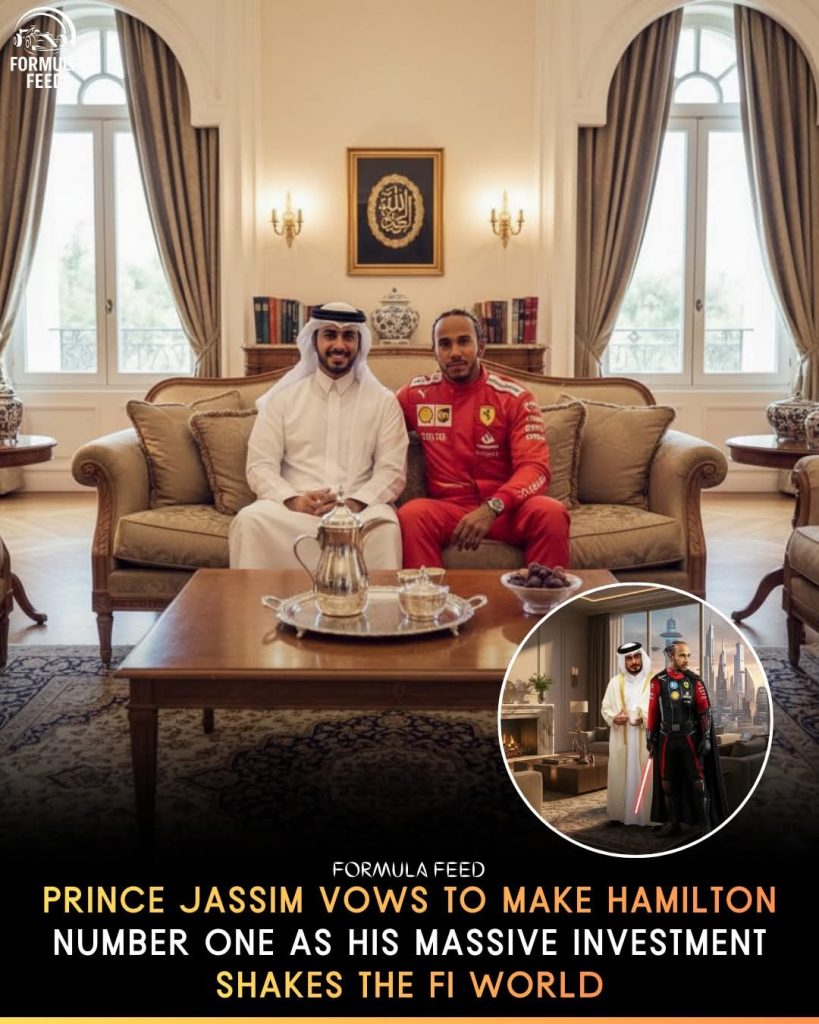
The Formula One paddock was sent into a frenzy after Prince Jassim, one of Qatar’s most influential billionaires, made a startling public vow. His message was blunt and incendiary: Lewis Hamilton would be the number one driver next season. While whispers had already linked Hamilton to a possible Ferrari future, no one anticipated a declaration backed by a massive personal financial commitment. The announcement landed like a grenade, instantly destabilizing the sport’s quiet off-season narratives.
Prince Jassim’s admiration for Hamilton is no secret, and he remains convinced the seven-time world champion’s story is far from finished. Sources suggest the investment will fuel an elite performance ecosystem—cutting-edge simulator access, bespoke fitness and recovery programs, and a specialized engineering analytics unit built solely around Hamilton. The sheer scope of the project has drawn comparisons to nothing previously attempted at an individual-driver level in Formula One.
Reaction across the paddock has ranged from disbelief to uneasy intrigue. While teams are quick to remind that championships can’t be bought outright, few deny that precision spending in data, preparation, and physical optimization can transform marginal gains into decisive advantages. Given Hamilton’s reputation for obsessive discipline and mental resilience, many insiders quietly admit this backing could tilt the competitive balance in subtle but decisive ways.
The noise, however, briefly stopped when Hamilton finally responded. Asked about Prince Jassim’s bold promise, he offered a measured smile and a seven-word reply: “Let the results speak for themselves next year.” The restraint was unmistakable. It wasn’t bravado—it was the calm assurance of someone who prefers lap times over headlines. Within hours, the quote flooded social media, hailed by fans as the season’s most chilling statement.
As speculation continues to spiral, one reality is unavoidable: this alliance has recalibrated expectations for what comes next. Ferrari now faces intensified scrutiny, rivals are recalculating their assumptions, and a grid on the brink of regulatory change must contend with an unprecedented personal performance push. Whether this marks the dawn of Hamilton’s resurgence or the ignition of a deeper political battle, Formula One is once again braced for turbulence—and watching closely.
About the Author