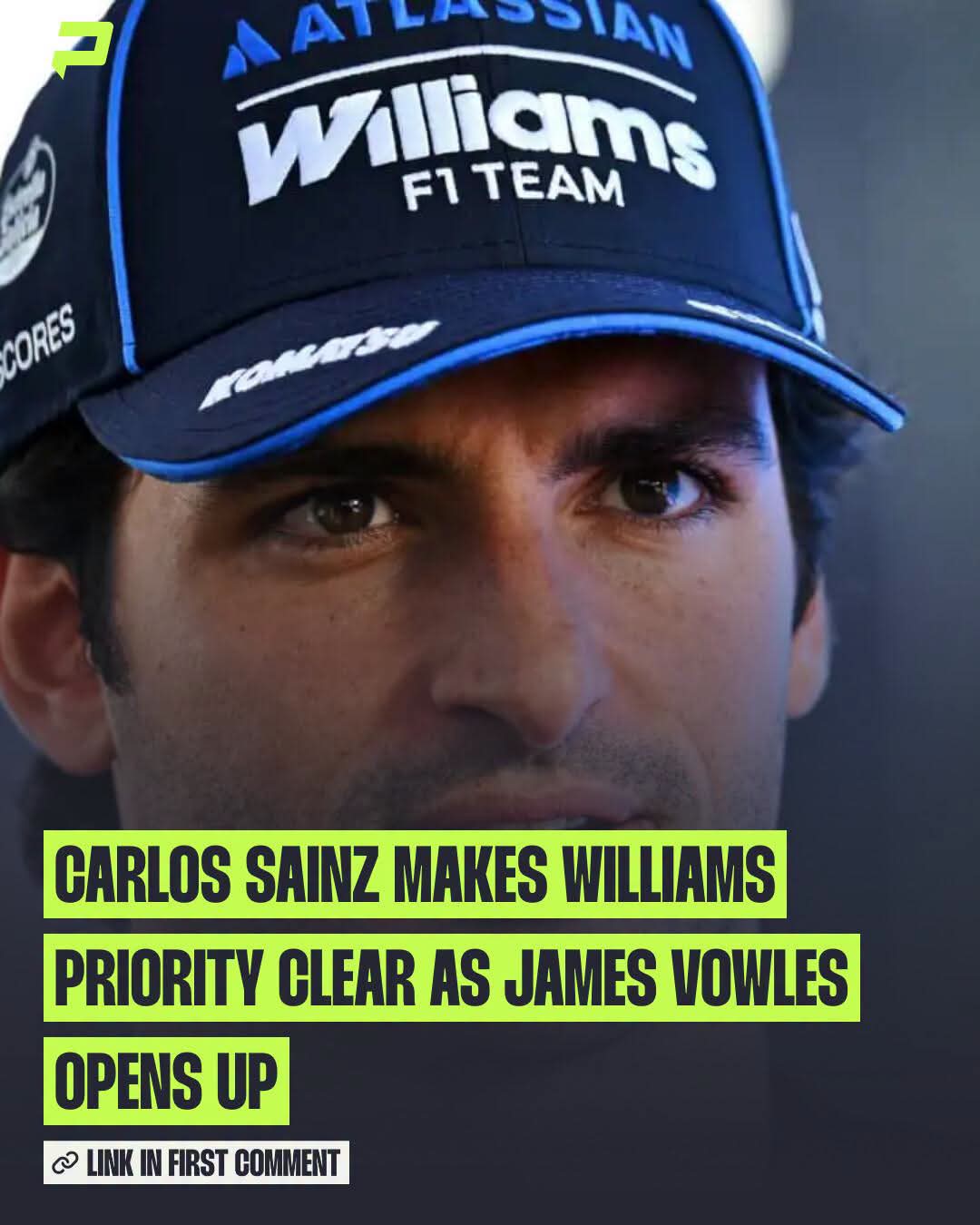
Carlos Sainz has reaffirmed his commitment to Williams despite a challenging start to the 2026 Formula 1 season, while team principal James Vowles has opened up about the honest conversations taking place behind the scenes as the team works through an unexpected setback.
After arriving at Williams with hopes of helping lead one of Formula 1’s most historic teams back toward the front of the grid, Sainz has experienced a season far different from what many anticipated. Technical issues, delays during pre-season preparations, and an underperforming car have left Williams struggling to build momentum. Yet despite growing speculation surrounding his future, the Spaniard has made it clear that his preferred path remains with the Grove-based team.
WILLIAMS’ PROMISING PROJECT HITS AN UNEXPECTED ROADBLOCK
When Sainz agreed to join Williams, the move was widely viewed as one of the most ambitious projects on the grid. The team had shown significant progress under James Vowles’ leadership and had climbed back into the midfield battle after years of decline.
However, the 2026 campaign began with major complications. Williams faced chassis-related delays before the season and also had to deal with an overweight FW48. Instead of focusing solely on performance upgrades, engineers were forced to prioritize weight reduction and reliability fixes.
Those early setbacks cost valuable development time, placing Williams behind several direct rivals. In Formula 1’s fiercely competitive midfield, even small delays can create significant disadvantages that take months to overcome.
For a driver like Sainz, who joined with ambitions of fighting closer to the front, the situation naturally raised questions about whether Williams could still deliver on its long-term vision.
JAMES VOWLES INSISTS TRANSPARENCY IS KEY
Rather than avoiding difficult conversations, Vowles has chosen a different approach. The Williams boss revealed that he and Sainz have maintained open and honest discussions throughout the difficult period.
According to Vowles, the team has explained exactly what went wrong during the winter, why those issues occurred, and what measures have been implemented to ensure similar problems do not happen again.
That level of transparency appears to have strengthened trust between driver and team rather than weakening it. Vowles believes exposing the weaknesses within the organization may ultimately prove beneficial because it has accelerated internal changes that were already needed.
The Williams team principal also pointed to ongoing restructuring efforts behind the scenes. While some changes have already been made public, others remain confidential as the organization continues modernizing its operations in pursuit of long-term competitiveness.
WHY SAINZ STILL BELIEVES IN THE PROJECT
Perhaps the most significant takeaway from Monaco was Sainz’s refusal to distance himself from the Williams project.
The four-time Grand Prix winner openly stated that his priority remains helping Williams return to competitiveness. While he acknowledged that future decisions will eventually need to be made, he emphasized that his original commitment was never intended to be a short-term experiment.
Sainz’s comments reveal a driver who remains invested in the bigger picture. He understands that rebuilding a Formula 1 team is rarely a straightforward process and that setbacks are often part of the journey.
His belief appears rooted in more than just promises. Williams showed encouraging progress during 2025, finishing fifth in the Constructors’ Championship and demonstrating genuine upward momentum. One difficult season does not automatically erase that progress.
For Sainz, abandoning the project now could mean walking away just before the foundation begins producing results.
THE PRESSURE OF FORMULA 1’S EVOLVING LANDSCAPE
Despite the public commitment, reality remains complicated. Formula 1 moves quickly, and opportunities at competitive teams can disappear just as fast as they emerge.
Reports suggesting Sainz may possess performance-related exit options have naturally fueled speculation. Any driver of his caliber wants to compete for victories and championships, particularly after spending years proving himself at Ferrari, McLaren, Renault, and Toro Rosso.
At 31 years old, Sainz is entering one of the most important phases of his career. He still has several prime seasons ahead, but he cannot afford to spend too many years trapped in the lower half of the grid if championship ambitions remain realistic.
That creates a delicate balance between patience and pragmatism.
WHAT THIS MEANS FOR WILLIAMS’ FUTURE
Retaining Sainz could be just as important as any technical upgrade Williams introduces over the next two seasons.
Elite drivers provide more than lap times. They help guide development, attract sponsors, inspire personnel, and send a message to the paddock that a team remains serious about its ambitions.
If Williams can convince Sainz to stay long-term, it would represent a major vote of confidence in Vowles’ leadership and the team’s strategic direction.
Conversely, losing him would raise fresh questions about whether the project is progressing quickly enough to attract and retain top-level talent.
The next several races could therefore become crucial. Continued improvement would strengthen Williams’ position, while further struggles may intensify speculation surrounding the Spaniard’s future.
CAN WILLIAMS COMPLETE ITS COMEBACK?
There are reasons for optimism despite the disappointing start to 2026. Formula 1 history is filled with examples of teams overcoming difficult seasons before emerging as contenders. McLaren, Mercedes, Ferrari, and Red Bull have all experienced periods where short-term setbacks eventually led to long-term success.
Williams appears determined to follow a similar path. The infrastructure investment, leadership changes, and technical restructuring currently underway suggest the team is building for sustained competitiveness rather than quick fixes.
The challenge will be convincing drivers, sponsors, and fans that the destination remains worth the wait.
PREDICTION: SAINZ STAYS, BUT WILLIAMS MUST SHOW PROGRESS
Based on the current situation, Sainz appears likely to remain with Williams for the immediate future. His public comments were stronger than those typically made by drivers preparing an exit strategy, and his relationship with Vowles seems built on genuine trust.
However, patience in Formula 1 is never unlimited.
Williams does not necessarily need to become a race-winning team overnight, but it must demonstrate clear and measurable progress throughout the remainder of 2026. If the team can continue climbing the grid and close the gap to the leading midfield runners, Sainz’s long-term commitment becomes far more likely.
The coming months may ultimately determine whether this partnership becomes the foundation of Williams’ revival—or another promising Formula 1 project that falls short of its ambitious goals.