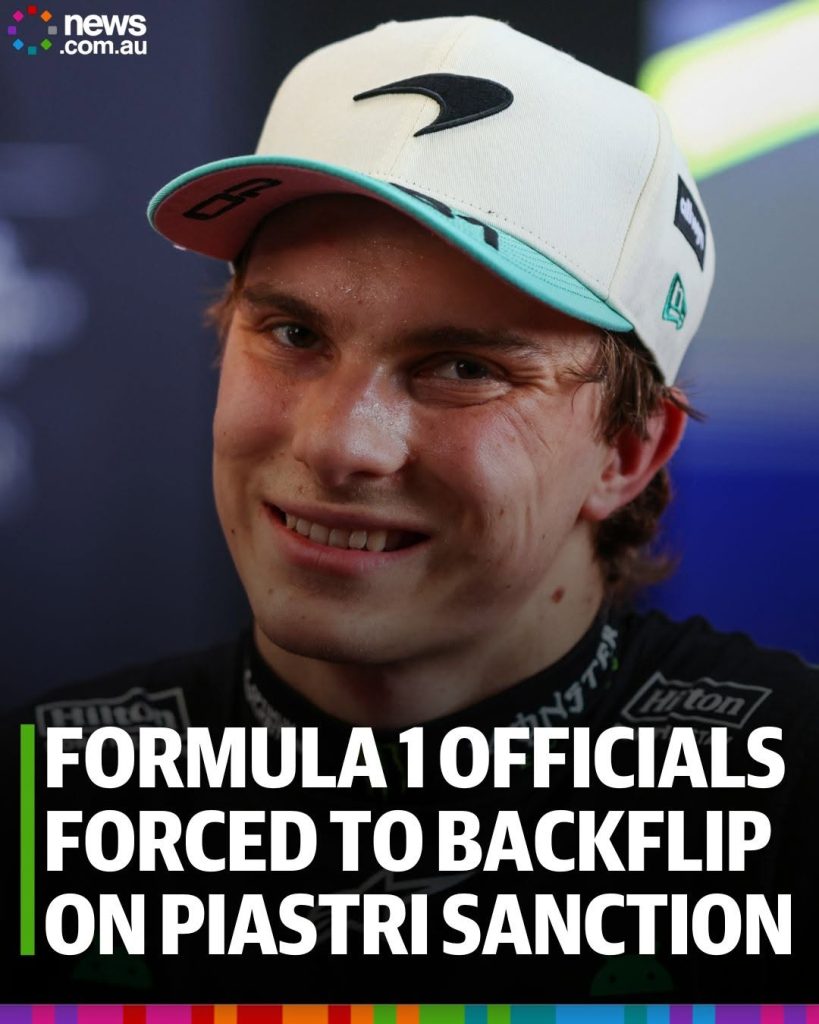
Formula 1 officials found themselves under fire after a confusing backflip regarding Oscar Piastri’s penalty at the Brazilian Grand Prix. The McLaren driver was initially hit with a 10-second time penalty and two penalty points for his involvement in a lap-six collision that also took Charles Leclerc out of the race. Following the announcement, the FIA stated Piastri had accumulated eight penalty points within 12 months—just four short of triggering an automatic race ban. However, a later clarification revealed a miscalculation: the Australian actually sits on six points, sparing him from immediate disciplinary danger.
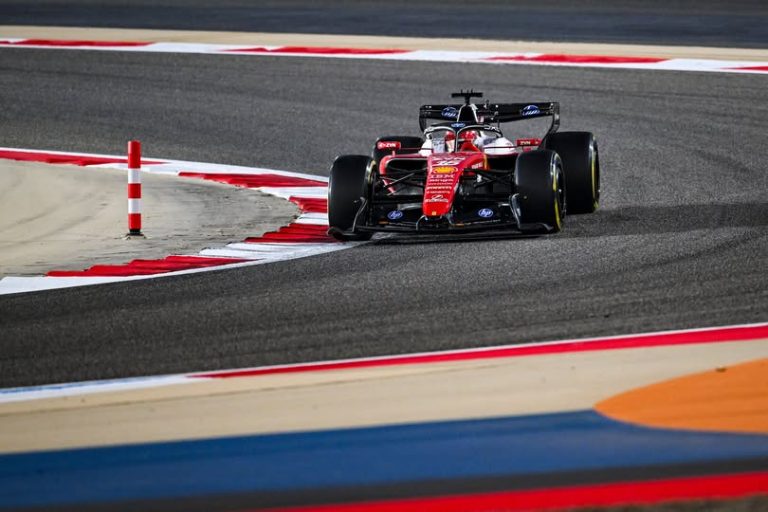
The Brazilian Grand Prix was a brutal affair for Piastri, whose title aspirations suffered a serious blow. After the race resumed on lap six following a Safety Car, the Australian found himself boxed in by Kimi Antonelli’s Mercedes. The slightest contact between the pair triggered chaos—Antonelli ricocheted into Leclerc, ending the Ferrari driver’s afternoon. While many viewed it as a racing incident, the stewards disagreed, declaring Piastri “wholly responsible” for the collision and enforcing a penalty that decimated his shot at victory.
The ruling sparked widespread backlash across the Formula 1 community. Sky Sports commentator David Croft openly criticized the decision, admitting it “doesn’t sit right,” while Alex Brundle took to social media to condemn the harshness of the call. Brundle argued that Piastri had legitimate positioning in the braking zone and that Antonelli had enough space to avoid contact. Their collective frustration echoed a growing sentiment that F1’s race control has become increasingly inconsistent in assessing wheel-to-wheel combat.
Despite the crushing penalty, Piastri handled the fallout with characteristic restraint. In post-race interviews, he maintained that he had no regrets over the move, explaining that he saw a clear opening and went for it. He acknowledged locking up slightly under braking but noted Antonelli’s unwillingness to leave room forced the issue. “I can’t disappear,” he remarked coolly, adding that while he didn’t agree with the decision, he accepted it as part of the sport’s unpredictability.
Looking ahead, Piastri admitted that his focus now shifts to maximizing results in the remaining three races of the season. He conceded that his overall pace during the Brazilian GP fell below expectations, especially in the opening stint, but remained determined to rebound. His composed reaction amid controversy once again underscored his growing maturity—a driver aware that championships are not won by emotion but by resilience. For now, the young Australian lives to fight another weekend, with the FIA’s recalculation granting him the faintest lifeline in an increasingly cutthroat title race.
About the Author