Formula 1’s newest engine regulations were designed to create a more competitive era, and the FIA’s first major ruling under the Additional Development and Upgrade Opportunities (ADUO) system has already delivered a surprise few expected.
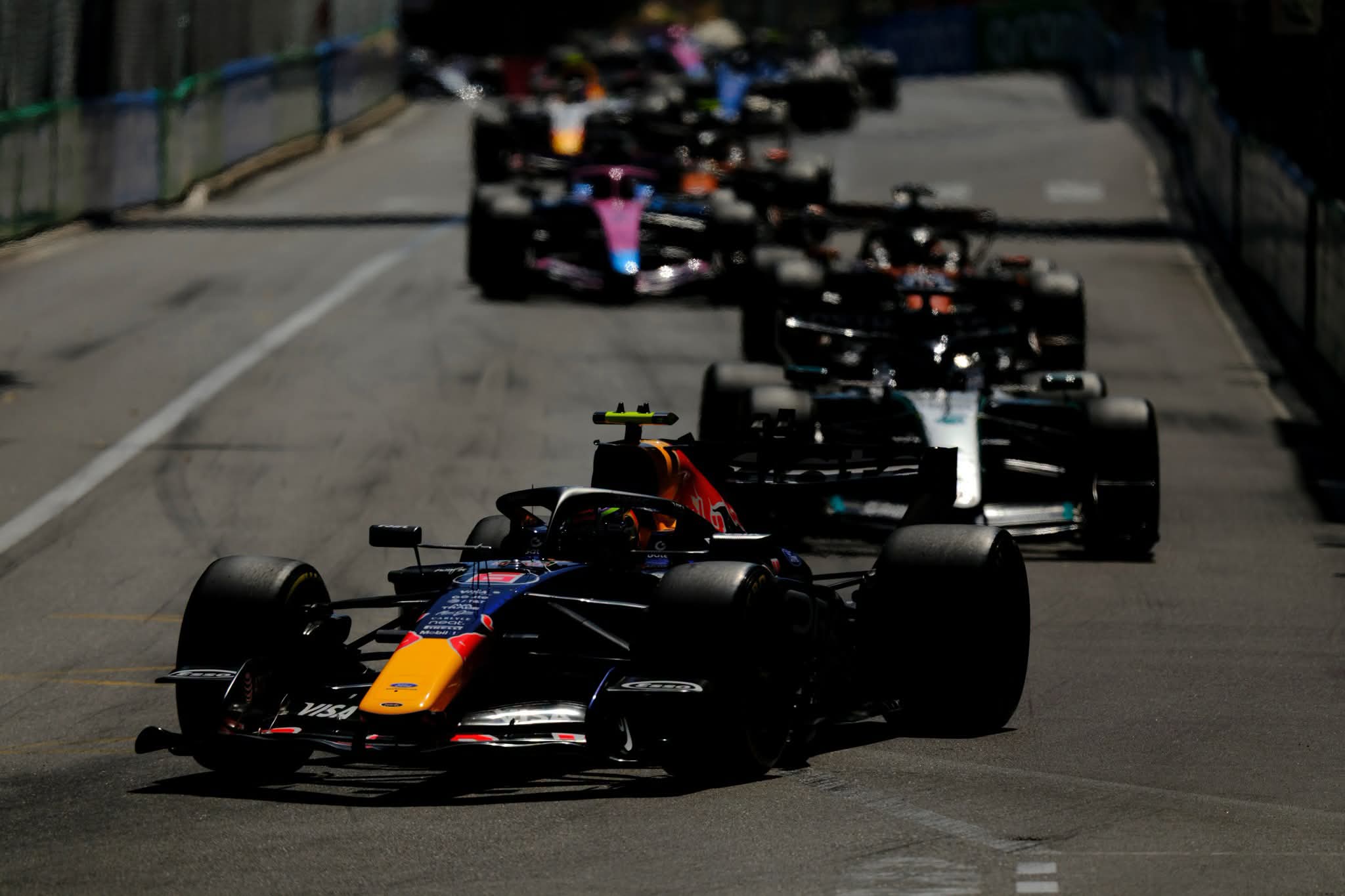
Despite Mercedes dominating much of the 2026 season and leading both championships through Andrea Kimi Antonelli’s remarkable run of victories, the FIA has reportedly determined that Red Bull’s Ford-branded power unit currently stands as the benchmark engine in Formula 1. The decision carries enormous consequences for the remainder of the season, granting Mercedes and Ferrari additional development opportunities while leaving Red Bull without access to extra engine upgrades.
The ruling could become one of the most important developments of the entire championship, influencing not only the current title fight but also the long-term balance of power across Formula 1’s new generation of power units.
WHAT IS THE ADUO SYSTEM?
The Additional Development and Upgrade Opportunities system was introduced as a safety net to prevent any manufacturer from becoming permanently trapped at the back of the engine hierarchy under Formula 1’s strict engine homologation rules.
Unlike previous eras when manufacturers could freely develop power units throughout a season, modern regulations heavily restrict upgrades. The ADUO system was created to ensure struggling manufacturers have a pathway to close performance gaps.
Under the regulations, manufacturers deemed more than 2% behind the benchmark power unit receive limited upgrade opportunities. If the deficit exceeds 4%, even greater development allowances become available.
These allowances include additional engine homologations, increased testing hours, and extra cost-cap spending specifically aimed at accelerating development.
The goal is simple: prevent one manufacturer from establishing an untouchable advantage that could damage competition for years.
WHY RED BULL’S POSITION IS SO SURPRISING
At first glance, many fans may find the FIA’s conclusion difficult to understand.
Mercedes has been winning races. Antonelli leads the championship comfortably. The Silver Arrows appear to possess the strongest overall package on the grid.
Yet the FIA’s evaluation focuses on a very specific area: the internal combustion engine.
Crucially, the assessment does not consider battery performance, energy deployment, energy recovery systems, software strategies, or overall vehicle efficiency.
This distinction is critical.
While Mercedes may currently have the strongest overall power unit package when all systems work together, the FIA’s analysis suggests Red Bull’s combustion engine itself is producing superior performance under the criteria being used.
That means Red Bull’s advantage appears to lie in the core engine architecture, while Mercedes gains significant performance through other technological areas that fall outside the ADUO evaluation process.
MERCEDES RECEIVES A VALUABLE LIFELINE
Although Mercedes remains the team to beat on race weekends, the manufacturer has now received permission to introduce one engine upgrade during 2026.
The ruling also grants Mercedes additional development resources, including increased testing time and extra spending allowances.
This creates a fascinating situation.
A team already leading the championship will now gain further opportunities to improve its engine package.
For rivals, that possibility is concerning.
Mercedes has demonstrated exceptional development efficiency throughout the modern Formula 1 era. If Antonelli is already dominating with the current package, additional engine gains could make the Silver Arrows even harder to catch during the second half of the season.
FERRARI’S BIGGER PROBLEM IS NOW CLEAR
Perhaps the most significant revelation concerns Ferrari.
Reports indicate Ferrari falls into the category of manufacturers considered more than 4% behind the benchmark, qualifying for the maximum number of upgrade opportunities currently available.
While the extra development freedoms are undoubtedly positive news for Ferrari, they also expose a worrying reality.
The team’s engine deficit appears larger than many expected.
Lewis Hamilton has managed to remain competitive through consistency, racecraft, and Ferrari’s improving chassis package. However, the FIA’s assessment suggests there may be a more substantial performance gap beneath the surface.
Ferrari will now receive additional homologations and expanded development resources, but closing such a deficit is never straightforward under modern Formula 1 regulations.
HONDA’S POSITION RAISES QUESTIONS
The inclusion of Honda among manufacturers qualifying for significant assistance creates another intriguing storyline.
Honda entered the 2026 regulations with high expectations, yet the FIA’s ruling suggests the Japanese manufacturer also faces a considerable gap to Red Bull’s benchmark engine.
The regulations even include enhanced support mechanisms for manufacturers that fall dramatically behind, highlighting how seriously Formula 1 views competitive balance during this new engine cycle.
The coming months will reveal whether Honda can utilize these development opportunities effectively and return to the front of the engine battle.
WHY THIS MATTERS FOR THE CHAMPIONSHIP
Championships are rarely decided by current performance alone.
The teams that improve fastest often determine who lifts trophies at season’s end.
That is why this ADUO ruling could have enormous implications.
Mercedes gains the ability to strengthen an already dominant package.
Ferrari receives tools to accelerate its recovery.
Honda has opportunities to close the gap.
Meanwhile, Red Bull must continue competing without access to similar upgrade allowances because its engine already occupies the benchmark position.
This creates an unusual scenario where the strongest engine manufacturer receives the fewest opportunities to improve.
Whether that ultimately helps maintain competitive balance or inadvertently strengthens already powerful rivals remains one of the biggest unanswered questions of the season.
RED BULL MAY HAVE WON THE LONG GAME
Although Red Bull misses out on extra upgrades, the FIA’s verdict represents a significant achievement for the team’s powertrain division.
When Red Bull announced its ambitious engine project, many doubted the organization could compete with established automotive giants.
Those doubts appear increasingly misplaced.
Being identified as the benchmark engine manufacturer under Formula 1’s newest regulations validates years of investment and development.
Even if Red Bull’s overall results have been inconsistent this season, the foundation appears exceptionally strong.
That could become increasingly important as teams continue refining their chassis and aerodynamic packages around these engines in future seasons.
WHAT HAPPENS NEXT?
The second half of the 2026 season now becomes even more fascinating.
Mercedes will look to convert its development opportunities into further championship momentum. Ferrari hopes additional upgrades can help Hamilton challenge more consistently for victories. Honda-backed teams will push aggressively to reduce the performance gap.
At the same time, Red Bull must prove it can maintain its advantage despite receiving no additional development assistance.
The ADUO system was introduced to keep Formula 1 competitive. Ironically, its first major ruling may have created even more intrigue.
One thing is certain: the battle between Formula 1’s engine manufacturers has become just as important as the fight taking place on the racetrack. As the season progresses, the effects of this ruling could shape not only the 2026 championship but the entire competitive order of Formula 1’s new era.