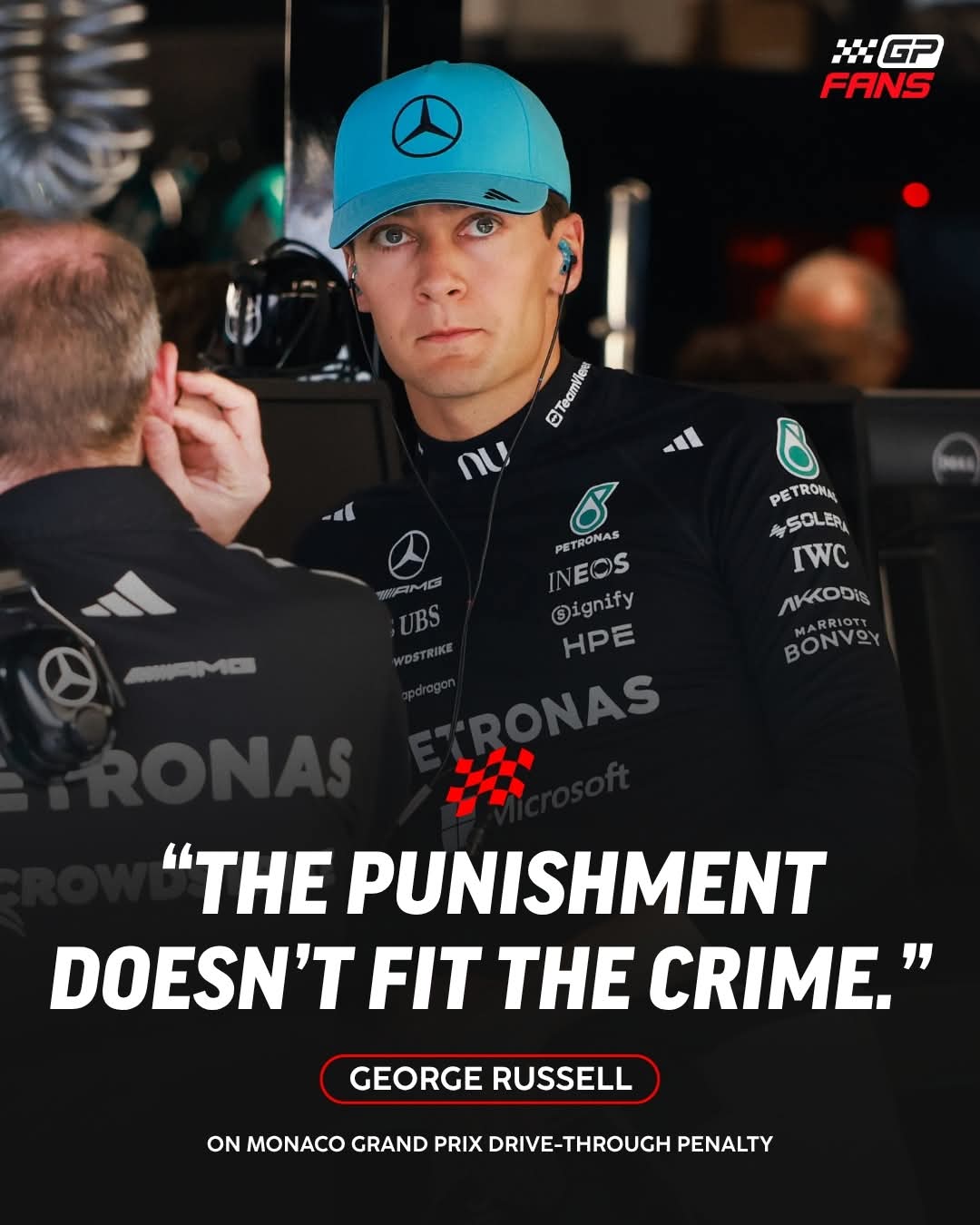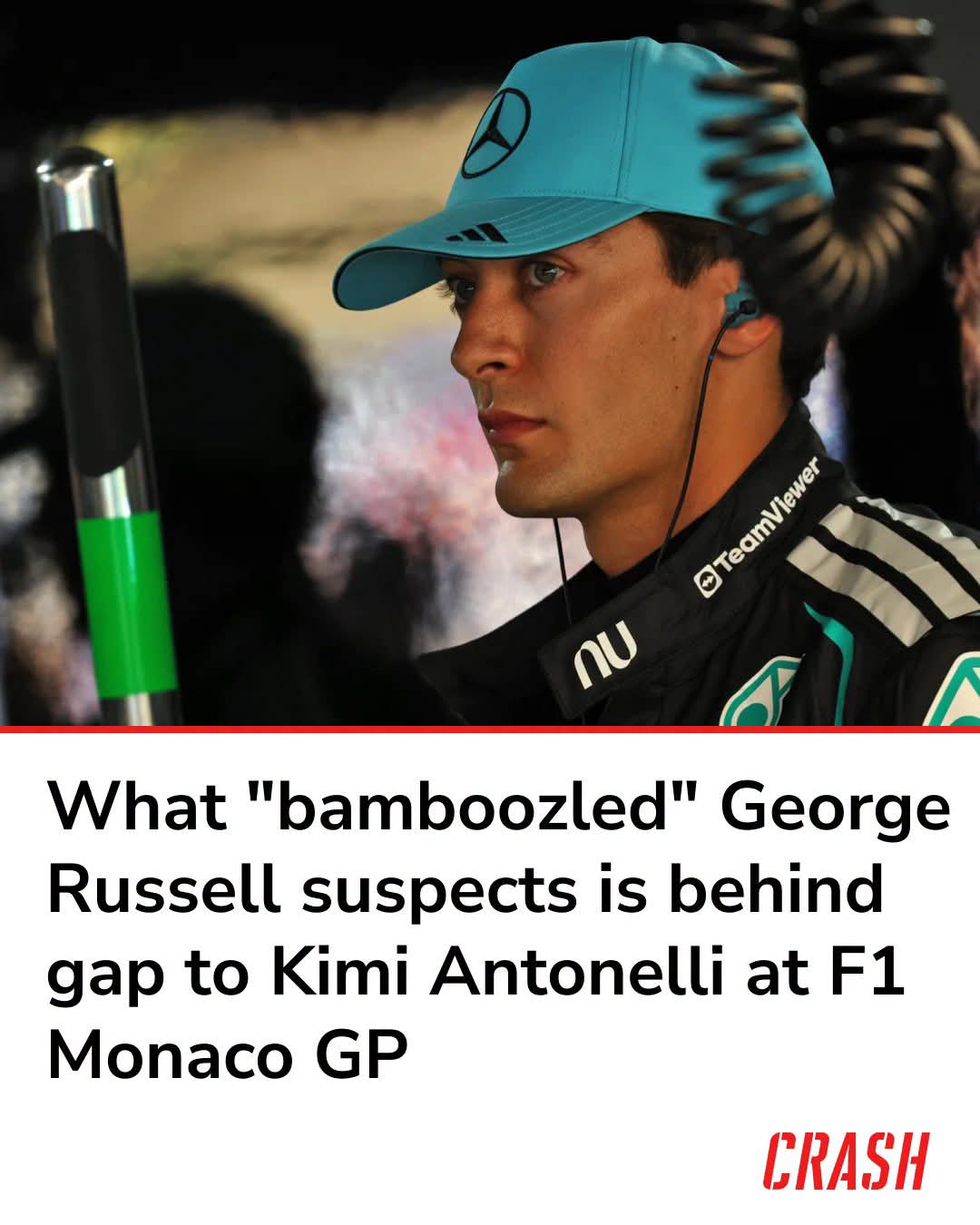
The 2026 Monaco Grand Prix qualifying session may be remembered as the day Andrea Kimi Antonelli firmly announced himself as Formula 1’s new benchmark. While the teenage sensation delivered a stunning pole position lap around the streets of Monte Carlo, Mercedes teammate George Russell was left frustrated, confused, and openly searching for explanations after qualifying more than four-tenths slower.
For a driver who entered the season as one of the championship favorites, Russell’s admission that he feels “bamboozled” by his recent lack of pace highlights a growing concern inside Mercedes. More importantly, it underlines how dramatically the balance of power within the team has shifted in just a few months.
ANTONELLI CONTINUES HIS REMARKABLE RISE
Antonelli’s Monaco pole was no ordinary achievement. The 19-year-old has already won four of the opening five races this season and now adds Formula 1’s most prestigious qualifying result to his rapidly growing résumé.
Monaco is often regarded as the ultimate test of precision, confidence, and commitment. Drivers must brush barriers at high speed while extracting every ounce of performance from their machinery. For Antonelli to defeat rivals such as Max Verstappen and Charles Leclerc on one of the sport’s most demanding circuits speaks volumes about his development.
The performance also strengthens his grip on the championship lead. Already holding a 43-point advantage over Russell before Monaco, Antonelli now has a prime opportunity to extend that margin further with track position being more valuable in Monaco than almost anywhere else on the calendar.
RUSSELL’S MYSTERIOUS LOSS OF FORM
What makes Russell’s struggles particularly intriguing is how strong he looked at the beginning of the season.
The British driver was frequently at the front during the opening rounds and appeared fully comfortable with Mercedes’ new-generation package. However, over the last three race weekends, his pace has noticeably dropped, especially in qualifying conditions where Antonelli has consistently found another level.
Russell himself admits he cannot fully explain the decline. He pointed to Monaco practice, where he initially felt competitive and even appeared capable of challenging the frontrunners. Yet as the weekend progressed, that speed disappeared.
Such sudden changes often point toward a combination of factors rather than one single issue. Driver confidence, tire preparation, setup direction, and evolving car characteristics can all create performance swings that are difficult to identify immediately.
THE DRIVING STYLE DIFFERENCE THAT COULD DECIDE THE CHAMPIONSHIP
Perhaps the most revealing part of Russell’s comments was his suggestion that the gap may stem from fundamental differences in driving style.
According to Russell, Antonelli is extracting more performance from the tires by placing them in a more effective operating window throughout the lap. In modern Formula 1, tire management has become one of the most important performance factors, especially under the current regulations where small temperature differences can dramatically affect grip levels.
Interestingly, Russell revealed that the opposite situation existed last year. The previous Mercedes package suited his natural driving style, while Antonelli struggled to adapt. The tables have now turned completely.
This highlights a reality often overlooked by fans. Formula 1 success is not always about raw speed. Sometimes a driver’s natural approach simply aligns better with the technical characteristics of a particular car. Right now, the 2026 Mercedes appears to be rewarding Antonelli’s style while exposing Russell’s weaknesses.
WHY MERCEDES CANNOT AFFORD TO IGNORE THE ISSUE
For Mercedes, this growing performance gap presents both an opportunity and a challenge.
On one hand, Antonelli’s emergence has transformed the team into the championship favorite. His consistency, qualifying speed, and race management have been exceptional. Mercedes could be witnessing the birth of its next superstar.
On the other hand, Russell remains a crucial asset. A team fighting for both championships cannot afford to have one driver consistently trailing the other. Every point matters in a season expected to become increasingly competitive as Ferrari, Red Bull, and McLaren continue developing their packages.
The engineering team must now determine whether setup changes, tire preparation strategies, or even aerodynamic balance adjustments can help Russell recover his confidence and competitiveness.
WHAT THIS MEANS FOR THE TITLE RACE
Monaco could become a defining weekend in the 2026 championship battle.
If Antonelli converts pole position into victory, he will further strengthen his lead and continue building momentum that already resembles a championship-winning campaign. His confidence is growing with every race, and rivals are beginning to run out of opportunities to stop him.
For Russell, the challenge is no longer simply beating Verstappen, Leclerc, or the McLaren drivers. His first priority is understanding why he cannot match the pace of the driver sitting in the other Mercedes garage.
Championships are often decided by how quickly drivers adapt to adversity. Russell still has plenty of time to respond, but unless Mercedes uncovers the root cause of his struggles, Antonelli’s remarkable rise could soon turn into a dominant march toward his first Formula 1 world title.
MONACO MAY MARK THE START OF A NEW ERA
Formula 1 has always been a sport where generational talents emerge suddenly and change the landscape. Antonelli’s pole position in Monaco feels like one of those moments.
The young Italian is no longer being discussed as the future of Mercedes. He is becoming its present.
Meanwhile, Russell faces perhaps the toughest challenge of his career: adapting fast enough to prevent a teammate from turning a promising championship fight into a one-sided battle. If Monaco is any indication, the balance of power at Mercedes may have already shifted—and the rest of Formula 1 is taking notice.