The 2026 Formula 1 season was supposed to be the year George Russell finally emerged as a genuine world championship contender. Instead, the Monaco Grand Prix may be remembered as the race that pushed his title ambitions to the brink.
After a controversial sequence of penalties, confusion within Mercedes, and a frustrating encounter with FIA stewards, Russell left Monaco with zero points, a growing sense of injustice, and a daunting championship deficit to overcome.
With teammate Andrea Kimi Antonelli continuing to lead the title race and rivals gaining momentum, serious questions are now being asked: can Russell still fight for the championship, or has Monaco effectively ended his hopes?
A WEEKEND THAT UNRAVELED AT THE WORST POSSIBLE MOMENT
Monaco has always been a circuit where tiny mistakes produce massive consequences. For Russell, a seemingly minor pit-lane speeding infringement triggered a chain reaction that destroyed what could have been a strong result.
The Mercedes driver initially received a standard five-second penalty for exceeding the pit-lane speed limit. While frustrating, it was hardly race-ending. Several drivers received similar sanctions throughout the race, and Russell still appeared capable of securing a valuable finish inside the top four.
The real disaster came later.
A late Safety Car triggered by Lance Stroll’s Aston Martin crash created an opportunity for teams to make strategic tyre changes. Mercedes called Russell into the pits, but amid the chaos, the team failed to ensure the five-second penalty was served during the stop.
Under FIA regulations, once a driver enters the pits, any outstanding time penalty must be served before work begins on the car. By changing tyres immediately and releasing Russell back onto the circuit, Mercedes committed a procedural error with major consequences.
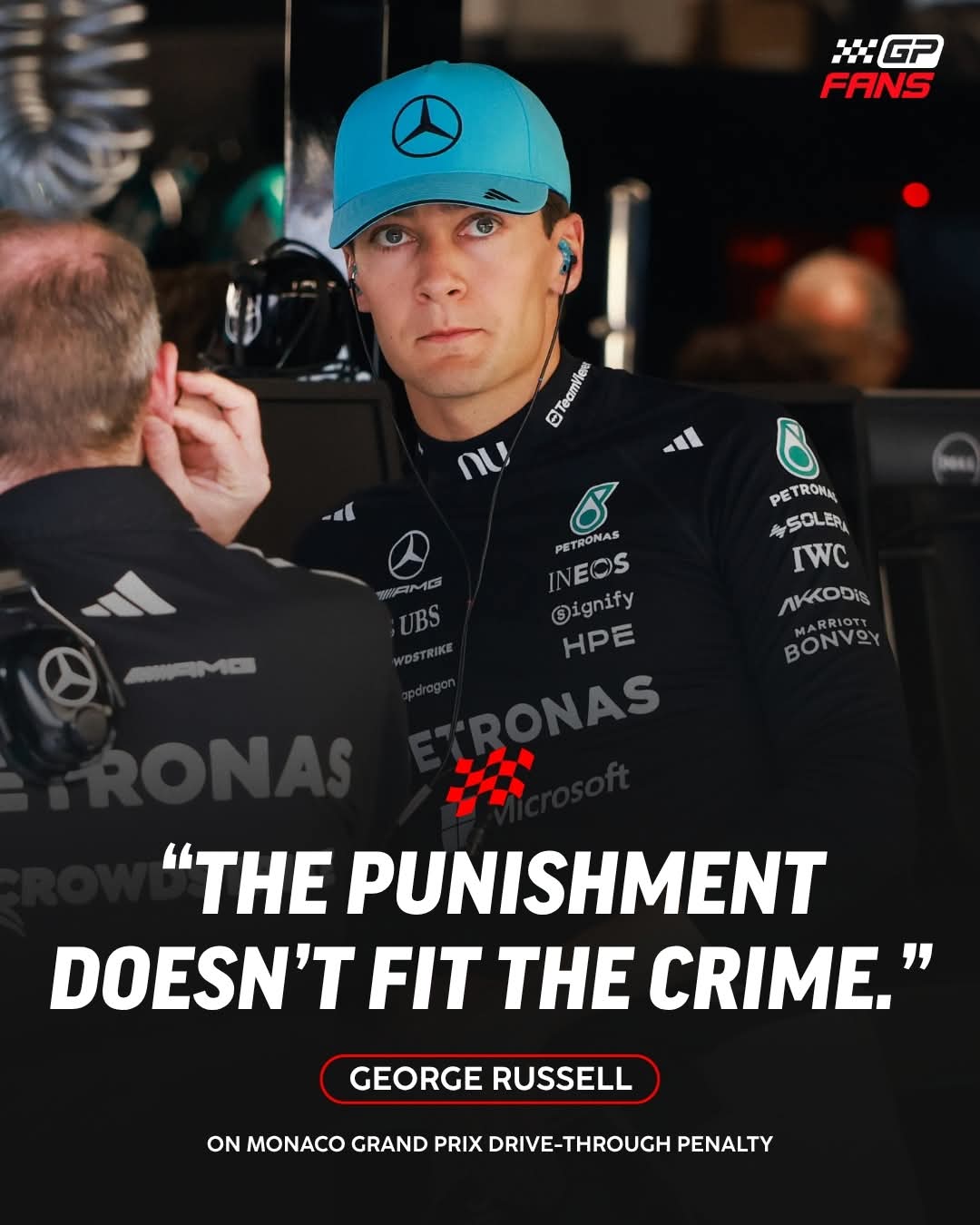
The stewards responded with a drive-through penalty—one of the most costly punishments available during a race.
WHY THE FIA REFUSED TO SHOW LENIENCY
From Russell’s perspective, the punishment appeared excessively harsh.
The British driver argued that the original speeding infringement resulted from a software-related issue and that the advantage gained was negligible. He also believed serving the five-second penalty later should have been a reasonable solution.
However, the FIA’s position was straightforward.
Formula 1’s sporting regulations leave little room for interpretation regarding unserved penalties. The governing body fears that allowing teams flexibility could create opportunities to manipulate race strategy and gain unfair advantages.
For the stewards, the case was simple: a penalty was not served when required, and the rulebook mandates a drive-through penalty in such situations.
The decision highlights one of the defining characteristics of modern Formula 1 officiating. Consistency often takes priority over circumstance. While drivers may feel hard done by, stewards are increasingly reluctant to make exceptions that could set controversial precedents later in the season.
THE MOMENT THAT CHANGED RUSSELL’S CHAMPIONSHIP OUTLOOK
The timing of the drive-through made the punishment even more devastating.
Following a red-flag interruption, the field was tightly compressed. When Russell served the drive-through, he dropped from fourth position all the way down the order, eventually finishing outside the points.
In a championship battle where every point matters, the impact was enormous.
Instead of limiting the damage with a podium challenge or a solid top-five finish, Russell walked away empty-handed for the second consecutive race weekend.
The numbers tell the story:
– Russell now trails championship leader Andrea Kimi Antonelli by 68 points.
– He has fallen to third in the standings.
– Lewis Hamilton has moved ahead of him into second place.
– Mercedes has lost valuable momentum in both championship battles.
For a driver hoping to challenge over a full season, consecutive scoreless weekends can be catastrophic.
MERCEDES MUST ACCEPT ITS SHARE OF THE BLAME
While Russell’s frustration with the FIA has attracted headlines, attention must also turn toward Mercedes.
The team’s operational error was the direct cause of the drive-through penalty. In Formula 1, championship campaigns are often won or lost through execution rather than outright speed.
Mercedes has shown flashes of impressive pace throughout 2026, but Monaco exposed weaknesses that championship-winning teams cannot afford.
Communication breakdowns, procedural mistakes, and strategic confusion have repeatedly hurt teams throughout Formula 1 history. When margins are measured in tenths of a second, administrative errors can be just as damaging as crashes or mechanical failures.
Russell’s comment that points have been lost due to circumstances outside his control will resonate with many fans. Yet from Mercedes’ perspective, the team must quickly address the processes that led to the costly mistake.
ANTONELLI CONTINUES TO LOOK LIKE A CHAMPION
While Russell endured one of the most frustrating afternoons of his career, Antonelli’s title credentials continue to strengthen.
The young Mercedes star has handled the pressure of leading a championship battle with remarkable maturity. Every race weekend that Russell struggles gives Antonelli another opportunity to establish himself as the team’s undisputed number-one contender.
What makes Antonelli particularly dangerous is his consistency.
Championships are rarely won through spectacular victories alone. They are won by avoiding disastrous weekends. So far, Antonelli has largely succeeded in doing exactly that.
As the season progresses, the psychological advantage may become just as important as the points gap.
LEWIS HAMILTON’S RESURGENCE CHANGES THE TITLE PICTURE
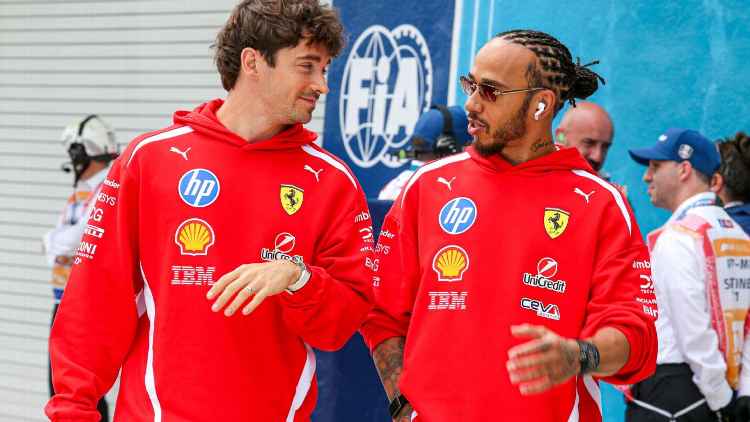
Another significant consequence of Monaco is the emergence of Lewis Hamilton as a more serious championship threat.
Hamilton’s improved form with Ferrari has allowed him to leapfrog Russell in the standings. After a difficult start to life at Ferrari, the seven-time world champion appears increasingly comfortable with his new environment.
If Ferrari continues to close the performance gap to Mercedes, Hamilton could become a genuine factor in the championship fight.
That would create a fascinating dynamic where Russell is forced to chase not only his teammate but also one of Formula 1’s greatest drivers.
CAN RUSSELL STILL WIN THE 2026 WORLD CHAMPIONSHIP?
History suggests that overcoming a 68-point deficit is difficult but not impossible.
Modern Formula 1 calendars are long, and numerous races remain. Reliability problems, accidents, weather-affected races, and future regulation interpretations can all reshape a championship battle quickly.
However, Russell’s margin for error has effectively disappeared.
He now needs:
– Consistent podium finishes.
– Multiple race victories.
– Strong reliability from Mercedes.
– Mistakes from Antonelli and other title rivals.
– Flawless execution from his team.
Any further setbacks could make the championship gap impossible to recover.
The concern for Russell is not simply the points deficit. It is the momentum. Formula 1 seasons often develop narratives, and right now the momentum is firmly with Antonelli and Hamilton.
WHAT MONACO COULD MEAN FOR THE REST OF THE SEASON
Monaco may ultimately prove to be a turning point in the 2026 championship.
For Antonelli, it reinforced his status as a legitimate title favorite.
For Hamilton, it provided another step toward a remarkable resurgence with Ferrari.
For Mercedes, it exposed costly operational weaknesses that require immediate attention.
And for Russell, it created perhaps the toughest challenge of his Formula 1 career.
The championship is far from over, but the road ahead has become significantly steeper.
If Russell eventually falls short of the title by a narrow margin, Monaco will almost certainly be remembered as the weekend when a five-second penalty snowballed into a championship-defining disaster.