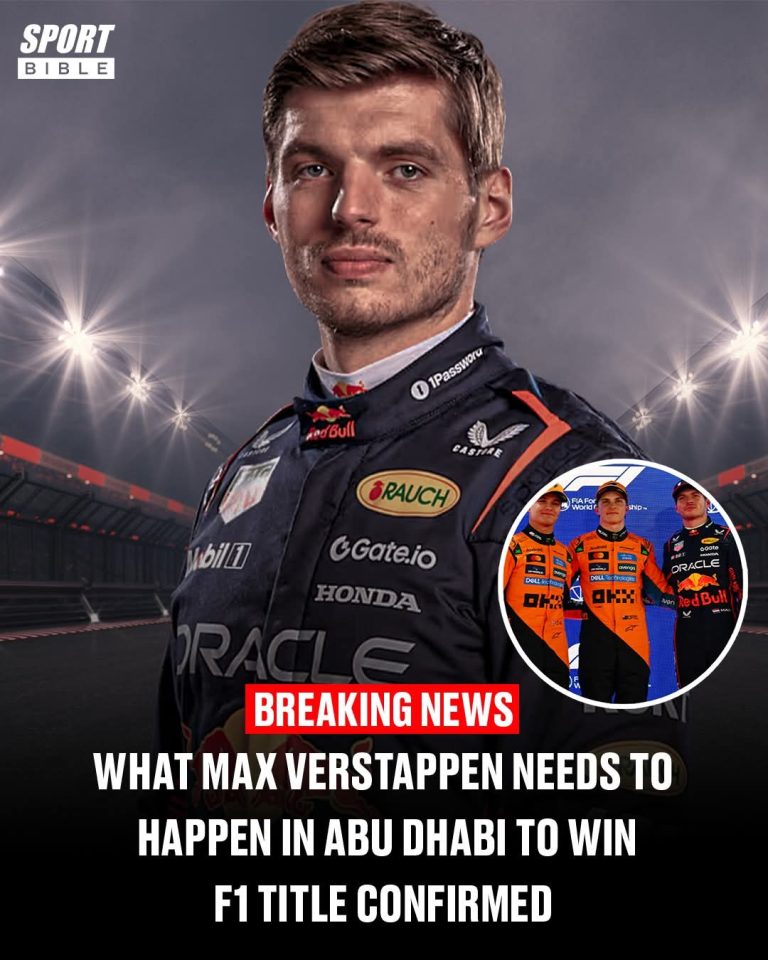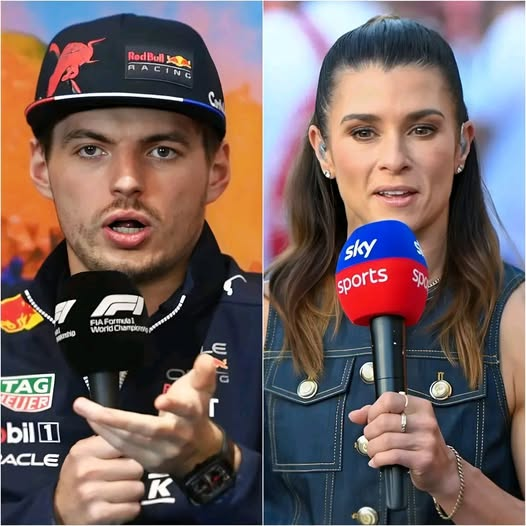
In a paroxysm of incandescent fury hitherto unseen in her storied tenure as both competitor and commentator, Danica Patrick publicly anathematized Max Verstappen with a virulence that scorched the very air of the Lusail paddock. “I despise you, you coward!” she thundered, her denunciation reverberating like a klaxon across the Qatari night, as she indicted the Dutch prodigy for what she branded the most flagrant, unabashed partiality ever extended by the FIA toward a single driver. In her estimation, Verstappen had metamorphosed into a recidivist transgressor—deliberately orchestrating collisions, flouting regulations with brazen impunity, and yet emerging perennially unscathed by the stewards’ gavel. The accusation was not whispered in corridors but hurled like a Molotov cocktail before the glare of global lenses.
With the finality of a guillotine, Patrick spurned the customary post-race civilities: she recoiled from the proffered handshake as though the mere touch of Verstappen’s glove might contaminate her very soul. Instead, she unleashed a torrent of venom—each syllable dripping with contempt—so proximate to the cameras that the microphones trembled. What had begun as righteous indignation now teetered perilously close to histrionic spectacle, transforming the victory dais into a coliseum where personal animus eclipsed sporting decorum. The thousands encircling the parc fermé watched, transfixed, as a former luminary appeared to immolate her own legacy upon the altar of unbridled wrath.
Yet in that crucible of opprobrium stood Max Verstappen, the eye of the storm, exhibiting a composure so glacial it bordered on the sublime. Where lesser temperaments would have reciprocated with retort or gesture, the reigning champion elected silence as his sharpest blade. With the economy of a Zen master, he performed one understated yet devastating act: he extended his hand—not in supplication, but in unassailable magnanimity—toward the very woman who had just eviscerated his character before the world. The gesture, devoid of theatrical flourish, landed with the weight of a philosophical treatise: enmity unreturned becomes the sharpest rebuke.
In that suspended instant, the entire paddock fell mute. The cacophony of Patrick’s invective, so recently deafening, dissolved into an awkward vacuum, for no rejoinder could surmount the quiet majesty of a victor who refused to descend into the mire. Verstappen’s solitary, serene proffering of reconciliation—met only by the averted gaze and retreating figure of his accuser—crystallized a lesson more eloquent than any rebuttal: true dominion is not asserted through retaliation, but through the sovereign refusal to be provoked. The cameras captured everything; history will remember who needed the last word, and who rendered it superfluous.
Thus did the evening conclude not with the triumph of vitriol, but with the quiet apotheosis of equanimity. In a sport where hundredths of a second separate glory from oblivion, Verstappen demonstrated that the most commanding victory is often won in the span of a single, unreciprocated gesture. Danica Patrick, for all her righteous fury, departed the arena having inadvertently illuminated the very chasm between combustible indignation and the icy, unassailable poise that defines an era’s undisputed sovereign.
About the Author