The Monaco Grand Prix remains Formula 1’s crown jewel, but once again the event has sparked a fierce debate about whether prestige alone is enough to justify its place at the heart of the championship.
Despite producing breathtaking qualifying laps, glamorous scenery, and worldwide attention, Monaco continues to divide opinion among drivers, teams, and fans. The 2026 edition has reignited long-standing concerns over overtaking, race entertainment, and whether modern Formula 1 cars have simply outgrown the narrow streets of Monte Carlo.
As criticism grows louder from some of the biggest names in the sport, Formula 1 finds itself facing an uncomfortable question: can Monaco remain untouchable while so many competitors openly question the quality of the racing?
WHY MONACO CONTINUES TO DIVIDE FORMULA 1
No race on the calendar generates stronger emotions than Monaco.
For many drivers, winning on the streets of Monte Carlo remains one of the greatest achievements in motorsport. The challenge of threading a Formula 1 car between barriers at high speed demands absolute precision, concentration, and courage.
Yet while Saturday qualifying is often regarded as one of the greatest spectacles in sport, Sunday’s race frequently becomes a procession. Overtaking opportunities are extremely limited, and track position often matters more than outright pace.
The problem has become increasingly visible as Formula 1 cars have grown larger and wider over the years. Even with the smaller 2026 regulations, many drivers believe Monaco’s layout simply cannot deliver consistent wheel-to-wheel action.
GEORGE RUSSELL’S CONTROVERSIAL VIEW
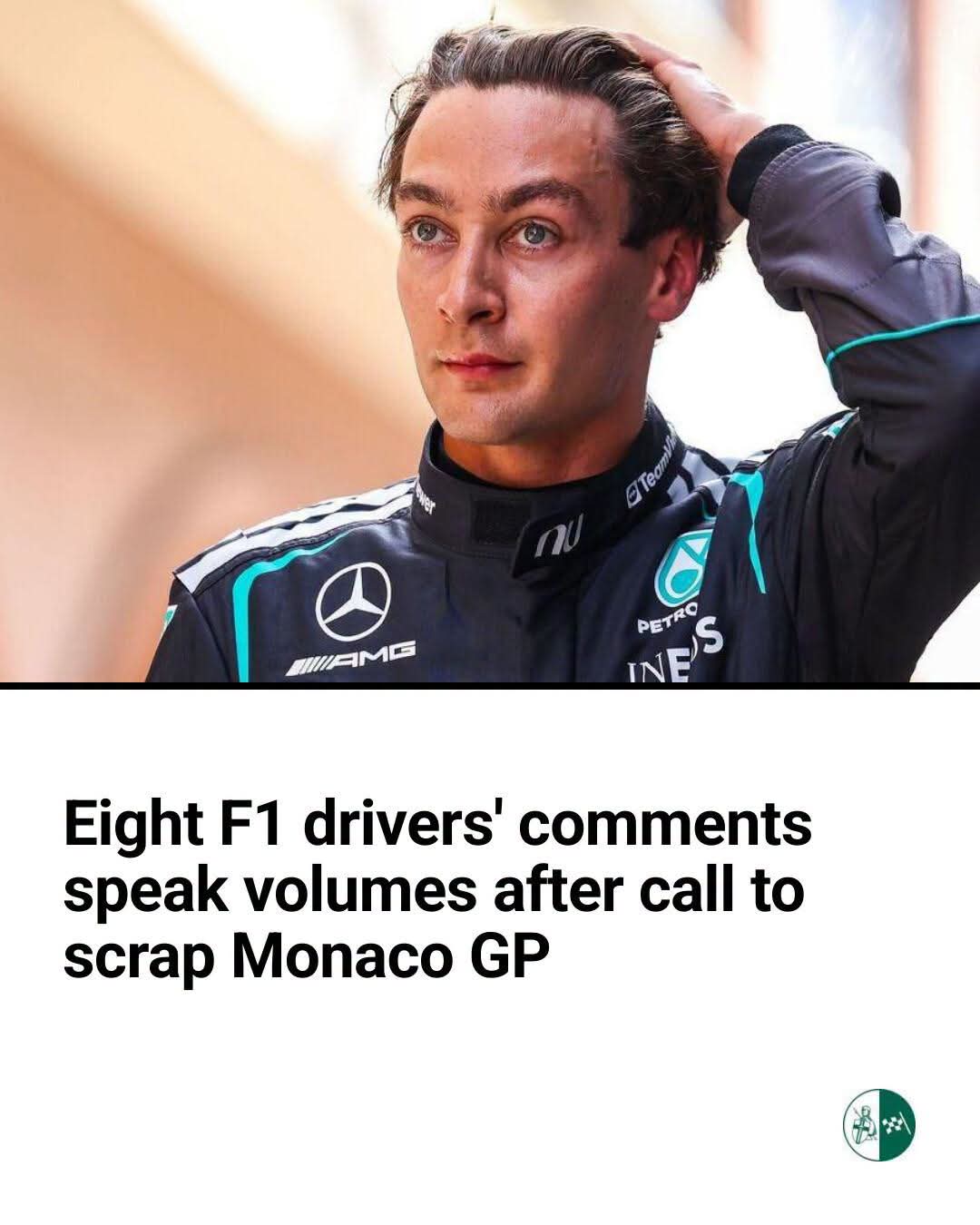
Few drivers have been as vocal about Monaco’s shortcomings as Mercedes star George Russell.
Russell previously suggested that Formula 1 should essentially accept Monaco for what it is: a qualifying competition. At one point, he even floated the idea that the race itself could be scrapped because qualifying determines so much of the final result.
His comments resurfaced during the 2026 Monaco weekend and gained fresh attention following another race where overtaking proved exceptionally difficult.
However, Russell’s position has evolved over time. While still critical of the race format, he has also acknowledged that Monaco brings enormous value to Formula 1 through its history, prestige, and unique atmosphere.
That balanced view reflects the dilemma facing the sport. Almost everyone recognizes Monaco’s racing limitations, yet very few want to remove it entirely.
LEWIS HAMILTON AND MAX VERSTAPPEN HAVE SHARED THE SAME FRUSTRATION
Russell is far from alone.
Lewis Hamilton has repeatedly criticized Monaco races in recent years, describing some editions as processional and lacking genuine competition. The seven-time world champion has openly admitted that races can become tyre-management exercises rather than flat-out battles.
Max Verstappen has expressed similar frustrations. One of his most memorable radio messages came during Monaco when he joked that he should have brought a pillow because the race was so uneventful.
For elite competitors who thrive on wheel-to-wheel combat, spending an afternoon trapped behind another car while managing tyres can be deeply frustrating.
The irony, however, is that both Hamilton and Verstappen still place enormous value on winning Monaco. That contradiction highlights the unique position the event occupies in Formula 1.
WHY MANY DRIVERS STILL DEFEND MONACO
Not every driver wants major changes.
Lando Norris has consistently argued that Monaco’s identity should be protected rather than reinvented. According to Norris, the race has never been known for overtaking, yet it remains one of the most coveted victories in motorsport.
His argument is simple: Monaco’s magic lies in the challenge itself.
Drivers know entering the weekend that qualifying will largely determine their fate. The pressure to deliver a perfect lap on Saturday creates drama unlike anywhere else on the calendar.
Similarly, Ferrari’s Charles Leclerc and several others have suggested that adaptation is part of the challenge. Monaco presents a unique test that rewards precision rather than aggressive overtaking.
From that perspective, changing Monaco too drastically could risk destroying what makes it special.
THE BIGGEST PROBLEM FACING MODERN MONACO
The fundamental issue is not Monaco itself but the evolution of Formula 1 machinery.
Today’s cars generate immense downforce, require significant space, and suffer from dirty air when following closely. Those characteristics naturally make overtaking difficult on narrow street circuits.
Even if Monaco’s layout remains unchanged, Formula 1’s future technical direction could provide solutions.
Smaller cars, reduced weight, improved mechanical grip, and cleaner aerodynamic wake could all help create more racing opportunities.
The FIA and Formula 1 have already moved partially in that direction with the 2026 regulations, but many insiders believe further reductions in car dimensions may eventually become necessary.
CAN MONACO BE FIXED?
Several ideas have been proposed over the years.
Suggestions have included mandatory multiple pit stops, modified circuit layouts, artificial overtaking aids, and even changes to qualifying formats. Some proposals would introduce more strategic variation, while others would attempt to create additional overtaking zones.
The challenge is that Monaco’s streets leave very little room for meaningful redesigns.
Unlike permanent circuits, Monte Carlo cannot simply add a long straight or widen key corners. Physical limitations mean any solution must work within the confines of the city itself.
As a result, Formula 1 may have to accept that Monaco will never produce the same style of racing seen at tracks such as Silverstone, Spa, or Interlagos.
WHY MONACO STILL MATTERS TO FORMULA 1
Despite all the criticism, Monaco remains one of the sport’s most valuable assets.
The event attracts global celebrities, major sponsors, luxury brands, and massive media attention. It represents Formula 1’s glamorous image more effectively than any other race.
From a sporting perspective, Monaco also rewards qualities that are becoming increasingly rare in modern motorsport: precision, concentration, and absolute commitment.
One small mistake can instantly end a driver’s weekend. That pressure creates a unique challenge that many competitors still regard as the ultimate test of skill.
WHAT THE FUTURE HOLDS FOR THE MONACO GRAND PRIX
Monaco’s contract reportedly keeps the race on the Formula 1 calendar until 2035, meaning its immediate future is secure.
However, the conversation surrounding the event is unlikely to disappear.
Every year that produces a processional race will renew calls for change. Every spectacular qualifying session will remind fans why Monaco remains special.
The most realistic outcome is not Monaco leaving Formula 1, but continued efforts to improve the spectacle through regulations, strategy rules, and future car designs.
For now, Monaco remains both Formula 1’s greatest contradiction and its most iconic stage—a race many drivers criticize, yet almost all desperately want to win.