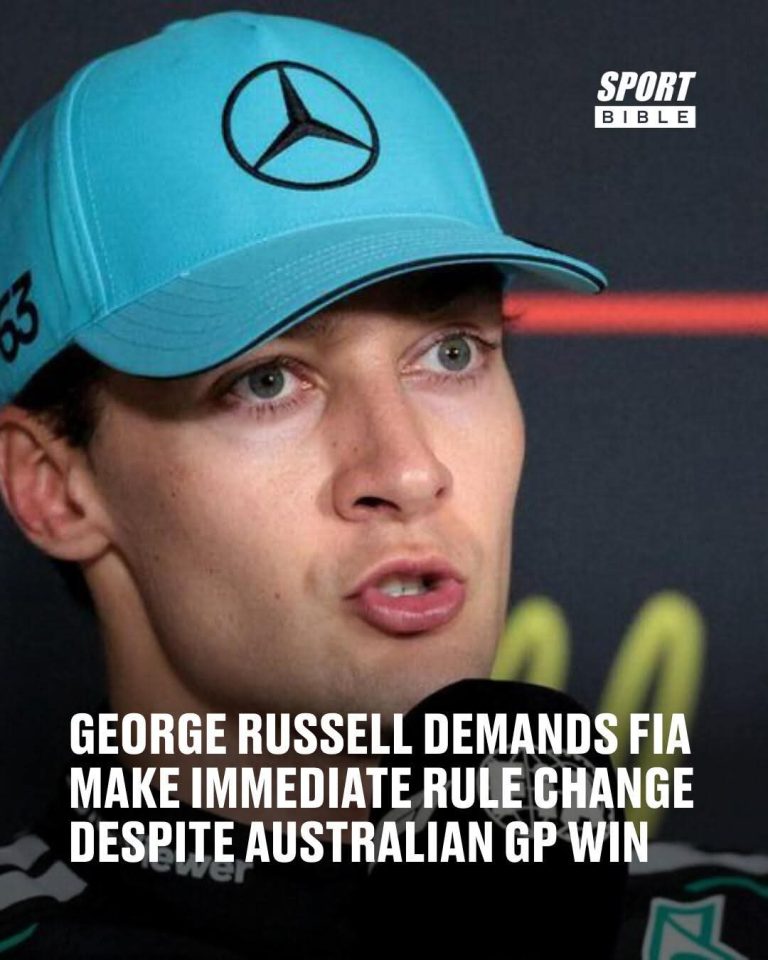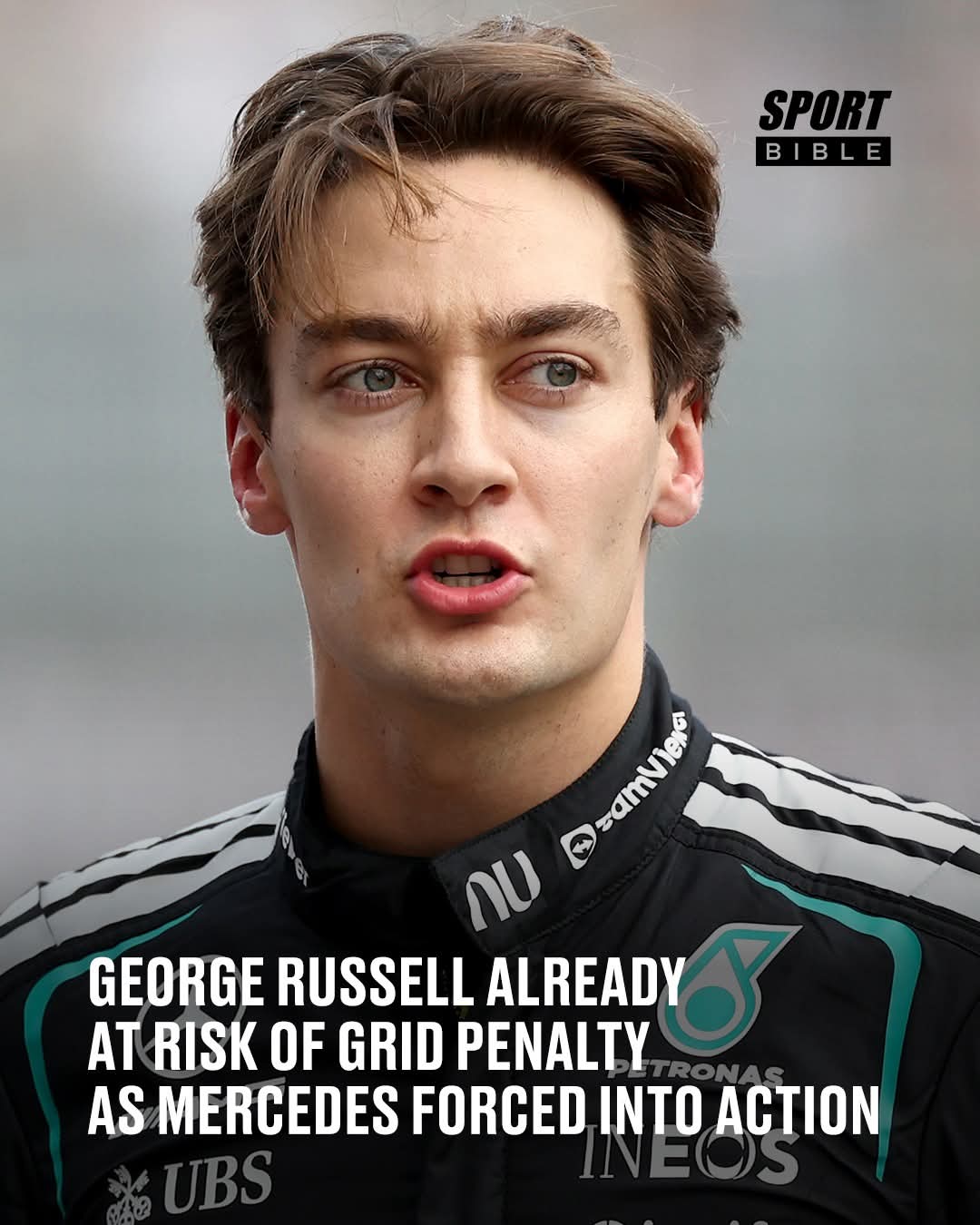
George Russell may have secured pole position for the Australian Grand Prix, but the Mercedes driver is already facing the looming possibility of a grid penalty early in the 2026 Formula 1 season. Despite delivering an exceptional qualifying performance in Melbourne, developments behind the scenes at Mercedes have placed the British driver in a delicate position regarding his power unit component allocations.
Russell dominated the qualifying session, comfortably setting the fastest lap during Q3 and outperforming his teammate Kimi Antonelli, who secured second place on the grid. The Mercedes driver finished nearly eight-tenths of a second ahead of Red Bull’s Isack Hadjar, who rounded out the top three. The commanding performance further reinforced Mercedes’ status as the team to beat heading into the new season.
The scale of Mercedes’ advantage was evident after qualifying, with both Hadjar and Ferrari’s Charles Leclerc openly acknowledging that their teams may struggle to match the Silver Arrows during the race in Melbourne. Russell will therefore aim to convert his pole position into a season-opening victory, though concerns regarding reliability could quickly overshadow the early success.
Prior to the qualifying session, Mercedes installed a new energy store unit, control electronics component, and power unit ancillary system on Russell’s car. While these changes do not trigger an immediate penalty because they fall within the season’s permitted allocations, the situation places Russell much closer to exhausting his available components. Under normal regulations, drivers are restricted to just two energy store and control electronics units across the entire 24-race calendar.
For the 2026 season, however, the FIA introduced a temporary provision granting teams an additional “bonus” component for these parts due to concerns about potential reliability issues under the new regulations. Although this extra allowance prevents an immediate penalty, the early component change may still raise concerns within Mercedes as they attempt to manage their remaining allocations across the demanding championship schedule.
Speaking after qualifying, Russell praised the improved characteristics of the new Mercedes car, noting that it feels far more agile compared to previous machines. He described the car as behaving more like a go-kart than the “bouncing bus” sensation drivers experienced under earlier ground-effect regulations, adding that the lighter and more responsive design has made the new generation of cars significantly more enjoyable to drive.
About the Author