Mercedes Performance Surge Raises Questions About Formula 1 Competitive Balance
There are moments in Formula 1 when the competitive order doesn’t just shift—it tilts so dramatically that the entire paddock is forced to pause and reassess. It often begins subtly, with small signs that something is different. A car looks more stable through corners, a driver appears more confident under pressure, and suddenly, what seemed like a tight field starts to stretch. These changes don’t always come with loud announcements, but they are impossible to ignore once they take hold.
At first, the conversations tend to circle around possibilities. Is it strategy? Is it driver form? Or is there something deeper embedded within the machinery itself? Analysts begin to compare data, fans dissect every lap, and rival teams quietly look for answers. In a sport where milliseconds define success, even the slightest advantage can evolve into a dominant force. And when that happens, it doesn’t just influence results—it reshapes expectations.
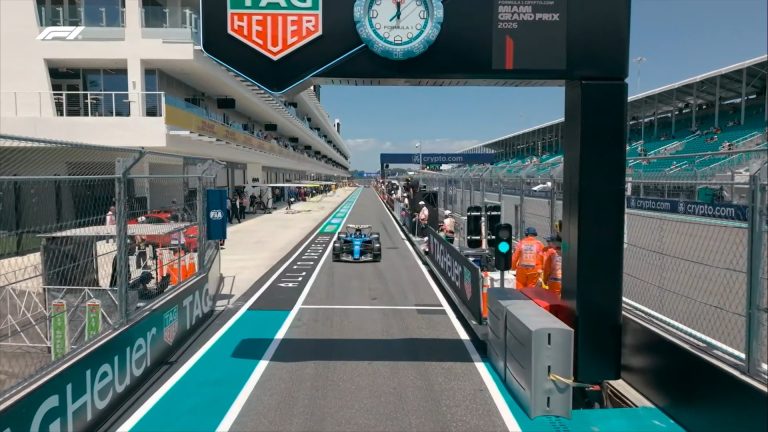
Recently, those quiet questions have grown louder, especially as Mercedes AMG Petronas Formula One Team continues to deliver performances that feel increasingly complete. It’s not just about speed on the straights or grip in the corners—it’s the overall balance that stands out. The car seems composed in every phase of a lap, giving its drivers the confidence to push without hesitation. That kind of harmony is rare, and when achieved, it often signals something bigger than a temporary advantage.
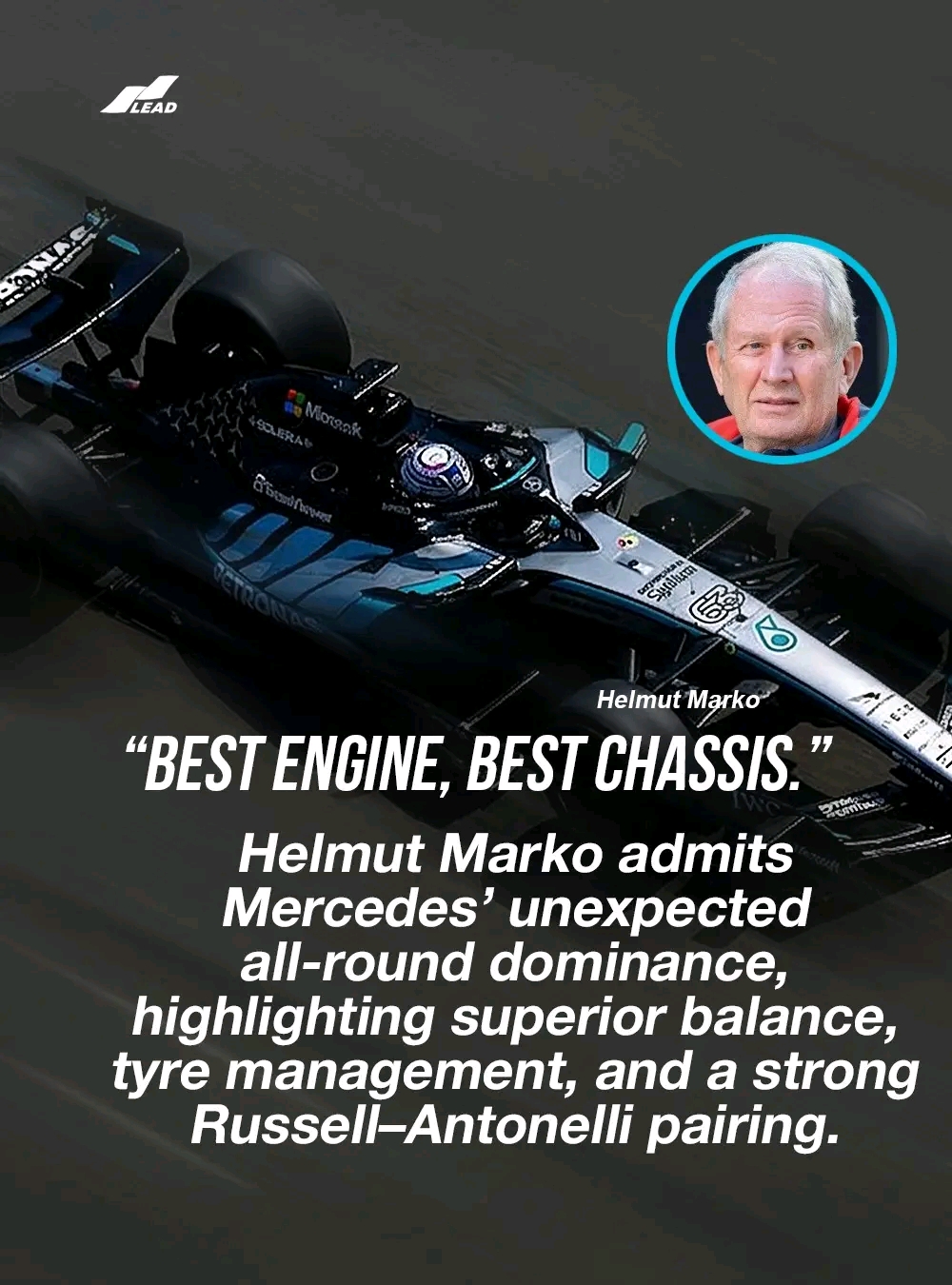
Helmut Marko himself acknowledged this shift, pointing to what he described as a near-perfect combination of engine performance and chassis design. His remarks carry weight, not only because of his experience but because they come from within a rival camp. When a competitor openly recognizes such strengths, it suggests that the gap may be more significant than it appears on paper. Add to that the consistency in tyre management and race execution, and a clear picture begins to form.
This is where the narrative sharpens. Mercedes is not just performing well—they are setting a new benchmark. With George Russell and rising talent Andrea Kimi Antonelli working in sync, the team has built a pairing that maximizes every opportunity. Their ability to extract performance lap after lap has turned potential into results, and results into momentum. It’s the kind of combination that doesn’t just win races—it changes the tone of an entire season.
Naturally, this level of dominance invites speculation about its broader impact. Some have even begun to wonder whether such a performance gap could influence how other drivers view the sport’s direction. The idea that a single team could reach such a complete level of execution raises questions about competitiveness, balance, and what it takes to challenge at the front. It’s in this context that dramatic reactions and bold statements start to emerge, fueled by both admiration and concern.
While talk of drastic consequences may lean toward exaggeration, the underlying sentiment is real. Formula 1 thrives on competition, on the constant push and pull between teams striving for the top. When one team edges too far ahead, it naturally sparks debate about how the balance can be restored. Yet, it’s also a testament to what is possible when engineering, strategy, and talent align perfectly.
As the season unfolds, the spotlight will remain firmly on Mercedes and how far they can take this advantage. Whether rivals find a way to close the gap or the team continues to extend it, one thing is certain—this moment has redefined expectations. And in a sport built on relentless pursuit of perfection, that kind of shift is never taken lightly.
About the Author