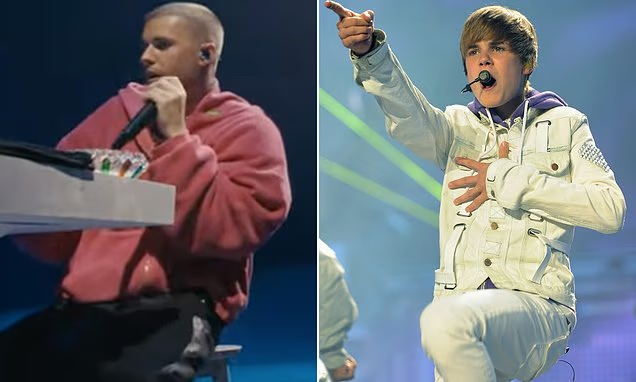
The controversy surrounding Justin Bieber and his widely discussed appearance at Coachella has sparked intense debate among fans and industry insiders alike. Reports claiming that the pop superstar was “paid $10 million to skip through songs on a laptop” during a headline set quickly went viral, leaving many questioning what truly happened behind the scenes. While the narrative painted a picture of a lackluster and unconventional performance, the real reasons appear far more complex than the headline suggests.
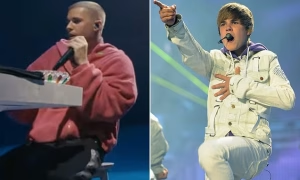 At the heart of the issue lies a long-standing contractual and legal framework that governs how artists can perform their older music. Bieber, like many global stars, does not always have complete autonomy over his catalog, especially songs tied to previous record deals. Music rights, licensing agreements, and publishing ownership can significantly impact what an artist is allowed to perform, how it is performed, and even the format in which it is presented during live shows.
Industry experts suggest that Bieber’s inability to fully perform his older tracks may stem from rights ownership complications. Over the years, artists often sell portions of their catalogs or enter agreements that limit their control over live renditions. If certain songs are tied to specific labels or agreements, performing them in full—especially in a high-profile, monetized setting like Coachella—could require additional permissions or incur hefty fees. This can lead to altered performances, shortened versions, or, in some cases, unconventional playback methods.
Another key factor is the evolving nature of live performances in the digital age. Many modern artists incorporate DJ-style elements, remixes, and digital playback into their sets. What some fans interpreted as “skipping through songs on a laptop” could actually have been a curated medley designed to fit time constraints or artistic direction. Festivals like Coachella often impose strict set durations, forcing performers to condense their discographies into tightly packed segments rather than full-length renditions.
There is also the possibility that Bieber’s performance choices were influenced by creative reinvention. Artists frequently use major stages to reimagine their music, blending old hits with new sounds or presenting them in experimental formats. While this approach can be exciting, it sometimes clashes with fan expectations, especially when audiences anticipate nostalgic, full-length performances of classic songs.
Financial considerations may also have played a role in shaping the set. The reported $10 million fee highlights the immense commercial stakes involved in headline festival appearances. Such deals often come with specific production requirements, branding elements, and performance guidelines. These constraints can affect everything from song selection to stage design, potentially limiting an artist’s ability to deliver a traditional live show.
Additionally, technical and logistical challenges cannot be overlooked. Large-scale festivals involve complex coordination between sound engineers, stage managers, and production teams. Any issues related to sound mixing, equipment, or scheduling could necessitate last-minute adjustments, including switching to pre-arranged digital segments or abbreviated performances.
Fan reaction has been deeply divided. While some criticized the perceived lack of effort, others defended Bieber, pointing to the pressures and constraints of performing at such a massive event. Supporters argue that without full knowledge of the contractual and logistical realities, it is unfair to judge the performance solely on viral clips or sensational headlines.
Ultimately, the situation underscores the intricate balance between artistry, business, and audience expectations in today’s music industry. What appeared to be a simple case of an artist “skipping songs” is, in reality, a reflection of deeper structural dynamics that shape how music is performed on the world’s biggest stages.
About the Author