Sophie Cunningham finally Explains Her Indiana Fever Contract
In professional sports, words often carry as much weight as performance. A single statement—whether intentional or misunderstood—can quickly travel beyond locker rooms and into the public eye, where it takes on a life of its own. For athletes, especially those competing in high-visibility leagues like the WNBA, managing that balance between honesty and interpretation can be just as challenging as the game itself.
Over the past few days, conversations have quietly built around one particular situation, drawing attention not because of controversy alone, but because of the uncertainty it seemed to create. Fans began to piece together fragments of comments, trying to understand what was really being said and, more importantly, what it might mean for the future. It wasn’t loud at first—but it was enough to spark curiosity and speculation.
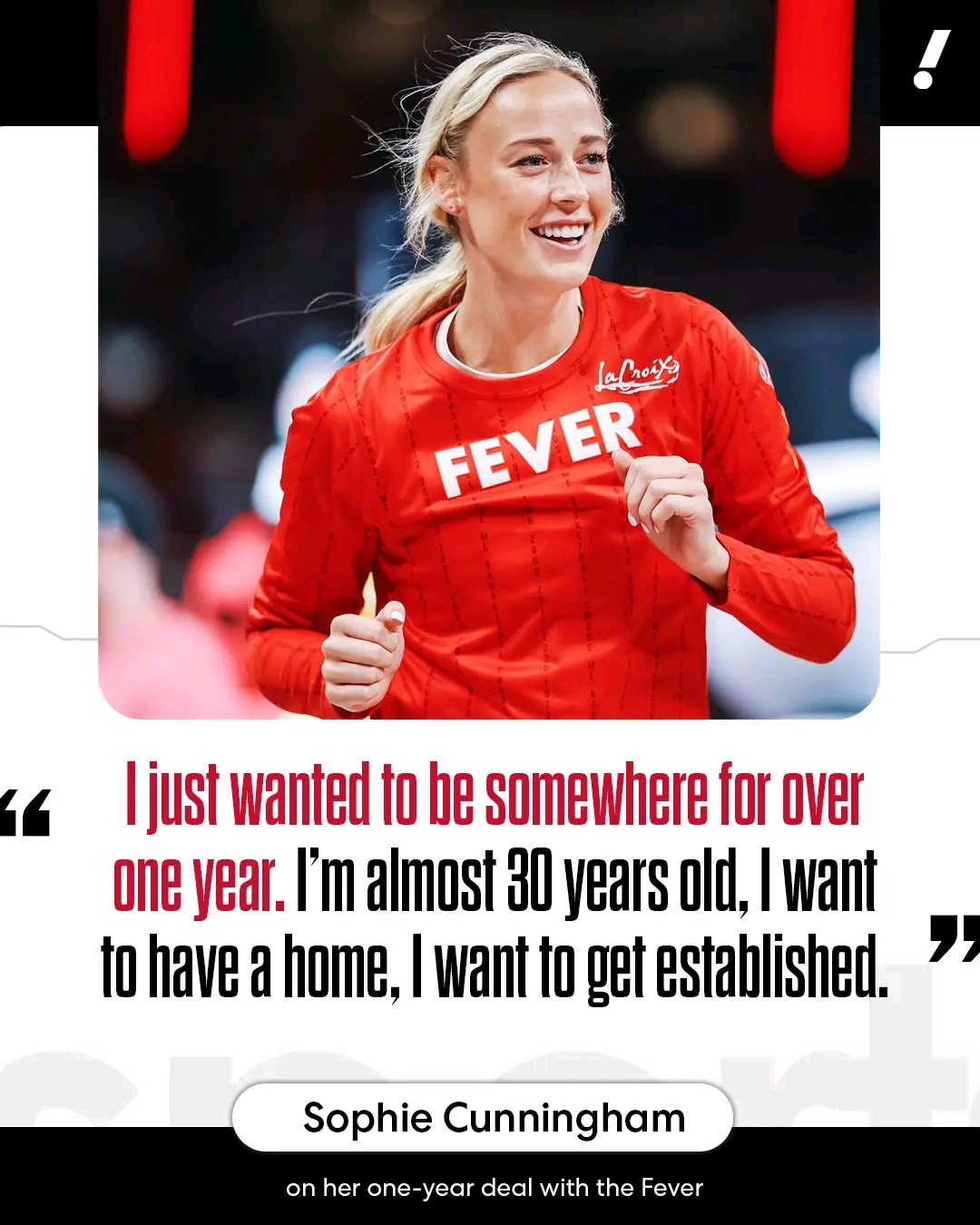
At the center of it all was Sophie Cunningham, a player known not just for her competitiveness on the court but also for her candid personality off it. Her remarks regarding her one-year deal with the Indiana Fever quickly became a talking point. Some interpreted her words as frustration, others as honesty, and a few even questioned whether it hinted at something deeper behind the scenes.
Naturally, when a player speaks openly about their contract, it tends to raise eyebrows. Contracts in professional sports are rarely just about numbers—they represent trust, timing, opportunity, and sometimes compromise. So when Cunningham’s initial comments surfaced, they left room for interpretation, and in a space where speculation thrives, that ambiguity became the story.
But as the discussion continued to grow, Cunningham stepped forward to provide clarity—and that’s where everything began to shift.
She explained that her remarks were never meant to signal dissatisfaction in the way some had assumed. Instead, they reflected a moment of honesty about navigating a short-term deal in a league where stability can often feel uncertain. Her intention, as she clarified, was not to criticize the organization or question her place within the team, but rather to share a perspective on the realities many players face when working within one-year contracts.
This clarification changed the tone of the conversation almost immediately. What once felt like a potential point of tension became a more grounded discussion about the structure of contracts in the league and how players approach them. Cunningham’s words highlighted the balance between appreciating an opportunity and still striving for long-term security—a balance that many athletes quietly manage throughout their careers.
In the end, what seemed like a brewing controversy turned into something far more relatable. It wasn’t about conflict or dissatisfaction—it was about transparency. And while the initial reaction may have been fueled by assumptions, the full picture revealed a player simply expressing the complexities of her situation. For fans and observers, it served as a reminder that not every headline tells the whole story—and sometimes, all it takes is a little context to bring everything into focus.
About the Author