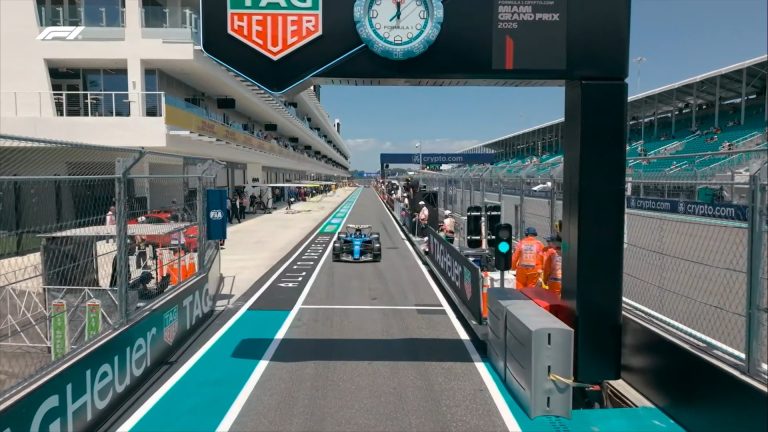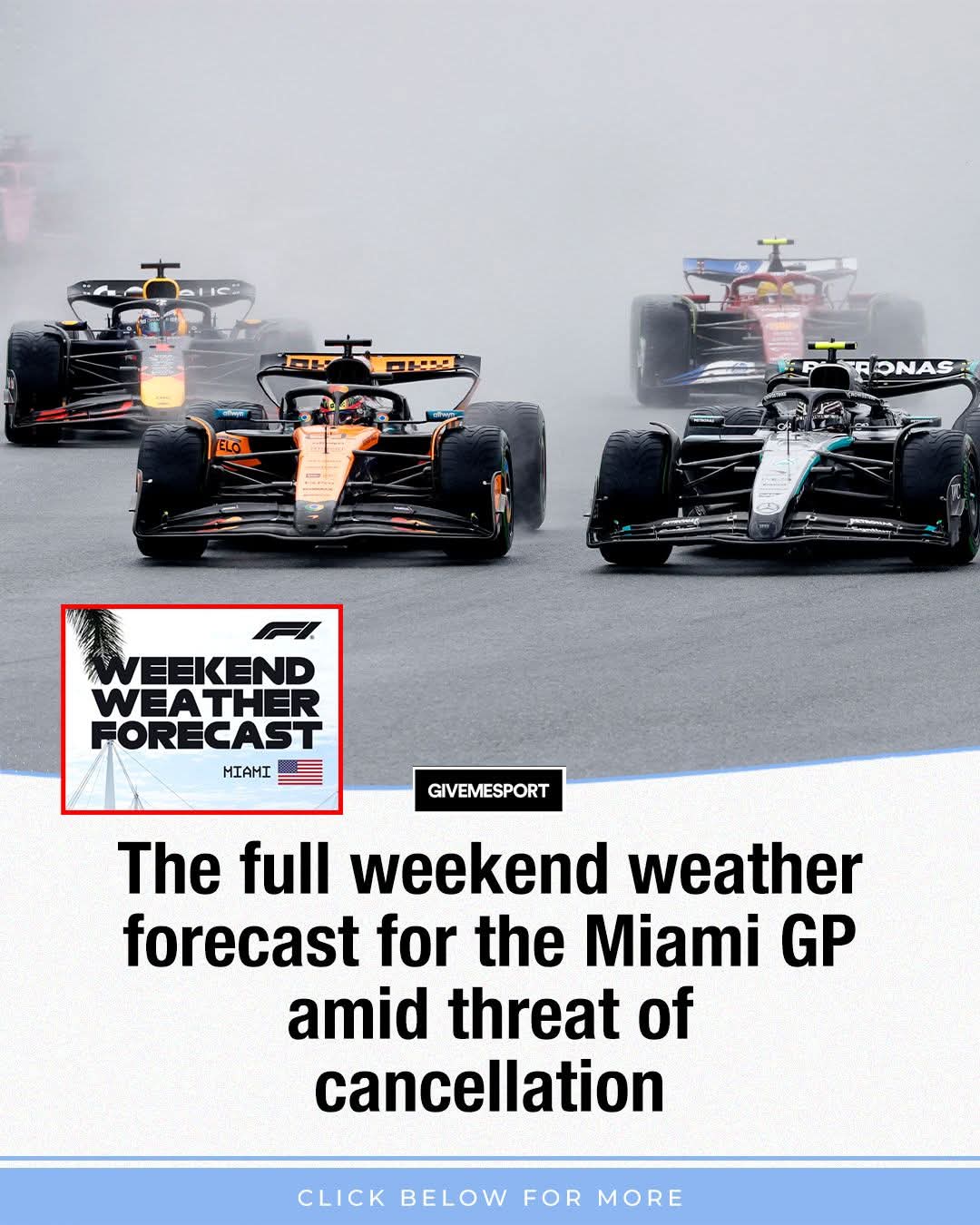
The Miami Grand Prix weekend is shaping up to be one of the most unpredictable events on the Formula 1 calendar, with volatile weather conditions threatening to disrupt—or even cancel—the race entirely. What initially looked like a routine race weekend has now evolved into a high-stakes situation where both nature and strict safety regulations could dictate the outcome before lights out.
Friday and Saturday are expected to deliver relatively stable conditions, allowing teams to execute practice sessions and sprint activities without major interruptions. Warm temperatures, humidity, and partial sunshine will dominate the early part of the weekend, creating ideal track conditions for teams to fine-tune setups. However, beneath that calm surface lies a looming shift that could dramatically alter everything on race day.
Sunday is where the real concern begins. Forecasts point toward a sharp deterioration in weather conditions, with increasing cloud cover, scattered showers, and the growing likelihood of heavy thunderstorms during the afternoon—the exact window scheduled for the race. This isn’t just a case of light rain adding excitement; the threat involves intense storms capable of halting proceedings entirely due to safety risks.
From a regulatory standpoint, this is where the situation becomes critical. The Fédération Internationale de l’Automobile operates under strict safety protocols, but in the United States, additional legal requirements make the situation even more complex. Lightning risk alone can force an immediate suspension of the event, regardless of race conditions on track. This means even if the circuit itself appears raceable, external factors like nearby storm activity could shut everything down.
Looking at the broader context, Miami has already flirted with weather-related disruptions in previous editions, including support race cancellations. But this time, the forecast suggests a more direct and sustained threat. The timing of the storm window—perfectly aligned with the race start—creates a scenario where organizers have limited flexibility. Any delay could push the race into worsening conditions rather than avoiding them.
Strategically, Formula 1 may be forced into difficult decisions. Moving the race start earlier could reduce risk, but such changes come with logistical challenges, especially during a sprint weekend format. Alternatively, delays could lead to extended interruptions, frustrating fans and disrupting broadcast schedules. In the worst-case scenario, a full cancellation—while rare—cannot be ruled out if safety thresholds are breached.
From a competitive perspective, this uncertainty introduces a wildcard element. Teams that excel in dry conditions may find their advantage neutralized, while others could benefit from chaos. Drivers known for wet-weather skill could suddenly become key contenders, but only if the race actually goes ahead. Otherwise, the championship narrative could be impacted by the absence of a crucial race result.
Looking ahead, the situation remains highly fluid. If forecasts shift even slightly, the race could proceed with minimal disruption. But if current predictions hold, Miami may deliver one of the most dramatic and unusual weekends in recent Formula 1 history—where the biggest battle isn’t between drivers, but between the sport and the storm.
About the Author