The tragic story of a young British racing talent lost at Spa
There are certain stories in motorsport that never truly fade, no matter how many years pass. They linger quietly in the background, resurfacing whenever the conversation turns to potential, destiny, and the fragile line between greatness and tragedy. Some drivers leave behind championships and records, while others leave something far more haunting—the sense of what could have been.
In the early days of Formula 1, the sport was as dangerous as it was thrilling. Circuits were unforgiving, safety measures were minimal, and every race carried a level of risk that today’s drivers can hardly imagine. Yet, despite the dangers, young talents continued to emerge, fearless and determined to make their mark among legends. One such name began to rise faster than most, capturing attention not just for raw speed, but for composure far beyond his years.
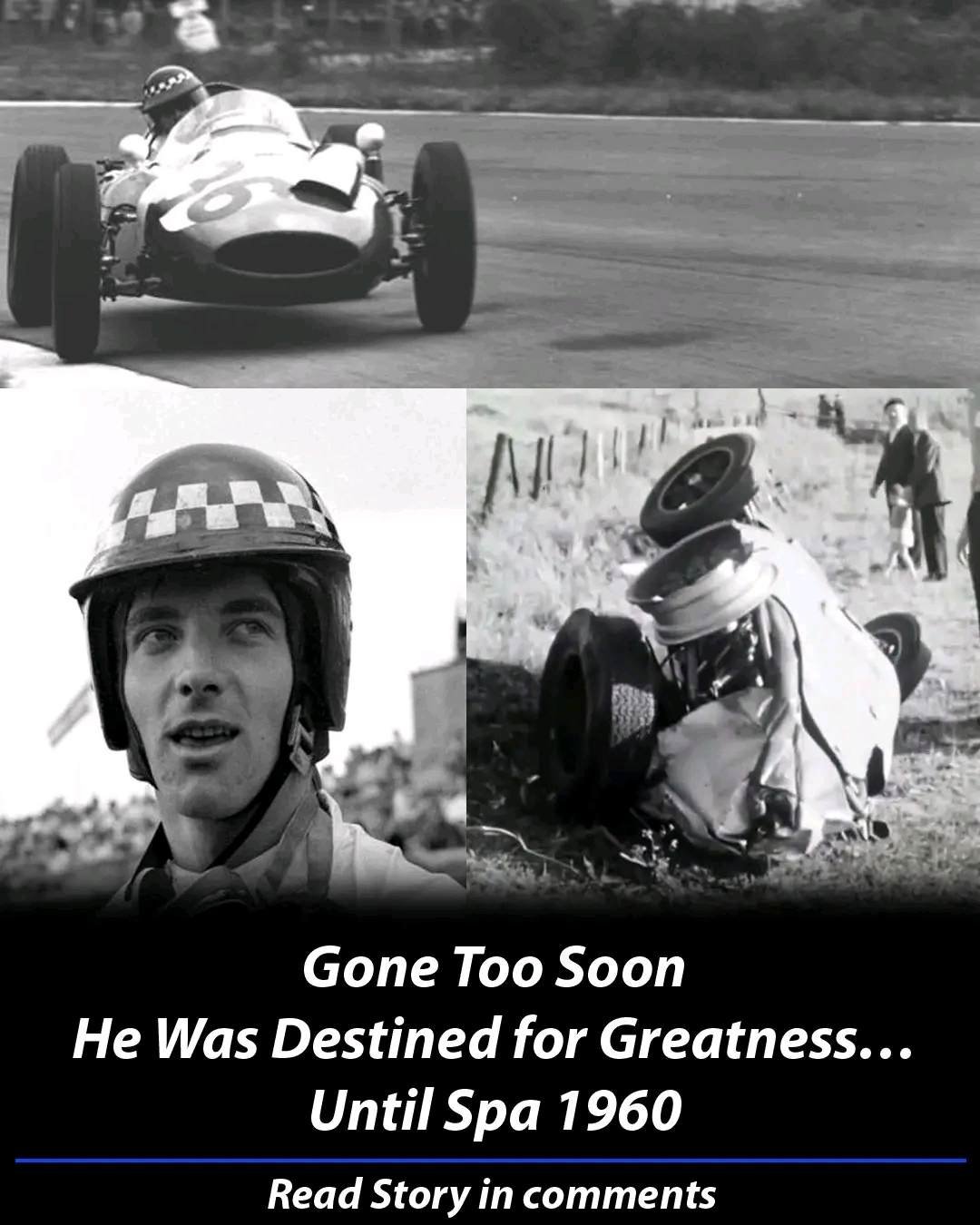
At just 22 years old, Chris Bristow had already started to build a reputation that seasoned drivers couldn’t ignore. Competing against some of the most respected figures in the sport—names like Jack Brabham, Graham Hill, and Bruce McLaren—he showed flashes of brilliance that suggested he wasn’t just participating, but learning, adapting, and steadily closing the gap. For many, it wasn’t a question of if he would become a champion, but when.
There was something captivating about his rise. It wasn’t loud or overly dramatic, but it was undeniable. Each race added another layer to the growing belief that this young British driver had something special. Observers spoke about his natural feel for the car, his calmness under pressure, and his ability to challenge more experienced competitors without hesitation. In an era filled with bold personalities, his talent quietly stood out.
Then came the race that would change everything.
The 1960 Belgian Grand Prix at Spa-Francorchamps was known for its speed and danger, a circuit where even the smallest mistake could have devastating consequences. It was a place that demanded absolute focus, yet offered little forgiveness. On that fateful day, what began as another opportunity to prove himself quickly turned into one of the darkest chapters in Formula 1 history.
Bristow’s accident was sudden and catastrophic, a reminder of just how unforgiving the sport could be at the time. In a matter of moments, a career filled with promise was cut short. The shock rippled through the paddock, leaving fellow drivers, teams, and fans struggling to process what had just happened. It wasn’t just the loss of a competitor—it was the loss of a future that many had already begun to imagine.
What makes the story even more difficult to revisit is the timing. At 22, Bristow was only beginning to scratch the surface of his potential. There were no limits yet defined, no ceilings established. Everything ahead of him was possibility—championships, rivalries, victories—all of it suddenly erased in an instant. It’s the kind of loss that forces the sport to reflect, even decades later.
Today, his name may not always appear in conversations about the greatest drivers, but among those who know the history, it carries a different kind of weight. It represents not just talent, but the cost of a sport that has since evolved in response to tragedies like his. Safety improvements, circuit redesigns, and technological advancements all owe something to the lessons learned during that era.
And so, the memory of Chris Bristow endures—not just as a young driver taken too soon, but as a symbol of both the beauty and the danger that once defined Formula 1.
About the Author