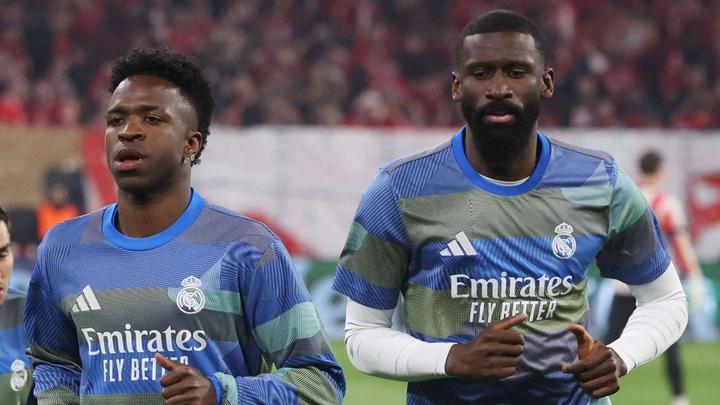
The spotlight once again fell on Vinícius Júnior as the Real Madrid winger found himself at the center of a storm of criticism following a heated performance that has divided opinions across Europe. Known for his electrifying pace and flair, the Brazilian star is no stranger to attention, but this time, the scrutiny has taken on a sharper, more personal edge.
 The harshest words came from legendary German manager Felix Magath, who did not hold back in his assessment. Speaking candidly, Magath reportedly exclaimed that the young forward had “lost his mind,” questioning not just his decision-making on the pitch but also his overall attitude during high-pressure moments. For a figure as experienced and decorated as Magath, such comments carry significant weight in the footballing world.
Vinícius has built his reputation on dazzling defenders and delivering in crucial moments, playing a key role in Real Madrid’s recent successes. However, critics argue that his emotional reactions and confrontational style sometimes overshadow his brilliance. In the match that sparked the controversy, his visible frustration, disputes with officials, and clashes with opponents seemed to dominate the narrative more than his footballing contributions.
Magath’s critique extended beyond mere performance analysis. He suggested that Vinícius needs to develop greater mental discipline if he is to truly reach the level of the game’s all-time greats. According to the German tactician, talent alone is not enough at the highest level, and maintaining composure under pressure is what separates elite players from legends.
The criticism did not stop with Vinícius. Antonio Rüdiger, his teammate at Real Madrid, also found himself in the firing line. Known for his aggressive defensive style and commanding presence, Rüdiger was accused of contributing to the chaos with overly physical play and questionable decisions that put his team under unnecessary pressure.
Magath’s comments about Rüdiger highlighted concerns over discipline and consistency. While acknowledging his defensive strengths, he pointed out that lapses in concentration and rash challenges can prove costly in crucial fixtures. For a club with the standards of Real Madrid, such mistakes are often magnified and heavily scrutinized.
The reaction from fans and pundits has been mixed. Some have defended Vinícius, arguing that his passion and intensity are integral to his game and should not be stifled. Others, however, agree with Magath’s assessment, suggesting that the winger must learn to channel his emotions more constructively to avoid hurting his team.
Similarly, Rüdiger’s supporters have praised his commitment and warrior-like mentality, insisting that his aggressive approach is part of what makes him effective. Yet, critics remain adamant that a balance must be struck between intensity and control, especially in high-stakes encounters.
Inside the Real Madrid camp, the situation presents a delicate challenge. The club has long prided itself on nurturing world-class talent while demanding professionalism and discipline. Managing strong personalities like Vinícius and Rüdiger requires careful handling to ensure that criticism becomes a catalyst for growth rather than a source of division.
As the season progresses, all eyes will be on how both players respond. For Vinícius Júnior, this moment could serve as a turning point—a chance to refine his mental approach and silence his critics with performances that speak louder than words. For Antonio Rüdiger, it is an opportunity to reaffirm his reliability and leadership at the heart of the defense.
Ultimately, football thrives on passion, but it also demands control. The balance between the two often defines careers. Whether Magath’s explosive remarks prove to be a harsh overreaction or a necessary wake-up call remains to be seen, but one thing is certain: the conversation around Real Madrid’s stars is far from over.
About the Author