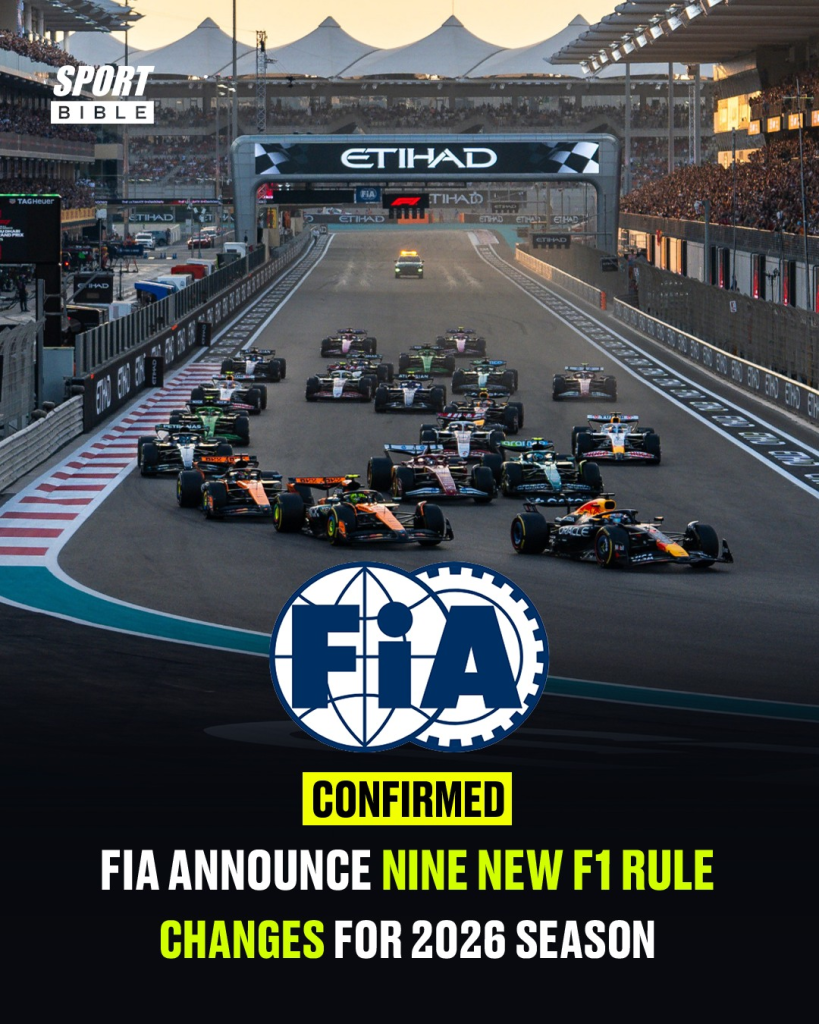
Formula 1 is preparing for sweeping regulatory adjustments as the FIA introduces nine new rules set to reshape the 2026 season, with sprint races among the most affected. The announcement comes shortly after Lando Norris secured his first world championship, shifting the sport’s attention toward next year’s evolving landscape.
Teams recently completed post-season testing in Abu Dhabi, aiding Pirelli’s tyre development and previewing the technical transformation ahead. The grid will also expand, with Cadillac joining as the 11th team—bringing back seasoned drivers Sergio Perez and Valtteri Bottas—while Audi officially takes control of Sauber, retaining Nico Hulkenberg and Gabriel Bortoleto.
Engineers now face the challenge of adapting to the most significant technical overhaul in years. The 2026 cars will be lighter, more responsive, and designed to promote closer racing. Aerodynamics have been redefined, DRS is being phased out, and power units will shift toward more advanced hybrid systems, marking a major shift in performance philosophy.
Sporting regulations will see changes as well, particularly in sprint weekends. From next season, teams will no longer gain extra dry tyres even if sprint qualifying is declared wet—a move intended to streamline tyre usage rules. Other updates include increased personnel limits, simplified race suspension procedures, and flexible practice time adjustments during sprint events.
Additional technical refinements cover deflection test clarifications, tyre-testing specifications, and energy management improvements within power unit regulations. With these updates approved, F1 enters a new era designed to enhance competition, modernize technology, and elevate the spectacle on track.
About the Author