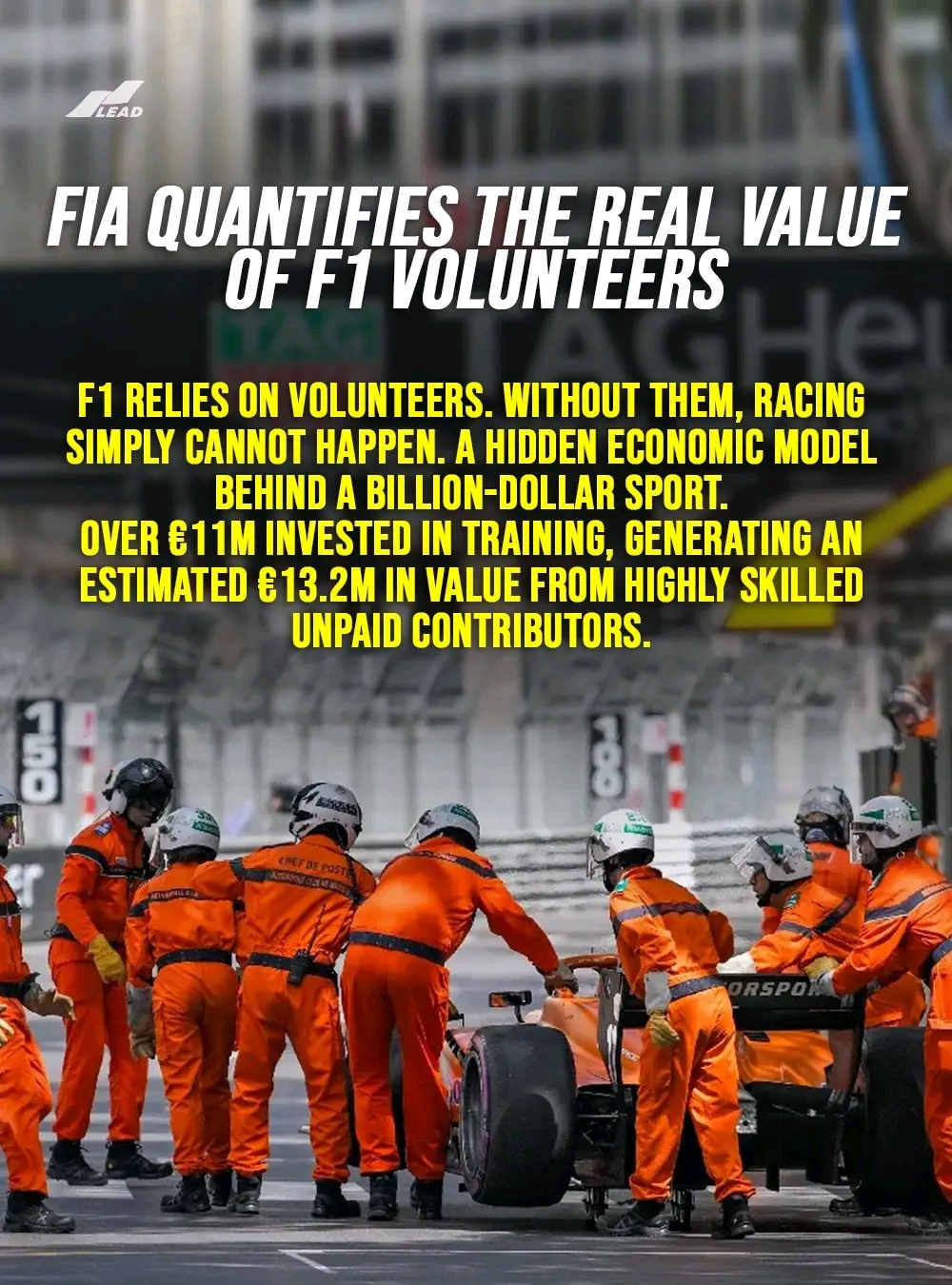
SHOCKING: FIA Exposes the Hidden Truth Behind Formula 1—The Billion-Dollar Sport That Secretly Runs on Unpaid Heroes
The glamorous world of Formula 1 has always been associated with speed, luxury, and cutting-edge technology, but a recent revelation has pulled back the curtain on a side of the sport that many fans rarely consider. Behind the roaring engines, multimillion-dollar sponsorships, and global spectacle lies a workforce that is often overlooked—volunteers who play a crucial role in keeping the entire operation running. According to insights shared by the FIA, these individuals are not just supporting the sport; they are fundamentally sustaining it in ways that challenge common perceptions of how Formula 1 operates.
At first glance, Formula 1 appears to be a finely tuned machine powered by elite teams and massive financial backing. However, the reality is far more complex. Volunteers are deeply embedded in the fabric of race weekends, handling responsibilities that range from trackside safety to logistical coordination. Without their presence, races would struggle to function smoothly, if at all. This has sparked an important conversation about the hidden economic structure of the sport—one where highly skilled individuals contribute their time and expertise without traditional financial compensation, yet generate immense value.
What has truly caught attention is the scale of that value. Reports indicate that millions are invested in training these volunteers, equipping them with the knowledge and skills required to operate in high-pressure environments. In return, the contribution they provide is estimated to exceed those investments, creating a system where their impact is both significant and measurable. This dynamic has raised questions about how such a model fits within a sport that is otherwise defined by its financial power and global influence.
The human side of this story is perhaps the most compelling. These volunteers are not simply participants—they are passionate individuals driven by a love for motorsport. Their dedication allows them to work in challenging conditions, often putting themselves in demanding situations to ensure the safety and success of each event. While their efforts may not always be visible to the average viewer, they are an essential part of what makes Formula 1 possible. This revelation has prompted fans to reconsider the true cost of the spectacle they enjoy.
As discussions continue, the spotlight now turns to the broader implications of this system. Should the role of volunteers be re-evaluated in a sport of such scale? Or is this model a testament to the unique community that surrounds Formula 1? Regardless of where opinions land, one thing is clear—the narrative of Formula 1 is far more layered than it appears. Beneath the surface of speed and prestige lies a network of individuals whose contributions are invaluable, reminding us that even the most advanced sports still rely on human passion at their core.
About the Author