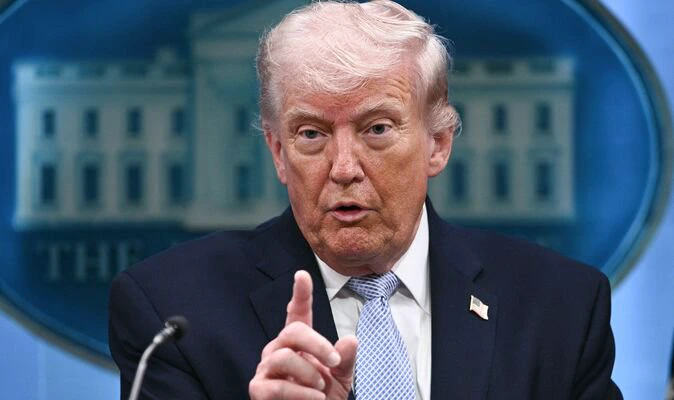
When Donald Trump stepped forward to declare a “total and complete victory” following a ceasefire agreement with Iran, the statement was meant to signal strength, closure, and a decisive end to weeks of escalating conflict.
Instead, it has triggered a wave of skepticism—from military analysts to political allies—because one major issue remains unresolved: the war may have ended, but Iran’s power has not.
A Victory Built on a Fragile Ceasefire
The foundation of Trump’s claim is a two-week ceasefire brokered after an intense military campaign. The U.S. administration points to extensive damage inflicted on Iran’s military infrastructure, including strikes on missile systems, naval assets, and parts of its nuclear program.
Trump himself insisted the United States had achieved all its objectives, calling the outcome “100 percent” successful.
But a ceasefire is not a peace deal. It is, at best, a pause—and in this case, a highly uncertain one.
The Huge Problem: Iran Still Holds Key Leverage
Despite the damage, Iran retains significant strategic advantages that directly challenge the idea of a “complete victory.”
Most notably, Tehran still exerts control over the Strait of Hormuz—one of the most critical chokepoints in global trade. Around a quarter of the world’s seaborne oil passes through this narrow waterway, and even after the ceasefire, access remains restricted.
Hundreds of ships have been left waiting, oil prices have surged, and Iran has reportedly imposed conditions—and even fees—for safe passage.
In simple terms, Iran may have been weakened militarily, but it now holds greater economic and geopolitical leverage than before.
Nuclear Questions Still Unanswered
Another major flaw in the “victory” narrative is the unresolved issue of Iran’s nuclear program.
While Trump has claimed Iran’s enriched uranium will be “taken care of,” no clear plan or mechanism has been publicly outlined.
Experts warn that Iran still possesses highly enriched uranium and the capability to continue its nuclear ambitions.
Without concrete disarmament or verification, the core objective of preventing a nuclear-armed Iran remains uncertain.
A War That Didn’t Change the Regime
Historically, wars framed as total victories often involve decisive political change. That hasn’t happened here.
Iran’s governing structure remains intact, and its leadership continues to operate with authority.
For critics, this raises a fundamental question: if the regime is still in place, its strategic assets still active, and its influence arguably expanded in key areas, what exactly was “won”?
Rising Doubts at Home and Abroad
Even within Trump’s political base, the ceasefire has exposed divisions. Some supporters view it as a smart tactical pause, while others argue it allows Iran time to regroup.
Internationally, allies have welcomed the de-escalation—but remain cautious, aware that the underlying tensions have not been resolved.
Conclusion: Victory or Illusion?
Trump’s declaration of a “total and complete victory” reflects a focus on battlefield success. But modern conflicts are rarely decided by military strikes alone.
As long as Iran retains control over strategic routes, maintains elements of its nuclear program, and emerges from the conflict with its leadership intact, the claim of total victory faces a difficult test.
The war may have paused—but the real outcome is still unfolding.
About the Author