🚨 BREAKING NEWS: FIA Calls Emergency Meeting Over “Fatal Flaw” in 2026 Regulations
The FIA has officially called an emergency meeting after the 2026 regulations were accused of containing a “fatal flaw” that threatens driver safety. The announcement came less than 24 hours after a violent incident in Shanghai forced the sport to confront questions it hoped the new rules had already answered.
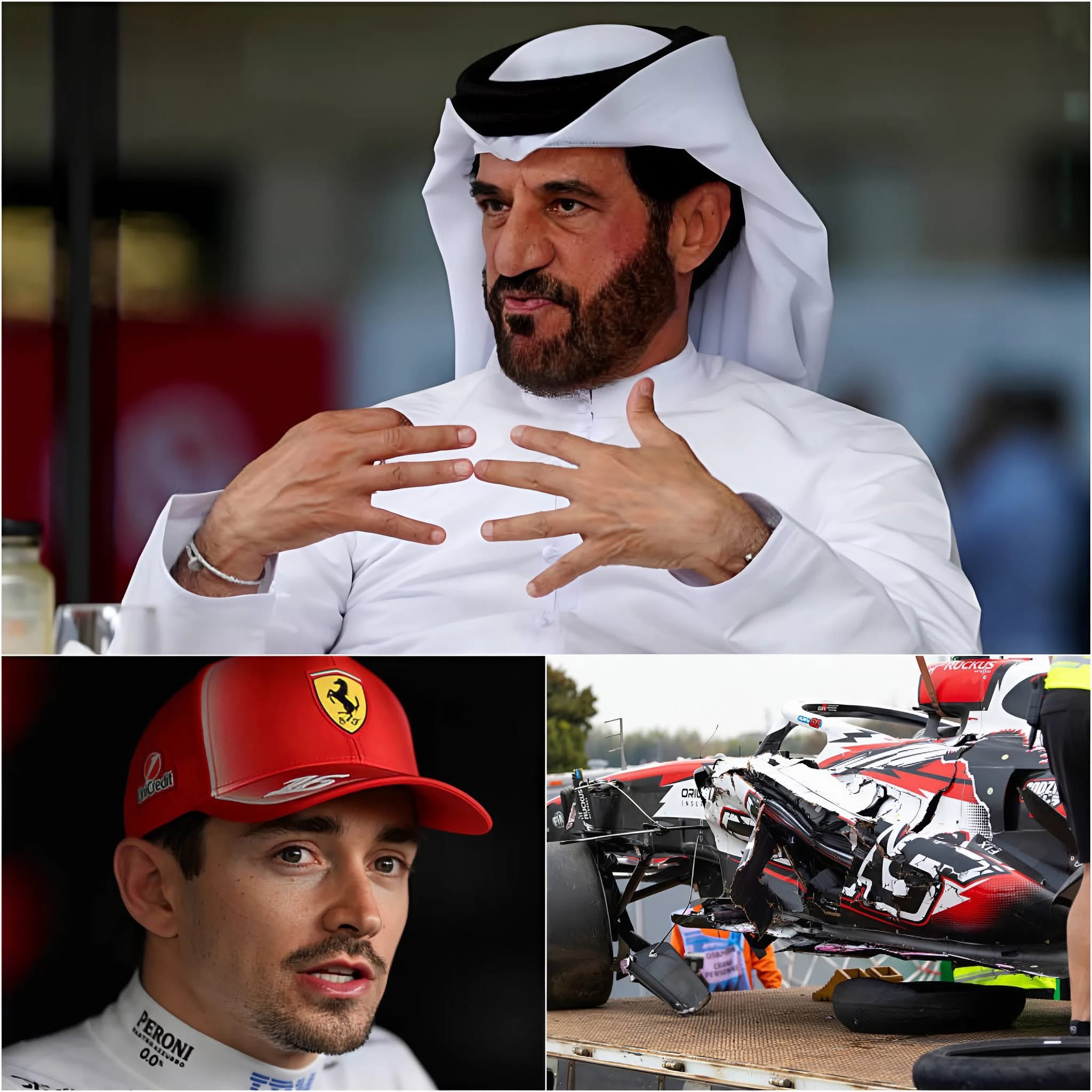
The controversy centers on a collision between Oliver Bearman and Franco Colapinto during lap 34 of the Chinese Grand Prix. Colapinto’s car suffered a sudden energy deployment cut on the back straight, creating a closing-speed delta of over 80 km/h. Bearman, with full ERS available, had no time to react before contact sent both drivers into the barriers at Turn 14.
Initial data pointed to the battery’s state-of-charge management as the direct cause. The 2026 power units rely heavily on complex software to govern when and how electrical energy is released. In Colapinto’s case, the system entered a protective “regen-priority” mode after detecting a thermal spike, instantly slashing power without driver input.
The footage spread quickly. Marshals were seen sprinting as debris covered the track, and the race was red-flagged for 38 minutes. Both drivers walked away, but Bearman was taken to the medical center for precautionary scans on his wrist. The FIA’s own race report labeled the speed differential “unmanageable in a racing scenario.”
Not stopping there, Charles Leclerc openly criticized the energy control system following the incident. Speaking to media in the Shanghai paddock, he claimed the computer was “stealing control” from the drivers. He argued that when the car decides to cut 200 horsepower mid-corner, it stops being a racing machine and becomes a liability.
Leclerc’s comments echoed concerns raised privately since pre-season testing. Several drivers have complained that the 2026 energy strategy software is too aggressive in protecting battery health, often overriding throttle commands at critical moments. Team radio from China captured Colapinto shouting “I had no power” seconds before impact.
The drivers’ association met within hours of the chequered flag. The meeting was described as unanimous and urgent. A joint statement called for immediate intervention, stating that no technical objective can outweigh the basic requirement that a driver must be able to predict his own car’s behavior.
In response to the situation, the FIA has presented 6 emergency solutions to address the issue. President Mohamed Ben Sulayem said the governing body would not wait for the next World Motor Sport Council and had invoked special safety powers to fast-track changes before Miami.
The six proposals include a mandatory minimum power floor during wheel-to-wheel racing, a ban on mid-corner energy cuts above 250 km/h, and a revised battery temperature threshold that prioritizes drivability over component life. A fourth measure would force real-time power data to be visible to all following cars on the FIA dashboard.
The final two solutions target governance. One creates a driver veto panel for any software change affecting power delivery. The other introduces independent auditing of each team’s energy strategy code before every race weekend. All six will be voted on by teams within 72 hours.
Team reaction has been mixed. Power unit manufacturers warn that restricting software controls could lead to battery failures and fires. Others argue that reliability cannot come at the expense of predictability. Mercedes’ technical director called the proposals “a necessary reset” while a rival engineer warned of “unintended consequences at high altitude tracks.”
Pirelli has also been drawn in. The tire supplier confirmed it is reviewing whether the sudden torque loss contributed to the accident by unloading the rear tires under braking. A joint FIA-Pirelli working group will run sim tests this week using Shanghai telemetry.
With Miami only two weeks away, the clock is ticking. The paddock wants action, fans want reassurance, and drivers want control of their cars back. The 2026 regulations were supposed to showcase innovation. After China, they are now fighting to prove they are safe.
Whatever the outcome of the emergency meeting, the sport has been reminded of a hard truth. Technology can push boundaries, but if a driver cannot trust the pedal under his right foot, then the rulebook needs rewriting, not defending.
About the Author