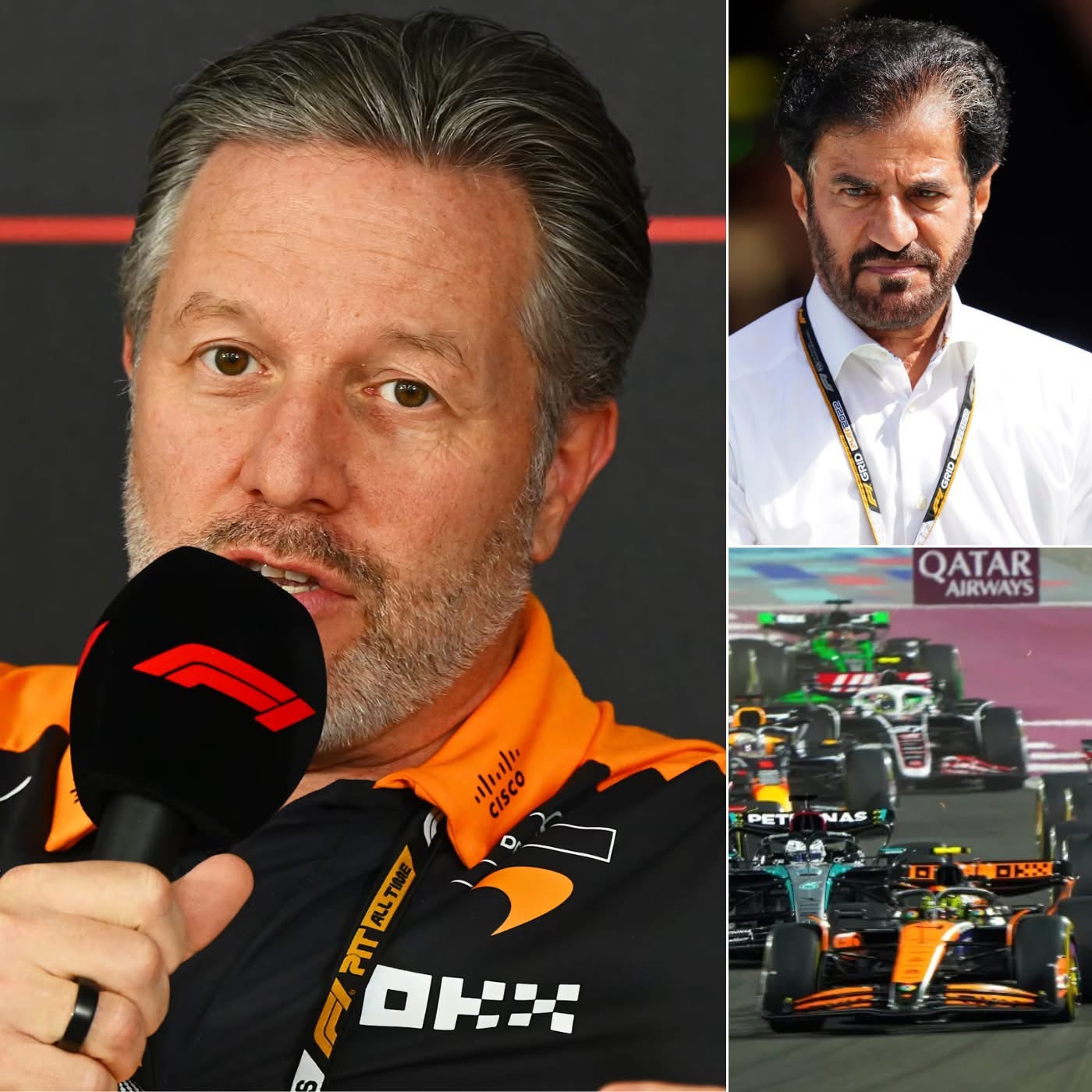
LONDON — The Formula 1 world is in a state of absolute turmoil following a staggering public outburst from McLaren CEO Zak Brown, who slammed the impending 2026 technical regulations as a “complete loss of identity” that makes the pinnacle of motorsport “no different from Formula E.”
Speaking to media ahead of the upcoming Grand Prix, Brown expressed deep concerns regarding the 50/50 split between internal combustion and electric power for 2026, arguing that the heavy reliance on battery deployment and active aerodynamics destroys the “DNA of Formula 1.”
Brown’s comments immediately went viral, sparking a global uproar among fans, many of whom have expressed fears that the new cars will be significantly slower and overly reliant on “gimmick” overtaking methods rather than pure driving skill.
The McLaren boss, usually a strong proponent of commercial growth, highlighted that the new engine and aerodynamic rules could lead to “yoyo racing,” a term used to describe cars that are forced to lift-and-coast to manage energy, similar to Formula E, rather than flat-out racing.
In an unprecedented move that has shocked the paddock, the FIA president, Mohammed Ben Sulayem, convened an emergency meeting within five minutes of Brown’s statement, bypassing typical regulatory wait times to act against the American team boss.
The FIA immediately slapped Zak Brown with a $100,000 fine for “causing unnecessary controversy, disruption, and bringing the sport into disrepute ahead of a race weekend,” fueling accusations that the federation is attempting to silence criticism of the 2026 regulations.
This rapid sanction has ignited a massive debate on freedom of speech within the sport, with fans and pundits questioning whether the FIA is becoming too authoritarian in its handling of the “Formula E” comparisons.
While Brown has been fined, his comments appear to reflect a growing unease among team principles regarding the 2026 regulations, which are designed to create more sustainable racing but have been criticised for excessive complexity.
The incident highlights a widening divide between teams concerned about the spectacle of 2026 and the governing body, which has strongly defended the new regulations as necessary for the future of the sport, citing the need for road relevance and new manufacturers.
Zak Brown’s criticism did not stop at the regulations; he furthered his assault by suggesting that the 2026 rules might require the FIA to make “quick, easy adjustments” if the cars prove to be a “bad show,” hinting at a chaotic development process.
Sources within the paddock suggest that Mercedes and Ferrari have adapted to the new regulations faster than others, creating fears among smaller teams that the 2026 season could begin with a highly unbalanced grid, further degrading the show.
As the F1 community waits for the next development, the pressure on the FIA to prove the 2026 rules will deliver “thrilling” racing has reached a boiling point, with the “media storm” forcing top management to hold their breath for every update.
About the Author