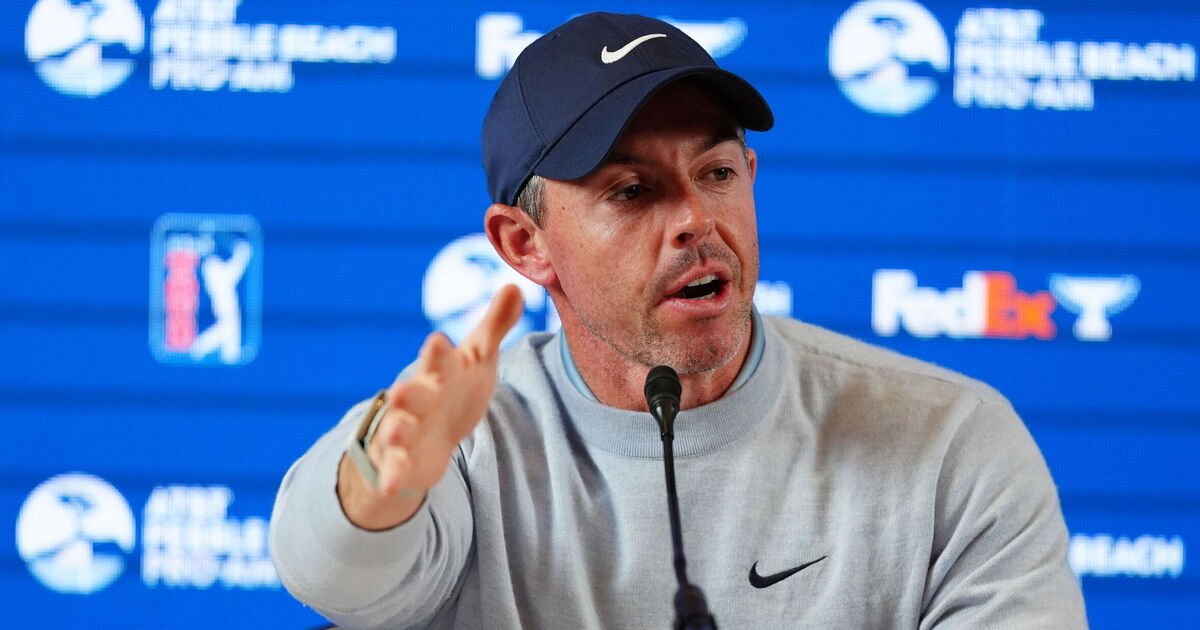
The spotlight at this year’s The Masters extended far beyond the leaderboard, as conversations surrounding sportsmanship, composure, and leadership took center stage. Among those adding their voice to the discussion was golf analyst Brandel Chamblee, who offered pointed commentary on how Rory McIlroy conducted himself as the reigning champion. With McIlroy entering the tournament carrying both prestige and pressure, every gesture and reaction was closely scrutinized.
 Chamblee, known for his candid and often uncompromising opinions, focused on what he perceived as subtle shifts in McIlroy’s demeanor throughout the tournament. While McIlroy has long been admired for his charisma and openness, Chamblee suggested that the Northern Irishman appeared more guarded this time around. According to him, the responsibilities of being Masters champion may have influenced McIlroy’s approach both on and off the course.
At the heart of the discussion was the expectation that comes with wearing the green jacket. Champions at Augusta National are not only measured by their performance but also by how they embody the traditions of the sport. Chamblee emphasized that past winners have often set a standard of calm authority, citing how legends have balanced competitiveness with grace under pressure.
McIlroy’s week at Augusta was far from straightforward. Battling strong competition and fluctuating form, he faced moments that tested his composure. While he delivered flashes of brilliance, there were also instances where frustration seemed visible. Chamblee pointed to these moments as evidence that the emotional weight of defending a title can sometimes challenge even the most seasoned players.
However, the critique was not entirely negative. Chamblee acknowledged McIlroy’s continued influence on the game and his ability to draw global attention to golf. He noted that few players possess the combination of talent and star power that McIlroy brings, making his behavior all the more impactful. In many ways, McIlroy’s actions set a tone for both fans and fellow competitors.
The conversation also sparked debate among fans and analysts. Some defended McIlroy, arguing that passion and visible emotion are part of what makes him relatable. They suggested that expecting perfection in conduct overlooks the human side of elite competition. Others sided with Chamblee, agreeing that champions carry an added responsibility to uphold the sport’s traditions.
For McIlroy, the scrutiny is nothing new. Throughout his career, he has navigated the pressures of being one of golf’s most prominent figures. From major victories to near misses, his journey has been defined by resilience and constant evolution. This latest քնն discussion is simply another chapter in a career that continues to captivate audiences worldwide.
As the tournament concluded, attention shifted from immediate results to broader reflections on leadership in golf. Chamblee’s remarks reignited questions about what it truly means to represent the sport at its highest level. Is it purely about performance, or does conduct carry equal weight? The answer, as always, remains subjective.
Ultimately, McIlroy’s legacy will not be determined by a single tournament or critique. Yet moments like these contribute to the ongoing narrative that shapes how champions are remembered. Whether viewed as constructive criticism or undue scrutiny, Chamblee’s comments have ensured that the conversation around McIlroy’s role as Masters champion will continue well beyond Augusta’s fairways.
About the Author