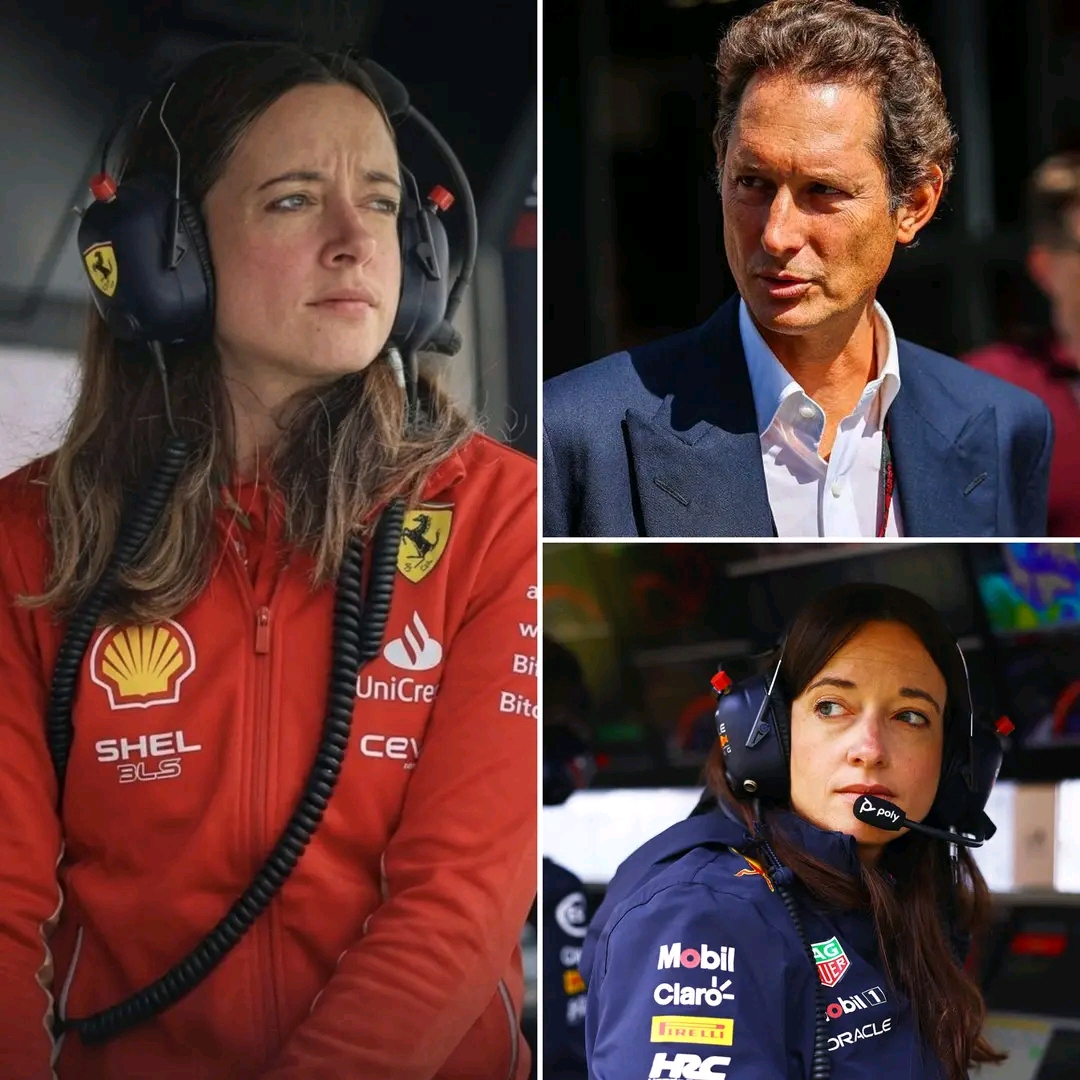
Ferrari “unprecedented offer that lure Hannah Schmitz away from Red Bull
In Formula 1, the biggest stories don’t always begin on the track. They start quietly—behind closed doors, in meeting rooms where decisions are made that can reshape the sport long before a single car lines up on the grid. These moments rarely come with immediate clarity. Instead, they arrive as whispers, hints of something shifting beneath the surface.
Because in a world as competitive as Formula 1, dominance isn’t just about drivers or cars. It’s about the minds behind the scenes—the strategists, the engineers, the decision-makers who turn potential into results. Teams spend years building these foundations, carefully protecting the people who give them an edge. And when one of those key figures becomes the center of attention, it’s never just another transfer story.
Lately, there’s been a growing sense that something significant is unfolding. Not loud, not fully visible—but enough to make insiders pause. A shift that doesn’t announce itself immediately, yet carries the kind of weight that could ripple across the paddock. The kind of move that makes rival teams watch closely, even if they don’t say it out loud.
That’s where the name Hannah Schmitz enters the conversation.
For years, Schmitz has been a crucial part of Red Bull Racing’s strategic brilliance—helping orchestrate race-day decisions that have defined championships. Her ability to read races, anticipate variables, and execute under pressure has made her one of the most respected figures in the sport. And when someone with that level of influence becomes a target, it’s never accidental.
Now, the story takes a sharper turn.
According to statements from John Elkann, Scuderia Ferrari didn’t just show interest—they made what he described as an “unprecedented” offer. Not the kind of proposal that fits within normal expectations. Something bigger. Something designed not only to attract, but to make a statement.
And that’s where the real tension begins.
Because this wasn’t just about money or position. It was about intent. The way the approach was made, the timing behind it, and the reaction it triggered behind the scenes have all raised eyebrows across the paddock. Teams aren’t just asking whether Ferrari can secure the deal—they’re asking what it means if they do.
By the time you reach this point, the picture becomes clearer.
This potential move isn’t just about adding talent—it’s about shifting balance. If Ferrari successfully brings Schmitz into their structure, they’re not only strengthening their own strategy department; they’re weakening one of their biggest rivals at the same time. It’s a double impact, the kind that can quietly alter how races are won and lost.
And with the 2027 season on the horizon, that timing feels anything but random.
Regulation changes, evolving team dynamics, and the constant race for innovation mean that every advantage matters. A strategist of Schmitz’s caliber doesn’t just influence individual races—she influences championships. Her decisions can define outcomes before the cars even hit the track.
Which leads to the question no one can ignore.
Is this simply a bold signing attempt… or the first move in a much larger plan?
Because if this deal goes through, it won’t just be remembered as a transfer. It will be seen as a turning point—a moment when Ferrari decided not just to compete, but to take something vital from the very team they’re trying to beat.
And in Formula 1, those are the moves that change everything.
About the Author