Redbull and Ferrari Already Be Shifting the Balance of Power Before Anyone Even Realizes What’s Coming Next
There’s a certain kind of silence in Formula 1 that feels louder than any press conference. It’s the kind that settles in when teams stop talking, when updates aren’t hyped, and when the usual stream of bold promises suddenly dries up. For those paying close attention, that silence often signals something far more significant brewing beneath the surface.
Because in this sport, progress doesn’t always arrive with fireworks. Sometimes, it creeps in quietly—hidden within test sessions, disguised as routine laps, or buried in data sheets that never make headlines. And when two of the most dominant forces on the grid begin moving in that same quiet rhythm, it raises a different kind of question: what exactly are they working on?
Over the past few weeks, there has been a growing sense that something subtle yet important has been unfolding. No dramatic announcements. No viral reveals. Just whispers tied to familiar locations—places that have historically played host to defining moments in Formula 1’s relentless evolution. Places where teams don’t just test cars… they test ideas.
That’s where the puzzle begins to take shape.
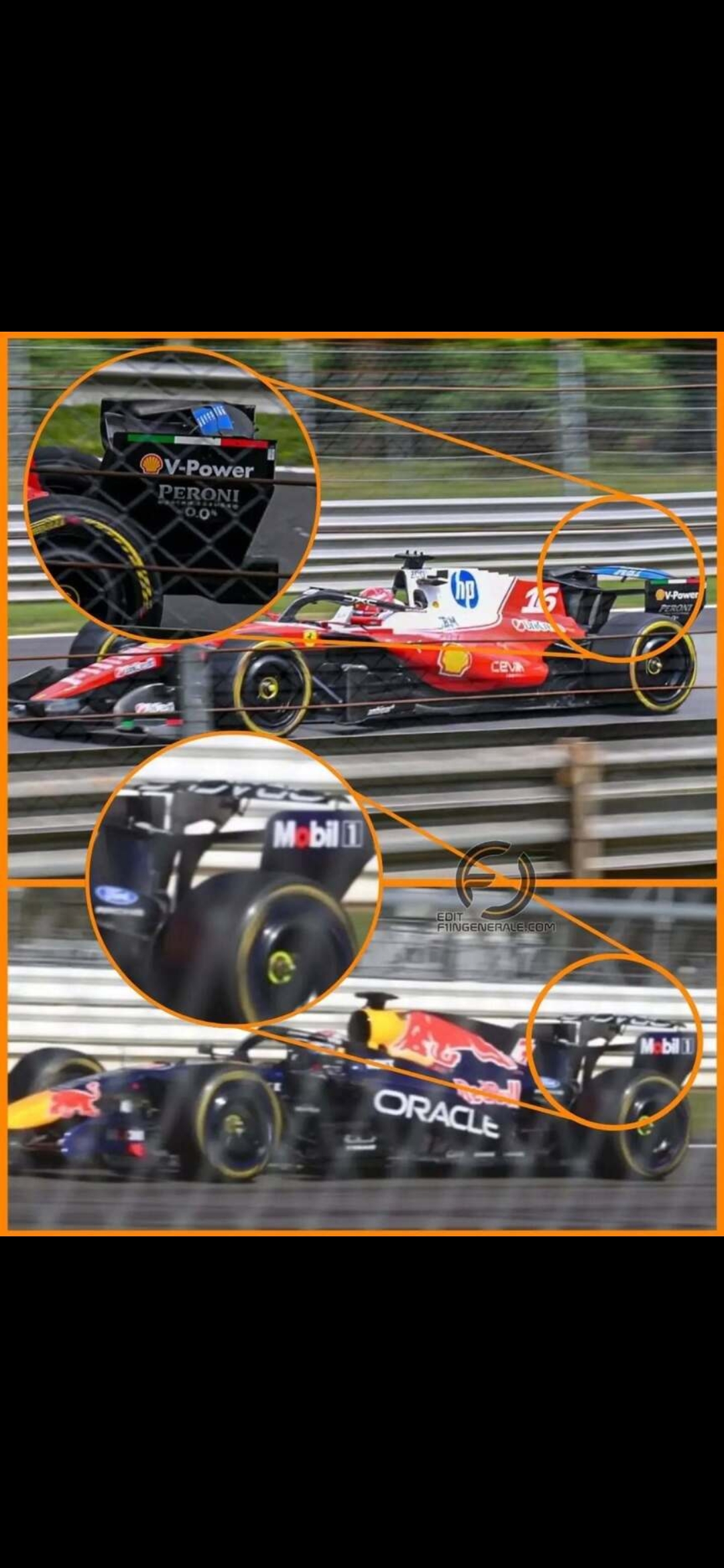
At iconic circuits like Autodromo Nazionale Monza and Silverstone Circuit, both Scuderia Ferrari and Red Bull Racing have reportedly been using track time not just for routine validation, but as an opportunity to quietly refine and push forward key upgrades. Not headline-grabbing changes, but targeted developments—small adjustments that, in Formula 1 terms, can translate into massive gains.
And here’s where it becomes clear.
This wasn’t coincidence. It wasn’t just about gathering data or ticking off testing requirements. Both teams appear to have recognized a narrow window—an opportunity within the regulations, the calendar, or even performance trends—and chose to exploit it with precision. While others focused on immediate race results, Ferrari and Red Bull were laying groundwork for something more calculated.
The upgrades tested weren’t random experiments either. Early indications suggest these were performance-driven refinements aimed at improving consistency, efficiency, and outright pace. The kind of changes that don’t always show instantly on a timing sheet but gradually shift the competitive landscape over several races. And by choosing Monza and Silverstone—two circuits that challenge very different aspects of a car—they ensured these developments were tested under contrasting conditions.
That dual-track approach is what makes this particularly intriguing. Monza, with its emphasis on straight-line speed and low drag, exposes one set of strengths and weaknesses. Silverstone, fast and flowing, demands aerodynamic stability and balance. For both Ferrari and Red Bull to run upgrades across these environments suggests a level of confidence—not just in isolated gains, but in a broader evolution of their cars.
And that’s the real story.
This isn’t just about two teams making progress. It’s about two front-runners potentially redefining the pace of the field at the same time. When rivals develop in parallel, the gap to everyone else doesn’t just stay the same—it can widen dramatically. And if these upgrades deliver as expected, the rest of the grid may find itself reacting rather than competing.
There’s also a strategic layer to consider. By keeping these developments relatively low-profile, both teams avoid unnecessary pressure and scrutiny. They gather real-world data, refine their packages, and only reveal their true performance when it matters most—on race weekends where points, not headlines, are at stake.
For fans and analysts, this creates a fascinating moment of uncertainty. On the surface, nothing dramatic has changed. But underneath, the foundations may already be shifting. The next race weekend could look familiar… or it could suddenly reveal a gap that wasn’t there before.
And that’s the suspense that now surrounds the grid.
Because when teams like Ferrari and Red Bull move quietly, it’s rarely without purpose. And when they both move at the same time, history suggests one thing: whatever they’ve been working on is not just an upgrade—it’s a statement.
The question now isn’t whether these changes will matter. It’s how soon everyone else will realize just how much they already do.
About the Author