David Purley’s heroic act at the 1973 Dutch Grand Prix still defines true greatness in Formula 1
In motorsport, greatness is usually measured in victories, championships, and moments of brilliance under pressure. Fans remember the fastest laps, the daring overtakes, and the drivers who stood tallest on the podium. But every now and then, the sport produces a moment that redefines what it truly means to be great—something that has nothing to do with winning at all.
There are stories in Formula 1 that feel almost unreal when revisited. Not because they are exaggerated, but because they reveal a level of humanity that contrasts sharply with the intensity of racing. These moments don’t come with trophies or celebrations. Instead, they linger quietly in the memory, reminding everyone that behind the helmets are individuals capable of extraordinary courage.
Back in 1973, during a race at Zandvoort Circuit, one such moment unfolded—one that would forever change how many view the concept of heroism in the sport. It wasn’t a title decider or a dramatic finish. It was something far more profound, unfolding in the middle of chaos and danger.
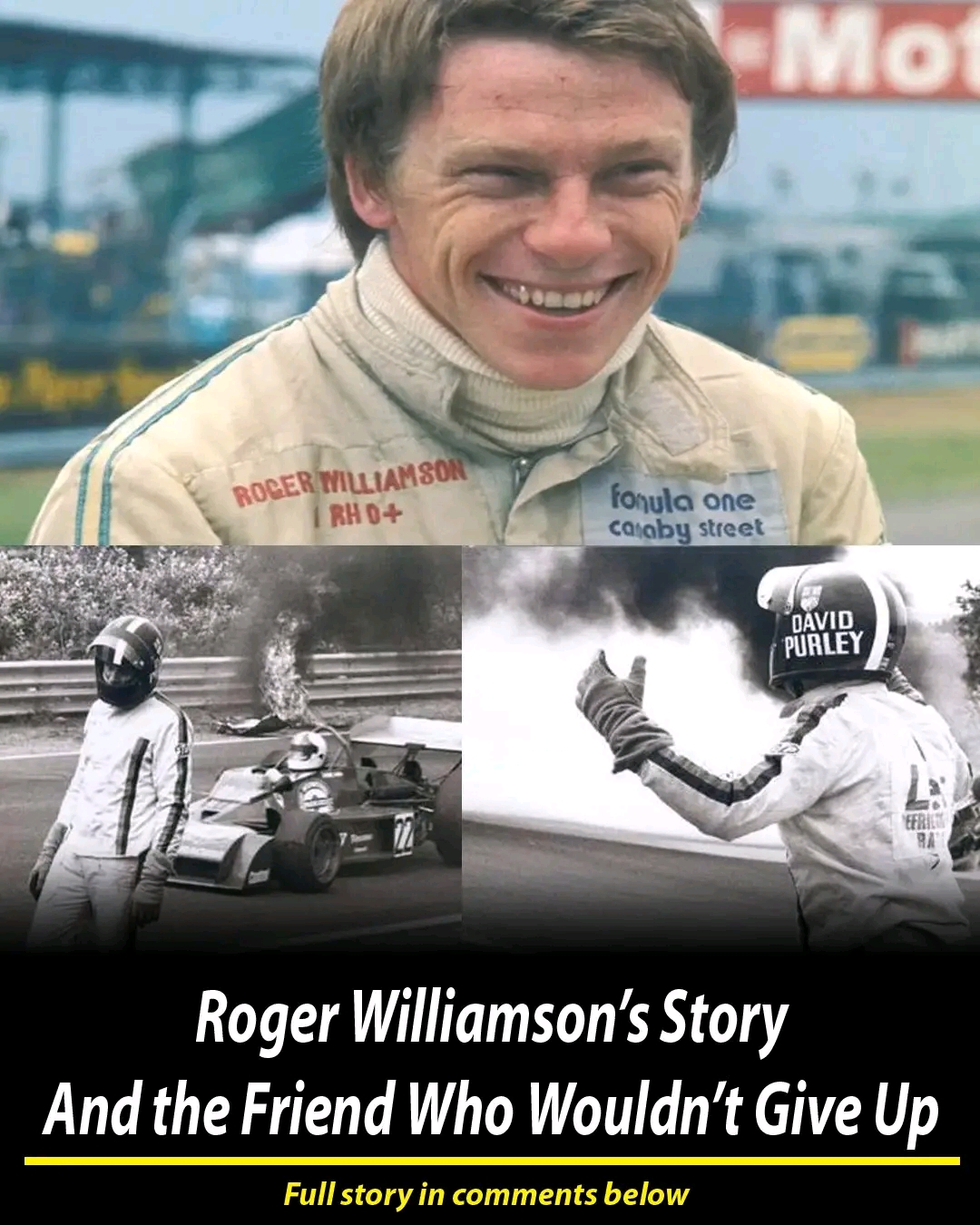
At the center of that moment was David Purley, a driver whose name may not dominate record books but whose actions that day echo louder than any statistic ever could. When fellow driver Roger Williamson suffered a catastrophic crash, the race continued—but Purley made a decision that would set him apart from everyone else on the track.
He stopped.
Not to retire. Not because of mechanical failure. But because he saw something that others either couldn’t or didn’t react to in time. While cars sped past and the race carried on, Purley pulled over, ran toward the wreckage, and tried—desperately—to save Williamson’s life. Alone, without proper equipment, and surrounded by danger, he pushed against flames and fear in a way few could imagine.
This is where the story shifts from racing to something much deeper.
Purley’s actions were not calculated. They weren’t part of a strategy or influenced by consequence. They came from instinct—from a refusal to look away when someone needed help. In a sport where every second matters, he chose to give up his race entirely for the chance to save another human being.
The tragedy is that despite his efforts, Williamson could not be rescued in time. But the outcome does not diminish what Purley did. If anything, it amplifies it. Because true courage is not defined by success—it is defined by the willingness to act when it matters most, regardless of the result.
Over the years, Formula 1 has evolved dramatically. Safety standards have improved, protocols have changed, and the sport has become far more equipped to handle emergencies. Yet, even with all those advancements, moments like Purley’s remain incredibly rare. Not because drivers lack bravery, but because what he did went beyond bravery—it was selfless, immediate, and deeply human.
And that’s why, decades later, his story continues to resonate.
In a world obsessed with titles and records, Purley’s legacy stands apart. He didn’t win that race. He didn’t become a world champion. But in that defining moment, he showed a level of character that transcends competition. It’s the kind of act that forces people to rethink what greatness really means.
So when people ask who the greatest Formula 1 driver of all time is, the answer isn’t always found in statistics.
Sometimes, it’s found in a single moment—when one man chose humanity over everything else, and in doing so, created a legacy that will never be forgotten.
About the Author