Formula 1’s growing debate over multi-team ownership has taken another intriguing turn, with Red Bull indicating it would support stronger regulations designed to ensure greater independence between teams. The comments come at a time when scrutiny surrounding relationships between affiliated outfits is increasing, particularly as the sport prepares for a new era under the 2026 regulations.
Red Bull’s structure has long been a unique feature of the Formula 1 grid. The company owns both Red Bull Racing and Racing Bulls, giving it a presence across two teams in the championship. While the arrangement has often been defended as fully compliant with FIA regulations, rival teams have increasingly questioned whether such structures provide advantages that independent organizations cannot access. As discussions around competitive fairness continue, Red Bull now appears willing to participate in any reforms deemed necessary by the sport.
RED BULL SIGNALS SUPPORT FOR STRONGER SAFEGUARDS
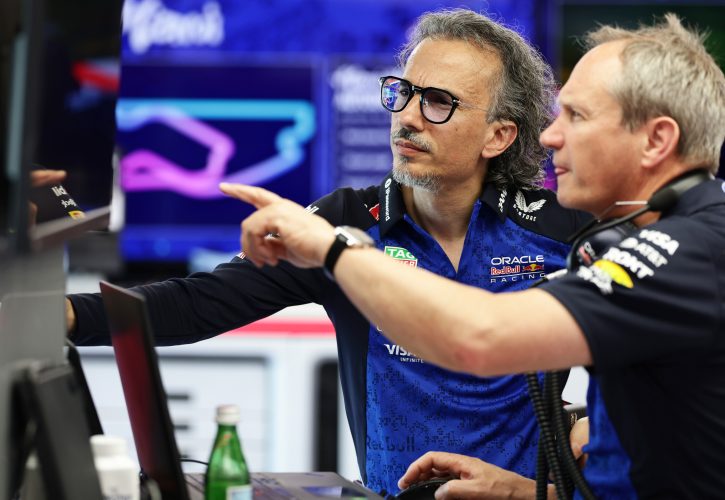
Speaking during the Canadian Grand Prix weekend, Racing Bulls Team Principal Laurent Mekies made it clear that Red Bull would not oppose further measures aimed at protecting competitive independence across Formula 1.
According to Mekies, the primary goal remains ensuring that all teams compete independently on track regardless of ownership arrangements. He pointed out that Formula 1 has already taken several steps in recent years to strengthen separation between organizations and suggested that Red Bull would support additional safeguards if stakeholders believe they are needed.
The significance of those comments should not be underestimated. Rather than resisting potential regulation changes, Red Bull is publicly positioning itself as a participant in the conversation, even if future reforms could impact aspects of its current operational model.
WHY THE DEBATE HAS GAINED MOMENTUM
The issue has become increasingly prominent following concerns raised by McLaren CEO Zak Brown regarding so-called “A/B team” relationships within Formula 1.
Critics argue that organizations with affiliated teams may benefit from operational flexibility, personnel movement, shared knowledge, and strategic alignment in ways that independent competitors cannot replicate. While current regulations contain restrictions designed to prevent direct collaboration on key performance areas, some rivals believe additional safeguards are necessary to eliminate any perceived advantages.
As Formula 1 grows financially and competitively, transparency has become a major focus. Teams investing hundreds of millions of dollars annually naturally want reassurance that every competitor is operating under a framework that guarantees equal opportunity.
The debate is no longer simply about legality. It is increasingly about perception, competitive trust, and maintaining confidence in the sport’s integrity.
MEKIES ARGUES THE ISSUE EXTENDS FAR BEYOND OWNERSHIP
While much of the criticism has focused on Red Bull’s ownership of two teams, Mekies believes the conversation is far more complex.
The Frenchman argued that Formula 1 already operates through a vast network of interconnected relationships. Power unit supply agreements, gearbox partnerships, suspension sharing arrangements, partial ownership structures, and commercial collaborations all create links between teams throughout the paddock.
His comments highlight an important reality. If Formula 1 decides to tighten independence regulations, governing bodies may need to examine the broader ecosystem rather than targeting one specific ownership model.
This creates a difficult challenge for regulators. Drawing a clear line between acceptable cooperation and excessive collaboration is far easier in theory than in practice.
FORMULA 1 ENTERS A NEW POLITICAL BATTLEGROUND
The timing of this debate is particularly noteworthy because it coincides with the arrival of the 2026 regulations.
Major rule changes often reshape competitive order, increase pressure on teams, and trigger political battles behind the scenes. Whenever performance gaps emerge, rival organizations naturally scrutinize every possible advantage enjoyed by competitors.
As Cadillac prepares to join the grid and Formula 1 expands toward an 11-team championship, questions surrounding competitive fairness are becoming more important than ever. Ensuring every team feels the playing field is level could prove critical to maintaining harmony within the sport.
The FIA and Formula One Management may therefore find themselves under increasing pressure to clarify how much cooperation should be permitted between organizations moving forward.
RED BULL REMAINS CONFIDENT IN CURRENT STRUCTURE
Despite supporting potential reforms, Mekies made it clear that Red Bull believes the existing framework already provides adequate independence.
The organization maintains that both Red Bull Racing and Racing Bulls compete independently on track and comply fully with current regulations. There has been no indication that Red Bull is considering selling Racing Bulls or fundamentally restructuring its Formula 1 operations.
Instead, the team’s position appears to be that if Formula 1 collectively decides stronger safeguards are necessary, it will participate constructively in those discussions.
That stance allows Red Bull to defend its current model while simultaneously presenting itself as cooperative rather than confrontational.
WHAT FUTURE RULE CHANGES COULD LOOK LIKE
If Formula 1 decides to act, several areas could come under review.
Regulators could introduce stricter controls on personnel movement between affiliated teams, impose additional restrictions on shared facilities, increase transparency requirements, or further tighten technical collaboration rules. Some proposals could also focus on governance structures to ensure strategic decisions remain completely independent.
However, implementing such measures will require careful balancing. Formula 1 teams already rely heavily on technical partnerships to remain financially sustainable. Overregulation could unintentionally increase costs and create new barriers for smaller organizations.
Finding the right balance between independence and practicality will likely become one of the sport’s most important governance challenges over the coming years.
WHAT THIS MEANS FOR THE FUTURE OF FORMULA 1
The growing conversation around team independence reflects Formula 1’s evolution into a more commercially sophisticated and globally scrutinized championship.
As investment increases and competition becomes tighter, stakeholders are paying closer attention to every aspect of the sporting framework. Questions that may have once been overlooked are now being examined through the lens of fairness, transparency, and long-term sustainability.
Red Bull’s willingness to engage in the discussion could help reduce tensions and encourage constructive negotiations. However, the issue is unlikely to disappear anytime soon.
With rival teams continuing to push for greater clarity and regulators under pressure to preserve competitive integrity, the debate over multi-team ownership could become one of the defining political stories of the 2026 season.
PREDICTION: TOUGHER RULES ARE LIKELY IN THE COMING YEARS
While immediate changes may not be introduced, the direction of travel appears increasingly clear.
Formula 1 is moving toward greater transparency and stricter governance standards, particularly as the championship expands and attracts new manufacturers. Incremental changes designed to reinforce team independence seem more likely than dramatic reforms, but adjustments are almost inevitable.
Red Bull’s willingness to support additional safeguards may ultimately help shape those future regulations. Whether those changes significantly alter the competitive landscape remains to be seen, but one thing is certain: the debate surrounding team independence is only just beginning.
About the Author