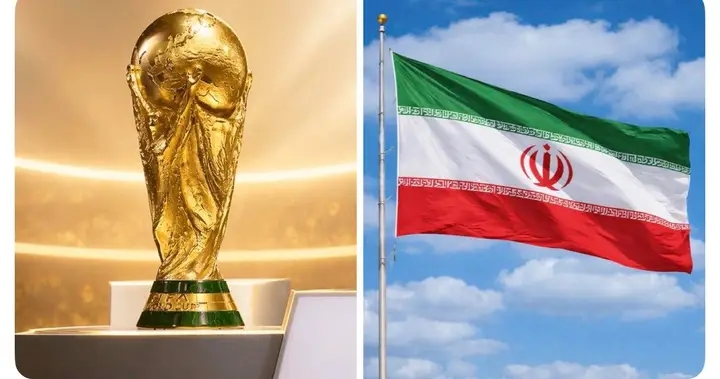
Tensions between Iran and the United States are once again spilling into the world of international sports after Iranian officials accused Washington of “abusing its role” as a FIFA World Cup host nation.
According to Iranian authorities, the United States issued heavily restricted visas to members of Iran’s national football team ahead of matches scheduled to take place on American soil. The controversy is already sparking debate among sports analysts, political observers, and football fans worldwide about whether geopolitics is beginning to overshadow the spirit of global competition.
Iranian officials argue that the visa limitations imposed on their national team violate the principles of fairness and neutrality expected from a World Cup host country. They claim that the restrictions make travel difficult for players, staff, and support personnel and could negatively impact preparation for one of the world’s biggest sporting events.
The Iranian government described the move as an “abuse” of hosting privileges, suggesting that political tensions between the two nations are influencing decisions that should remain strictly related to sports.
Although detailed information about the exact restrictions has not yet been publicly disclosed, reports indicate that the visas may include tighter travel controls, limited movement permissions, and additional security conditions not commonly applied to other participating nations.
WHY THIS ISSUE MATTERS FOR THE FIFA WORLD CUP
The FIFA World Cup has long been promoted as a global event that unites nations regardless of politics, ideology, or conflict. Host countries are generally expected to guarantee smooth entry and participation for all qualified teams.
This latest controversy raises concerns about whether political disputes could interfere with international sporting competitions in the future.
The United States is set to play a major role in upcoming World Cup tournaments, including the expanded FIFA World Cup format that will bring unprecedented global attention and millions of visitors to North America.
If participating countries begin to feel politically targeted or restricted, FIFA could face mounting pressure to clarify rules regarding host nation obligations and visa access.
THE LONG HISTORY OF US-IRAN TENSIONS
Relations between Iran and the United States have remained deeply strained for decades, shaped by sanctions, diplomatic breakdowns, military confrontations, and regional disputes.
Sports have occasionally become caught in the middle of these tensions. Iranian athletes, teams, and officials have previously faced travel complications involving the United States, particularly during periods of heightened diplomatic conflict.
At the same time, football matches involving Iran often carry symbolic political weight beyond the game itself. International audiences closely watch these events not only for sports competition but also for what they reveal about global diplomacy.
FIFA MAY FACE PRESSURE TO RESPOND
FIFA has historically insisted that politics should not interfere with football. However, governing bodies often face difficult challenges when host nations impose security or immigration measures tied to international relations.
If Iran formally escalates the complaint, FIFA may be forced to investigate whether the United States is meeting its responsibilities as a host nation.
Analysts believe FIFA will likely attempt to avoid direct confrontation while encouraging behind-the-scenes diplomatic solutions. The organization traditionally prefers maintaining tournament stability over public political disputes.
Still, the situation could become more complicated if additional countries raise concerns about travel access or unequal treatment.
SECURITY CONCERNS VERSUS FAIR COMPETITION
Supporters of stricter visa controls argue that the United States has legitimate national security responsibilities that cannot simply be ignored because of a sporting event.
Given ongoing geopolitical tensions in the Middle East and broader global security concerns, American authorities may view enhanced screening procedures as necessary precautions rather than political discrimination.
Critics, however, warn that selective restrictions risk undermining the integrity of international competition. They argue that all qualified teams should receive equal treatment regardless of political disagreements between governments.
This debate highlights a growing challenge facing modern global sports: balancing security policies with the principle of open international participation.
POSSIBLE IMPACT ON IRAN’S WORLD CUP PREPARATIONS
Even relatively small travel restrictions can affect a team’s preparation, logistics, training schedules, and morale.
International football tournaments require extensive coordination involving players, coaches, analysts, medical personnel, and support staff. Delays or limitations could disrupt planning and create additional pressure on athletes already competing at the highest level.
Some observers believe Iran may use the controversy to rally domestic and international support, portraying the issue as evidence of unfair treatment on the global stage.
Others argue that the dispute could ultimately motivate the Iranian team, turning political pressure into a source of unity and determination during competition.
GLOBAL REACTIONS ARE LIKELY TO GROW
As news of the visa dispute spreads, reactions are expected from football fans, political commentators, human rights advocates, and international organizations.
Some countries may quietly monitor the situation to assess how future political disagreements could affect their own athletes and delegations in global sporting events hosted by rival nations.
Social media discussions are already intensifying, with some users accusing the United States of politicizing sports while others defend the country’s right to enforce its immigration policies.
The issue also arrives at a time when international sports are increasingly intersecting with diplomacy, sanctions, and geopolitical rivalry.
WHAT HAPPENS NEXT
Several outcomes remain possible in the coming weeks:
– FIFA could privately mediate discussions between Iran and the United States.
– The United States may revise or clarify visa policies to reduce international backlash.
– Iran could formally file complaints through international sports channels.
– The controversy could escalate into a broader diplomatic issue beyond football.
Much will depend on whether both sides choose de-escalation or continue using public statements to pressure one another.
For now, the situation serves as another reminder that in today’s interconnected world, even football cannot fully escape global politics.
FINAL THOUGHTS
The controversy surrounding Iran’s World Cup visas reflects a much larger debate about the intersection of politics, national security, and international sports.
While the FIFA World Cup is designed to unite nations through competition, geopolitical tensions continue to shape how countries interact both on and off the field.
Whether this dispute fades quietly or grows into a major international issue, it has already reignited questions about fairness, neutrality, and the responsibilities that come with hosting the world’s biggest sporting events.
About the Author