Formula 1’s revolutionary 2026 regulations have introduced one of the most significant technical mechanisms seen in modern motorsport. Known as Additional Development Upgrade Opportunities (ADUO), the new rule could dramatically influence the competitive landscape over the coming seasons and may ultimately determine which manufacturers emerge as title contenders in Formula 1’s new era.
While much of the attention surrounding the 2026 season has focused on radical power unit changes, active energy deployment systems, and the growing debate over battery reliance, ADUO has quietly become one of the most important regulatory tools available to the FIA. The system was designed to prevent manufacturers from falling permanently behind while maintaining competition among engine suppliers. As the championship enters a crucial phase, the first ADUO assessment could reshape the future of several teams.
WHAT IS ADUO AND WHY WAS IT INTRODUCED?
Additional Development Upgrade Opportunities is Formula 1’s answer to one of the biggest problems that emerged during previous engine regulation cycles. When Mercedes introduced its dominant hybrid power unit in 2014, rival manufacturers spent years trying to recover lost ground, creating a prolonged period of competitive imbalance.
The FIA wanted to avoid repeating that scenario in 2026. As a result, ADUO was created as a performance-balancing mechanism specifically focused on power unit manufacturers rather than entire teams.
Unlike traditional Balance of Performance systems seen in other categories, ADUO does not penalize successful manufacturers. Instead, it offers struggling manufacturers additional opportunities to improve their engines through expanded development allowances.
This approach allows Formula 1 to preserve engineering competition while preventing the championship from becoming dominated by a single manufacturer for years at a time.
HOW THE ADUO SYSTEM WORKS
Under the regulations, manufacturers are evaluated through a detailed ICE Performance Index. This system measures the effectiveness and competitiveness of each power unit package compared to the leading benchmark.
Manufacturers found to be between two and four percent behind the class-leading engine become eligible for immediate development concessions. Those exceeding the four percent threshold can receive even greater support.
Potential benefits include:
Additional dyno testing opportunities
Greater development flexibility
Increased cost cap allowances related to engine development
Faster approval pathways for upgrades
Additional performance recovery opportunities
The goal is simple: allow manufacturers to close the gap without artificially slowing down the leaders.
However, Formula 1 officials remain adamant that the system is designed to encourage recovery, not create sudden competitive reversals.
FERRARI COULD BE ONE OF THE BIGGEST BENEFICIARIES
Among the manufacturers under intense scrutiny is Ferrari.
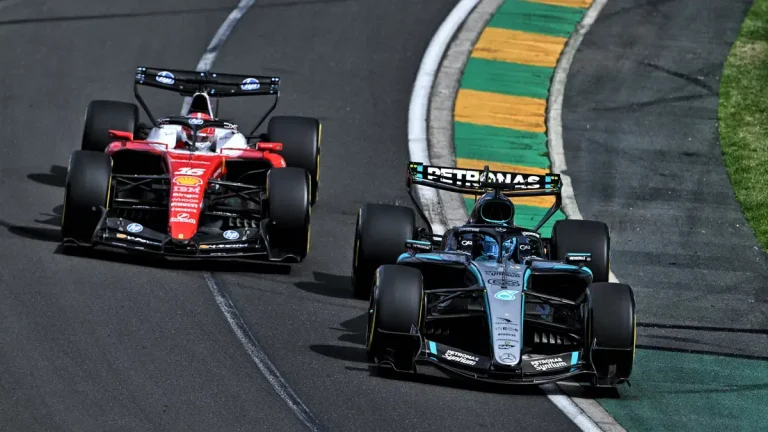
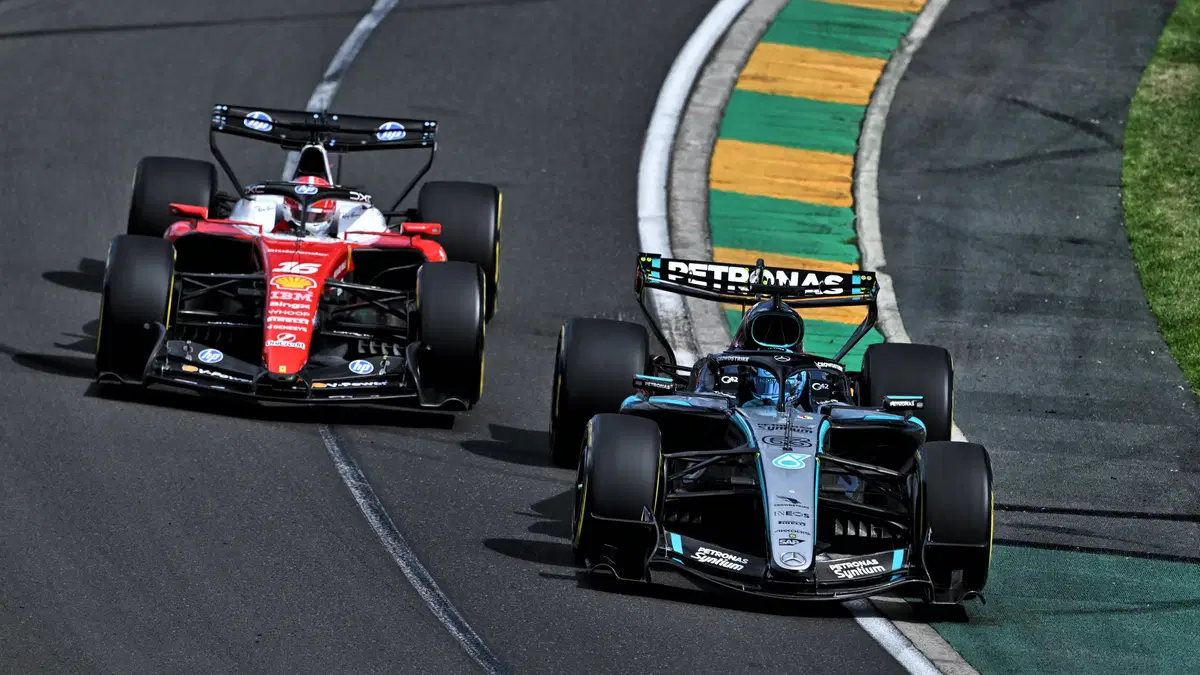
Throughout the opening races of 2026, Ferrari has demonstrated strong chassis performance but has frequently appeared vulnerable on long straights compared to Mercedes. The power deficit has become increasingly visible during qualifying sessions and race weekends where top speed plays a major role.
If the FIA’s assessment confirms Ferrari is within the ADUO eligibility window, the Scuderia could receive development opportunities that help narrow the gap to Mercedes.
Such assistance would be especially significant given Ferrari’s strong aerodynamic platform. Even modest gains from the power unit could transform the Italian team into a consistent race-winning force.
For Charles Leclerc and Lewis Hamilton, the outcome of the first ADUO evaluation may prove pivotal to their championship ambitions.
AUDI FACES A LONG-TERM CHALLENGE
While Ferrari’s situation appears manageable, Audi faces a far steeper climb.
The German manufacturer entered Formula 1 fully aware that competing against established engine giants would require patience. Audi’s leadership has repeatedly emphasized that the project was built around long-term objectives rather than immediate championship success.
Mattia Binotto has openly acknowledged that power unit performance remains Audi’s biggest challenge. According to the team’s assessment, much of the current deficit stems directly from the engine package rather than the chassis.
The reality is that power unit development is measured in months and years rather than weeks. Certain design concepts require extensive testing, manufacturing, and validation before reaching the track.
This explains why Audi continues targeting 2030 as its realistic championship objective despite ambitious long-term plans.
ADUO could provide valuable support, but it will not produce overnight miracles.
HONDA’S EARLY STRUGGLES MAKE ADUO CRITICAL
Perhaps no manufacturer is watching the FIA’s decision more closely than Honda.
The Japanese company has endured a difficult start to Formula 1’s new regulation era, facing challenges involving both performance and reliability.
Engineers continue working aggressively to improve battery systems, drivability, energy deployment strategies, and outright engine output. However, like Audi, Honda recognizes that meaningful gains require significant development time.
The manufacturer has collected extensive race data throughout the opening rounds, which should accelerate future upgrades. Yet if Honda receives maximum ADUO support, it could dramatically improve its recovery trajectory.
Given the importance of power management under the 2026 regulations, every gain in efficiency and performance could translate into major lap-time improvements.
WHY THE FIRST FIA ASSESSMENT IS SO IMPORTANT
The first ADUO threshold assessment has become one of the most anticipated technical decisions of the season.
Originally scheduled after the sixth round, the timeline shifted following disruptions to the calendar caused by geopolitical events affecting Bahrain and Saudi Arabia.
As a result, the FIA now has fourteen days following the Canadian Grand Prix to publish the initial engine rankings.
The findings will reveal:
Which manufacturers qualify for ADUO assistance
The extent of development support granted
When upgrades may be introduced
How large the current performance gaps truly are
For teams and manufacturers, this announcement could have championship implications extending far beyond 2026.
WHY MERCEDES IS CONCERNED ABOUT ADUO
Mercedes enters the ADUO debate from a very different position.
The Silver Arrows currently possess one of the strongest power units on the grid and have little to gain from expanded concessions for rivals.
Team principal Toto Wolff has voiced concerns regarding potential “gamesmanship” within the system. His argument is not against helping struggling manufacturers but rather ensuring that the process remains transparent and objective.
Wolff fears that if the thresholds are not applied with absolute precision, manufacturers could potentially exploit loopholes or gain advantages beyond the intended scope of the rule.
From Mercedes’ perspective, ADUO should help teams catch up—not leapfrog competitors who have already invested heavily in developing superior technology.
This concern highlights the delicate balancing act facing Formula 1 regulators.
COULD ADUO CHANGE THE CHAMPIONSHIP ORDER?
The answer is potentially yes—but not immediately.
Engine development cycles remain lengthy and highly complex. Even manufacturers granted additional opportunities will need months to translate those concessions into meaningful on-track gains.
However, the long-term implications are enormous.
A successful ADUO implementation could prevent the emergence of another multi-year dominance era. Instead of one manufacturer controlling the championship for several seasons, Formula 1 could maintain a far more competitive environment.
That outcome would benefit teams, drivers, sponsors, broadcasters, and fans alike.
WHAT THIS MEANS FOR FORMULA 1’S FUTURE
The introduction of ADUO represents one of the most ambitious competitive-balancing experiments Formula 1 has attempted.
The system seeks to preserve innovation while ensuring manufacturers are not permanently trapped by early mistakes. If successful, it could become a model for future regulation cycles.
Yet the rule also carries significant risks. Any perception of unfairness, favoritism, or manipulation could generate major controversy throughout the paddock.
With Mercedes currently setting the benchmark, Ferrari chasing improvements, Honda seeking recovery, and Audi building for the future, the first ADUO decision could become one of the defining moments of the 2026 season.
PREDICTION: A CLOSER GRID IS COMING
Based on the early evidence, ADUO is unlikely to dramatically alter the championship fight in the short term. Mercedes appears well-positioned to maintain its advantage through much of 2026.
However, by late 2026 and especially during the 2027 season, the effects could become increasingly visible. Ferrari looks best placed to capitalize on any development opportunities, while Honda and Audi may gradually close significant portions of their current deficits.
If the FIA executes the system effectively, Formula 1 could avoid another prolonged era of manufacturer dominance and instead enter one of the most competitive periods in modern history.
For that reason alone, ADUO may become one of the most influential regulations the sport has introduced in decades.
About the Author