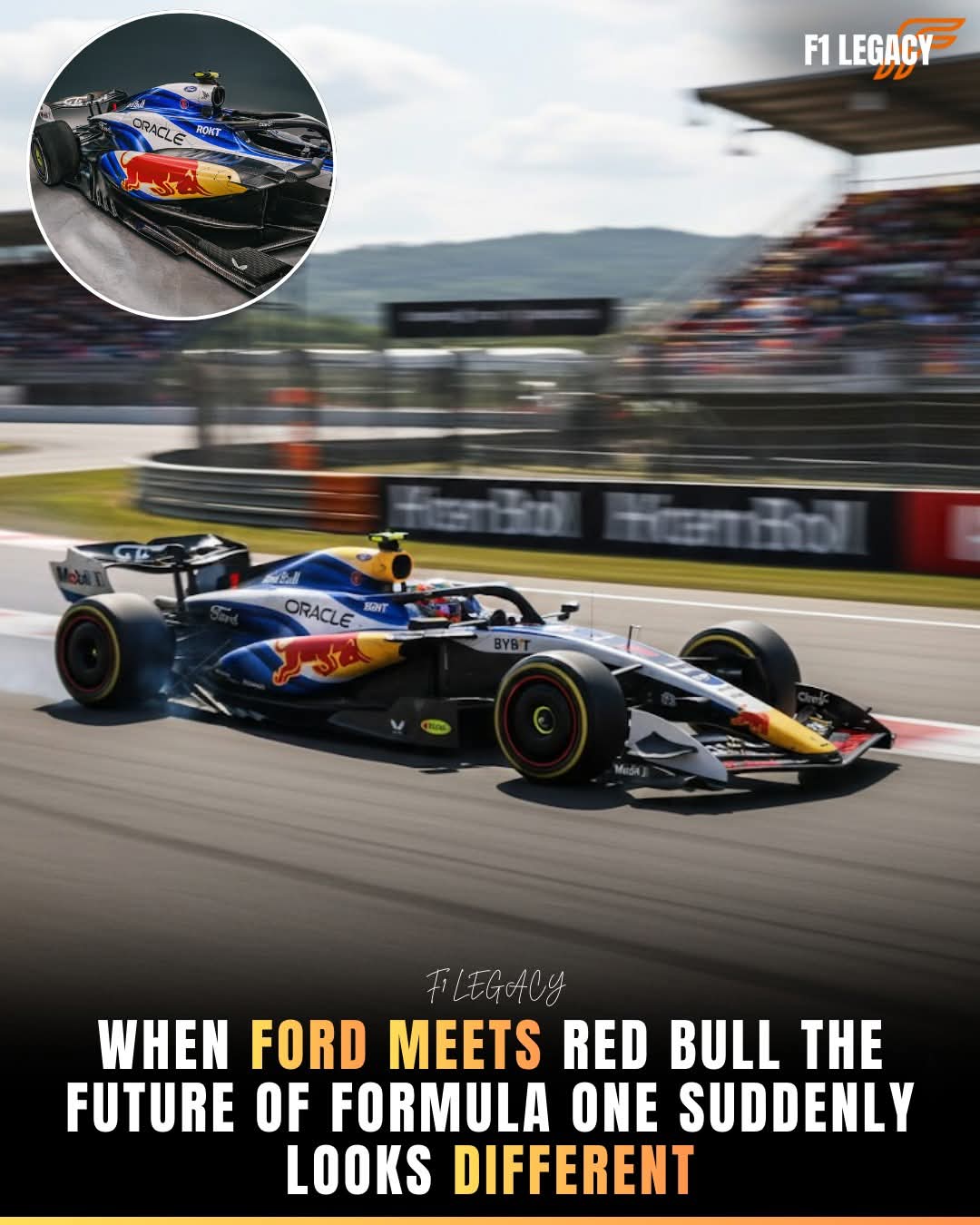
This marks the first tangible visual indication of what the Red Bull–Ford alliance may ultimately represent, and the reaction was immediate. The palette, the proportions, and the meticulous detailing all point toward a decisive new era, one that feels evolutionary rather than a cosmetic exercise in branding convenience.
The sight of Max Verstappen’s iconic number aligned with the Ford emblem fundamentally alters the emotional register. It forges a compelling fusion between contemporary supremacy and old-world automotive muscle, merging modern Formula One dominance with a lineage steeped in racing folklore.
There is a measured confidence embedded in the design language. Nothing feels overstated or gratuitous; instead, the car projects a disciplined aggression. Its restrained surfaces and assertive stance convey an unmistakable sense of intent, as though the direction of the project has already been firmly mapped out behind closed doors.
What has resonated most with observers is the sense of purpose. This does not resemble a speculative concept probing regulatory boundaries, nor does it feel uncertain in its identity. It looks resolved, engineered with victory as its primary objective rather than spectacle as a distraction.
Should this visual philosophy translate even partially into reality, the rest of the grid would be wise to take notice. Red Bull Ford appears uninterested in a quiet introduction to Formula One’s future. The message is clear: this is not an arrival—it is a statement of leadership.
About the Author