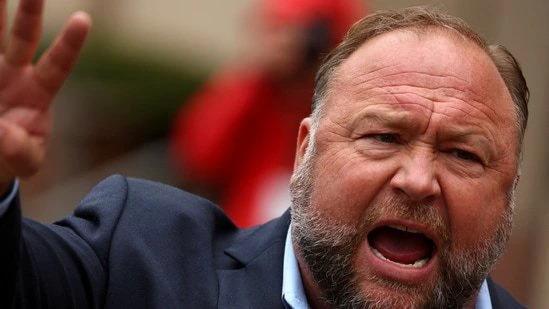
Tensions between controversial media figure Alex Jones and U.S. President Donald Trump have reportedly reached a boiling point, following a series of public remarks that escalated into a war of words. The latest flashpoint came after Trump appeared to mock Jones during a rally-style appearance, prompting a furious response from the outspoken broadcaster, who warned he could “go nuclear” in retaliation.
 Jones, known for his combative rhetoric and loyal audience, did not hold back when addressing Trump’s comments. In a fiery broadcast, he suggested that the former president had underestimated both his influence and his willingness to fight back. “If you think I’ve been coming after you,” Jones said ominously, trailing off before implying that his previous criticisms were mild compared to what could follow.
The feud marks a striking shift in the relationship between the two men, who were once seen as ideological allies. During Trump’s presidency, Jones frequently praised him, framing him as a disruptor of the political establishment. However, cracks in that alignment have grown more visible in recent months, with Jones increasingly critical of Trump’s decisions and political strategy.
Observers note that Trump’s mockery may have been calculated, as he has a long history of using public ridicule to undermine opponents. By targeting Jones, Trump could be attempting to distance himself from controversial figures ahead of future political ambitions. Still, such a move carries risks, especially given Jones’s ability to mobilize a passionate segment of the online audience.
Jones’s threat to “go nuclear” has sparked speculation about what he might reveal or pursue next. While he did not provide specifics, his statement has been interpreted as a warning that he could release damaging information, intensify his criticism, or leverage his platform in ways that could create political headaches for Trump.
Political analysts are divided on the potential impact of the feud. Some argue that it could fracture a portion of Trump’s base, particularly among those who have long followed Jones’s content. Others believe that Trump’s core supporters are unlikely to be swayed, viewing the clash as just another example of internal disputes within a broader political movement.
The episode also highlights the volatile nature of alliances built on media influence and populist appeal. Both men have cultivated reputations as anti-establishment figures, but their overlapping audiences mean that conflicts between them can quickly become highly visible and emotionally charged.
Social media reactions have been intense, with supporters on both sides trading accusations and defending their preferred figure. The dispute has trended across platforms, underscoring how personal rivalries between high-profile personalities can dominate the public conversation.
As the situation continues to unfold, many are watching closely to see whether Jones follows through on his threat or whether the conflict will cool down as quickly as it erupted. For now, the clash serves as a reminder that in today’s media landscape, alliances can shift rapidly—and when they do, the fallout can be dramatic.
About the Author