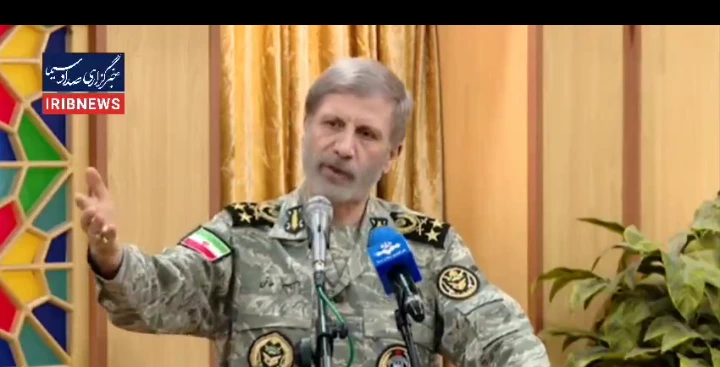
The ongoing conflict involving Iran, the United States, and allied forces has produced a wave of dramatic claims, counterclaims, and competing narratives. Among the most striking is the assertion attributed to Iran’s military leadership that its air force has effectively been “destroyed.” This claim, whether interpreted as a literal admission or a strategic statement, reflects the intensity of the current war and the scale of damage inflicted on Iran’s military infrastructure.
 In recent weeks, coordinated airstrikes by U.S. and Israeli forces have targeted key Iranian defense systems, including radar installations, missile bases, and air defense networks. According to reports, a significant portion of Iran’s air defense capability—estimated at around 80%—has been severely degraded, alongside widespread destruction of weapons production facilities and missile storage sites. These developments have raised serious questions about the operational status of Iran’s air force and its ability to defend national airspace.
However, interpreting the statement that the air force has been “destroyed” requires nuance. Military language during wartime is often shaped by psychological and strategic considerations. On one hand, such a statement could be seen as an acknowledgment of the heavy losses suffered. On the other, it might be a calculated message aimed at reshaping expectations, mobilizing internal support, or even misleading adversaries about Iran’s remaining capabilities.
Despite the extensive damage reported, evidence suggests that Iran retains some level of operational capacity. Satellite imagery and intelligence assessments indicate that Iranian forces are actively working to recover and reposition remaining missile systems and launchers. This suggests that while the air force and air defense network may be significantly weakened, they are not entirely eliminated.
Historically, Iran has emphasized resilience and adaptability in its military doctrine. Even in previous conflicts, Iranian commanders have claimed success in intercepting enemy aircraft and drones, asserting the continued effectiveness of their air defense systems. Such statements highlight a pattern of emphasizing strength and endurance, even under heavy attack, which makes the current claim of total destruction particularly noteworthy.
Another dimension to consider is the broader strategic environment. The conflict has not been limited to aerial engagements alone; it has expanded into naval blockades, missile exchanges, and cyber operations. The United States, for instance, has imposed a maritime blockade that has disrupted a large portion of Iran’s economy and logistics, further compounding the pressure on its military capabilities. In such a context, the degradation of the air force may be just one part of a wider weakening of Iran’s defense posture.
At the same time, Iranian officials have continued to project defiance. Senior military figures have warned that their remaining missile systems are capable of targeting adversary assets, including naval forces in the region. This indicates that even if the air force has suffered catastrophic losses, Iran still retains asymmetric capabilities that could influence the course of the conflict.
The claim also underscores the evolving nature of modern warfare. Air superiority, once a decisive factor, is now intertwined with cyber warfare, unmanned systems, and long-range precision strikes. The destruction of traditional air force assets does not necessarily equate to total military defeat, especially for a country that has invested heavily in missile technology and unconventional tactics.
Ultimately, the statement that Iran’s air force has been destroyed should be understood within the fog of war. While there is credible evidence of severe damage to Iran’s aerial capabilities, the full extent of the losses—and the true operational status of its forces—remains uncertain. As the conflict continues, clearer assessments will likely emerge, but for now, the situation remains fluid and highly contested.
In conclusion, the reported claim by Iran’s Commander-in-Chief reflects both the scale of the current military confrontation and the complexity of interpreting wartime narratives. Whether it signals a moment of vulnerability or a strategic recalibration, it highlights a critical turning point in the conflict—one that could reshape the balance of power in the region and influence the trajectory of future engagements.
About the Author