Tensions in the Middle East have once again intensified following a bold and controversial statement by Recep Tayyip Erdoğan, who declared that Turkey could consider military intervention if Israel’s actions against Palestinians continue to escalate. The remarks have drawn global attention, sparking debates about regional stability, international law, and the potential for broader conflict.
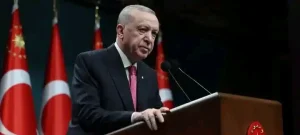 Speaking during a public address, Erdoğan positioned Turkey as a defender of Palestinian rights, reiterating his long-standing criticism of Israeli policies in the occupied territories. His comments reflect a continuation of Ankara’s increasingly assertive foreign policy, particularly regarding issues in the Middle East. While he did not outline specific military plans, the mere suggestion of intervention marked a significant escalation in rhetoric.
The Turkish president’s warning comes amid ongoing violence between Israel and Palestine, where clashes have resulted in mounting civilian casualties and widespread destruction. International organizations and human rights groups have repeatedly called for de-escalation, yet progress toward a lasting ceasefire remains elusive. Erdoğan’s statement appears to reflect frustration with what he perceives as insufficient global action.
Historically, Turkey has maintained a complex relationship with Israel. Once close allies, the two nations have experienced periods of tension, particularly after incidents involving Gaza. Erdoğan has been one of the most vocal critics of Israeli military operations, often accusing the government of disproportionate use of force. His latest remarks suggest a willingness to move beyond diplomatic condemnation into more direct forms of involvement.
Critics of Erdoğan’s statement argue that any military intervention by Turkey could significantly destabilize the region. Analysts warn that such a move might provoke retaliation, draw in other regional powers, and potentially lead to a broader conflict involving multiple states. The Middle East, already grappling with numerous geopolitical crises, could face heightened uncertainty if tensions escalate further.
Supporters of the Turkish leader, however, view his stance as a necessary show of strength. They argue that strong rhetoric—and the possibility of action—could pressure Israel to reconsider its approach. For many in Turkey and across parts of the मुस्लिम world, Erdoğan’s words resonate as a defense of Palestinian sovereignty and human rights.
The international community has responded cautiously. Western nations have largely emphasized the need for dialogue and restraint, while some regional actors have echoed Turkey’s concerns but stopped short of endorsing military involvement. Organizations like the United Nations continue to call for humanitarian access and renewed peace negotiations.
Meanwhile, Israel has not officially responded in detail to Erdoğan’s latest comments, but previous statements from Israeli officials have rejected external interference in what they consider internal security matters. The situation remains fluid, with both diplomatic and military developments unfolding rapidly on the ground.
Ultimately, Erdoğan’s remarks underscore the deep divisions and high stakes surrounding the Israeli-Palestinian conflict. Whether his statement translates into concrete action or remains a strategic warning is yet to be seen. What is clear, however, is that such rhetoric adds another layer of complexity to an already volatile situation, raising concerns about the potential for further escalation in one of the world’s most enduring conflicts.
About the Author