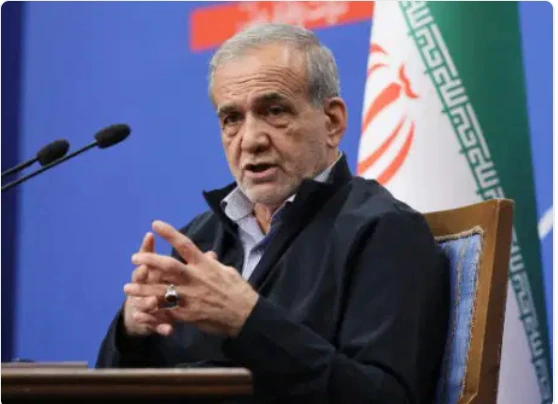
Rising tensions between the United States and Iran have once again captured global attention, as strong rhetoric and warnings continue to define the fragile relationship between the two powers. The headline statement—suggesting that Iran would take a “large number” of American prisoners if another war begins—reflects a broader pattern of escalating language that has characterized the ongoing geopolitical standoff.
 The roots of this tension lie in the intensifying conflict that erupted earlier in 2026, when military confrontations between the two nations and their allies pushed the Middle East to the brink of a wider regional war. The United States justified its actions as necessary to counter perceived threats, while Iran viewed the moves as direct aggression against its sovereignty. This clash of narratives has fueled a cycle of warnings, threats, and retaliatory posturing.
Iranian officials have repeatedly emphasized that any new conflict would not be limited or contained. Instead, they warn it could expand beyond traditional battlefields and involve unconventional strategies, including targeting infrastructure and capturing enemy personnel. Such statements are designed not only to deter military action but also to signal Iran’s readiness for prolonged confrontation.
One of the most controversial elements of these claims is the issue of prisoners of war. Earlier in the conflict, Iranian authorities asserted that American soldiers had already been captured during clashes. However, the United States strongly denied these allegations, calling them misinformation and insisting no troops had been taken prisoner. This contradiction highlights the fog of war, where competing narratives often shape public perception as much as actual events on the ground.
The rhetoric surrounding prisoner capture carries both symbolic and strategic weight. Historically, prisoners of war have been used as bargaining chips in negotiations, tools for propaganda, and leverage in international diplomacy. By warning that large numbers of American troops could be captured, Iran is signaling that any future conflict could have serious human and political consequences for the United States.
Recent developments suggest that while open warfare may have slowed due to ceasefire efforts, the underlying tensions remain unresolved. Reports indicate that a ceasefire has paused large-scale hostilities, but both sides continue to maintain strong military positions and assert their strategic interests in the region. This uneasy calm creates an environment where rhetoric can quickly translate back into action.
At the same time, Iran’s leadership has adopted increasingly defiant language, rejecting external pressure and emphasizing national resilience. Statements from senior figures underline a belief that the country can withstand military and economic pressure, while also warning that any aggression would be met with severe retaliation. Such messaging is aimed at both domestic audiences and international observers, reinforcing the image of a nation unwilling to back down.
For the United States, these warnings pose a complex challenge. On one hand, they underscore the risks of deeper military engagement in a volatile region. On the other, they highlight the strategic calculations involved in deterrence, where both sides attempt to project strength without triggering full-scale war. The possibility of American troops being captured adds another layer of political sensitivity, as it could significantly influence public opinion and policy decisions.
The broader international community is watching closely, aware that any renewed conflict could disrupt global energy markets, destabilize neighboring countries, and escalate into a wider regional crisis. The Strait of Hormuz, a critical chokepoint for global oil supplies, remains a focal point of concern, with both sides recognizing its strategic importance.
Ultimately, the statement about taking prisoners reflects more than just a threat—it encapsulates the high-stakes nature of modern geopolitical rivalry. It serves as a reminder that in today’s interconnected world, the consequences of war extend far beyond the battlefield, affecting diplomacy, economics, and global stability.
As tensions persist, the hope among many observers is that diplomacy will prevail over confrontation. However, with both sides continuing to exchange warnings and assert their readiness for conflict, the situation remains uncertain, and the risk of escalation cannot be entirely ruled out.
About the Author