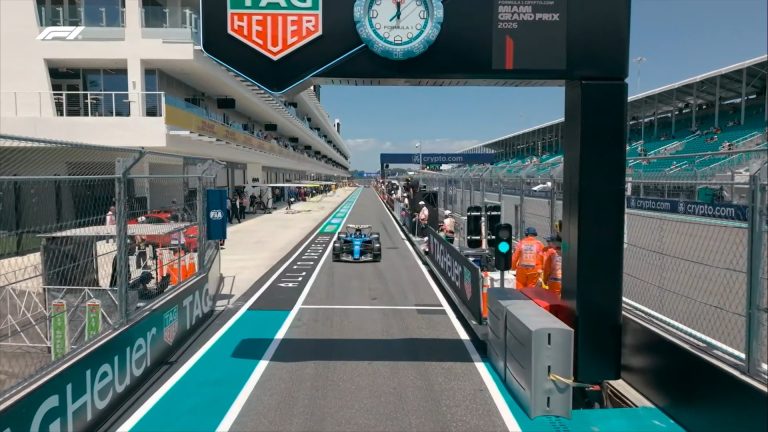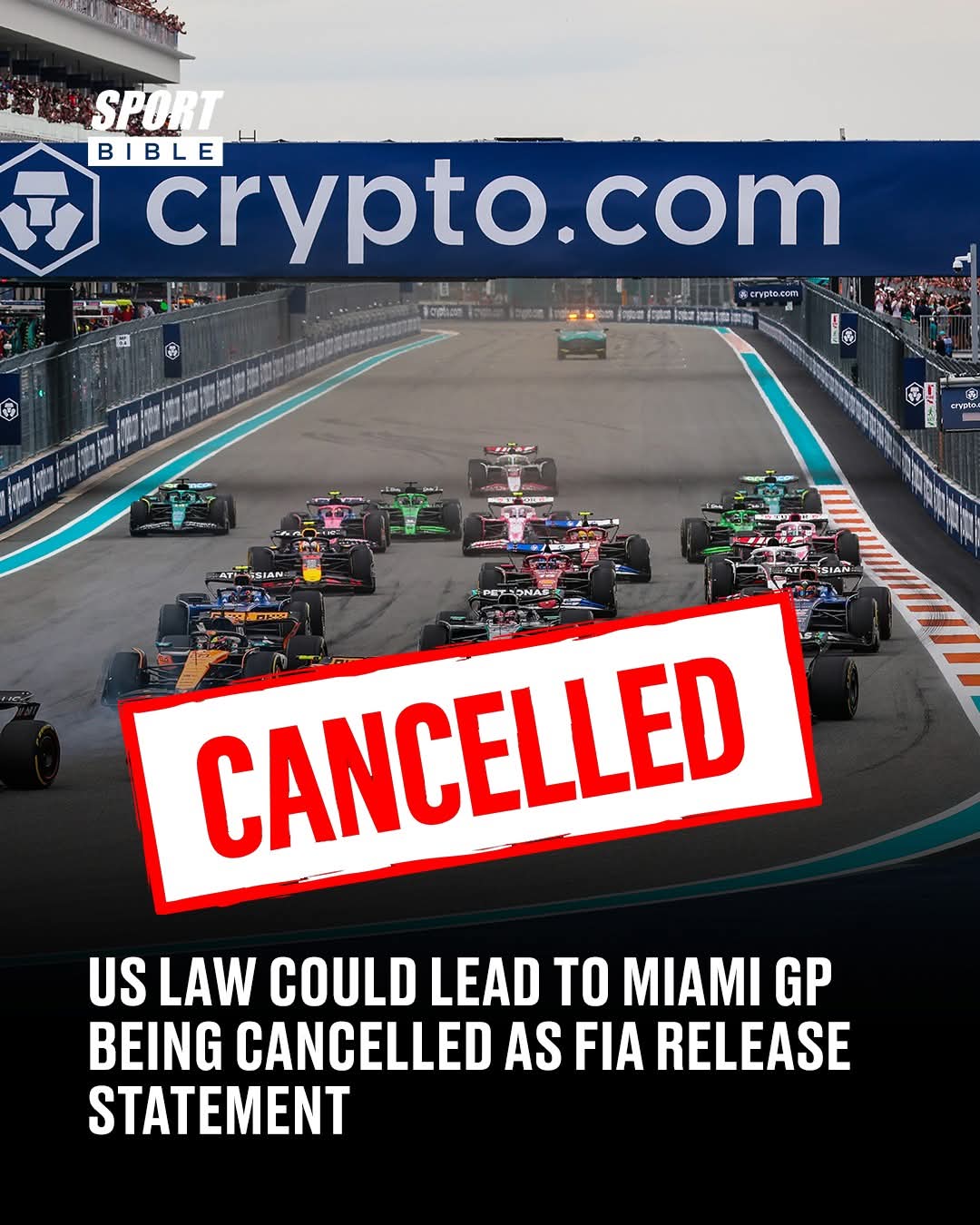
The upcoming Miami Grand Prix has been thrown into uncertainty after fresh concerns emerged over extreme weather conditions and strict United States safety laws that could force a last-minute cancellation. What was expected to be another high-energy Formula 1 weekend is now overshadowed by a growing risk that events on track may not go ahead as planned.
At the center of the issue is a worsening weather forecast. Early predictions already warned of thunderstorms, but updated reports now suggest a far more disruptive scenario—morning rain followed by intense afternoon storms, with an 80 percent chance of rainfall. Forecasts indicating heavy thunderstorms capable of directly impacting the race have raised serious alarms, especially given how unpredictable Florida weather can be during this time of year.
The governing body, Fédération Internationale de l’Automobile, has responded by confirming it is closely monitoring the situation. Officials have pointed to contingency plans designed to reduce disruption, referencing similar challenges faced during previous Miami race weekends. However, contingency plans alone may not be enough this time, as external legal factors could ultimately override sporting decisions.
Unlike typical race delays caused purely by weather, this situation is complicated by strict U.S. safety regulations. Federal guidelines require immediate suspension of large public events when lightning poses a risk, with a mandatory delay of at least 30 minutes after the last detected strike. With over 250,000 spectators expected across the weekend, safety becomes the top priority. In addition, operational requirements—such as the ability to deploy a medical helicopter—mean the race cannot proceed under unsafe conditions, further tightening restrictions on what race officials can control.
Looking at precedent, the risk is far from theoretical. Last year’s Miami weekend already saw support races cancelled due to severe weather, narrowly avoiding disruption to the main Grand Prix. But this time, the combination of stronger storm forecasts and stricter enforcement expectations could push the situation further. Even if the rain doesn’t directly hit the circuit at race time, nearby lightning activity alone could be enough to halt proceedings.
From a strategic standpoint, Formula 1 has limited options. Race organizers could attempt to move the start time earlier in the day to avoid peak storm conditions, or in extreme cases, shift the event to an earlier slot in the weekend. However, with Miami operating under a sprint format, any changes would create a domino effect, forcing adjustments or cancellations across the entire schedule.
In terms of competitive impact, a disrupted or cancelled race would significantly affect the championship narrative. Teams that rely on momentum or track-specific advantages could lose critical opportunities, while others may benefit from an unexpected reset. For drivers, especially those fighting for early-season positioning, losing a race weekend could prove costly in a tightly contested title battle.
Looking ahead, the situation remains fluid. If weather conditions stabilize, the race could proceed with minimal disruption. But if forecasts hold—or worsen—fans and teams alike may be forced to accept a rare and dramatic outcome: a Formula 1 Grand Prix halted not just by nature, but by the law itself.
About the Author