THE RETURN NOBODY SAW COMING AS FERRARI’S PAST DECISION STARTS TO HAUNT THEM AND CARLOS SAINZ SUDDENLY FINDS HIMSELF AT THE CENTER OF A STORY THAT COULD REWRITE EVERYTHING
In Formula 1, timing is everything—but understanding timing is something else entirely. Teams make decisions in the present while chasing a future they can’t fully predict. Drivers move, contracts are signed, and lineups change, all under the belief that each step is leading closer to success. But every now and then, the sport pauses just long enough to make people wonder: what if a decision that once felt right is now quietly unraveling?
There’s always a moment when reflection begins to creep in. Not publicly, not dramatically—but in whispers, in subtle conversations, and in the tone of those who watch closely. It’s in these moments that narratives begin to shift, and what once looked like progress starts to resemble something far more complicated. Formula 1 has seen this pattern before, where the past doesn’t stay buried—it waits.
And lately, there’s been a growing sense that one particular storyline is beginning to circle back. Not with noise at first, but with suggestion. A comment here, an opinion there—until suddenly, it doesn’t feel like coincidence anymore. It feels like a door that was once closed might not be as firmly shut as everyone believed.
At the center of this quiet storm is Carlos Sainz, a driver whose journey through the grid has been anything but ordinary. Consistent, composed, and often underestimated, Sainz has built a reputation not through headlines alone, but through performance when it mattered most. And yet, despite everything he delivered, his chapter with Scuderia Ferrari came to an unexpected turning point.
That’s where things start to get interesting.
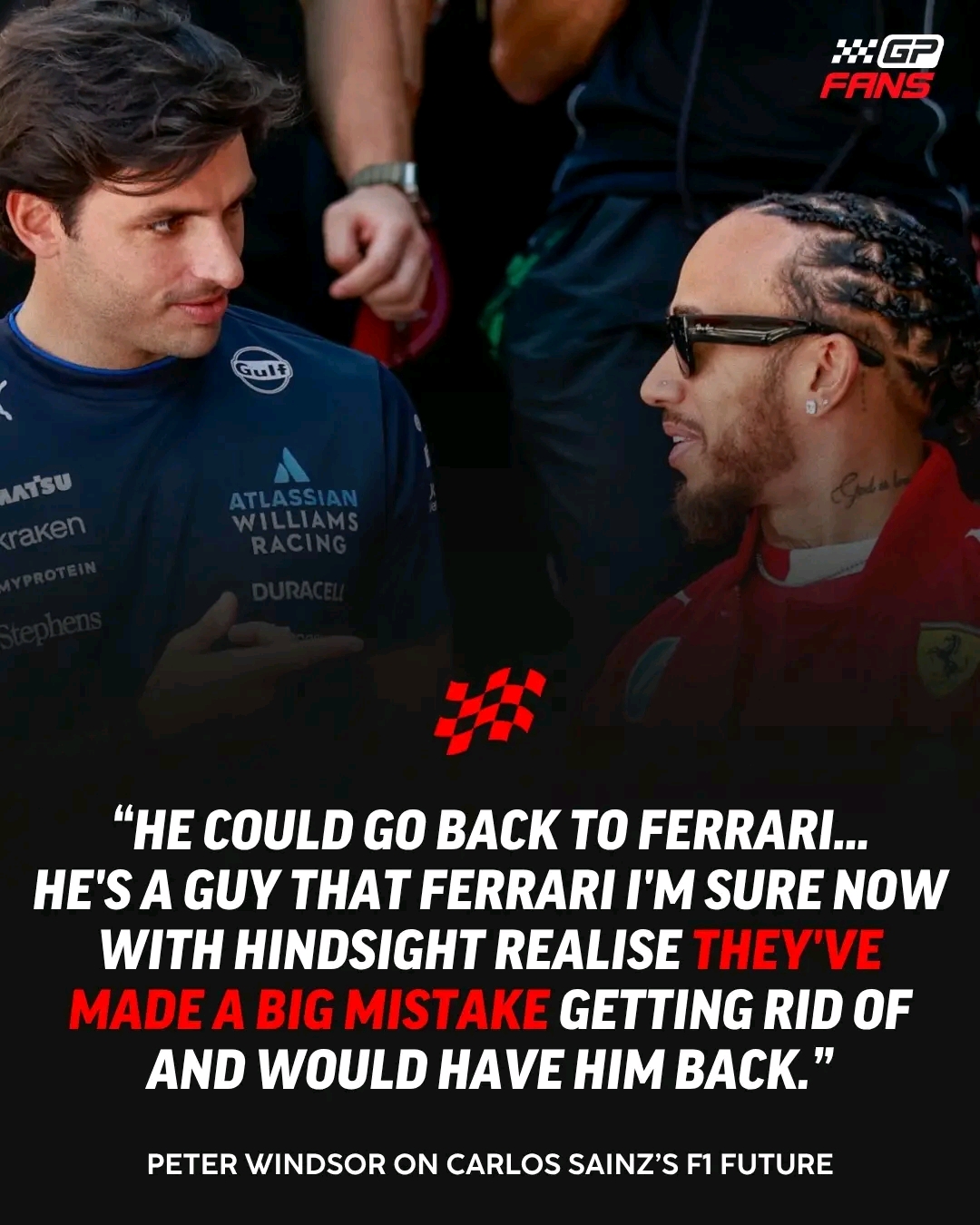
Because as discussions grow louder, a striking perspective has emerged—one that reframes everything. According to Peter Windsor, Ferrari may now be looking back at their decision with a sense of regret. The suggestion isn’t subtle. It’s direct, almost uncomfortable in its clarity: that letting Sainz go might have been a mistake… a big one.
And suddenly, the narrative flips.
What once seemed like a forward-thinking move now invites scrutiny. In a sport where every decision is measured in milliseconds and championships, the idea of “what could have been” carries real weight. Ferrari, a team defined by legacy and expectation, rarely entertains the notion of missteps publicly—but that doesn’t stop the outside world from asking the question.
Could they actually want him back?
It’s a possibility that adds an entirely new layer to the story. Especially when you consider the shifting dynamics within the grid, including the presence of stars like Lewis Hamilton and the constant pressure to build a championship-winning lineup. In that context, every past decision becomes part of a larger puzzle—and every overlooked piece starts to matter again.
But this isn’t just about Ferrari.
It’s about how quickly fortunes can change in Formula 1. One moment, a driver is part of the long-term vision. The next, they’re moving on. And then, almost unexpectedly, their value becomes even clearer in hindsight. Sainz’s situation reflects that reality perfectly—a reminder that performance doesn’t always align neatly with timing.
As the season unfolds, this story will continue to evolve. Whether it leads to a dramatic reunion or remains a lingering “what if,” one thing is certain: the conversation has already begun. And in Formula 1, once a conversation like this starts, it rarely fades quietly.
Because sometimes, the biggest twists in the sport aren’t about what happens next…
They’re about what teams wish they could undo.
About the Author