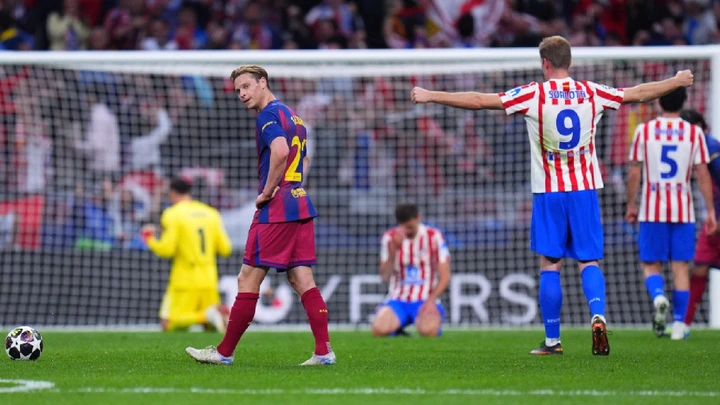
The night that was supposed to define FC Barcelona’s European resurgence instead ended in controversy, frustration, and bitter accusations. After a dramatic and chaotic clash in the UEFA Champions League, Brazilian winger Raphinha did not hold back, branding the officiating as “a robbery” following his team’s elimination. The explosive comments came in the aftermath of a match overshadowed by contentious decisions, most notably a decisive red card that changed the course of the game.
 Barcelona entered the fixture with high expectations, carrying the hopes of their fans who believed this could finally be the year the club returned to European dominance. The atmosphere was electric, with the players showing early intent and attacking flair. However, the tone of the game shifted dramatically after a controversial moment involving a sending-off that left the Catalan giants with ten men.
The red card incident quickly became the focal point of the match. Barcelona players protested furiously, arguing that the decision was excessively harsh and failed to consider the context of the challenge. From the bench to the pitch, disbelief spread among players and coaching staff alike. The referee, unmoved by the protests, stood firm, further fueling tensions as the game resumed under a cloud of controversy.
For Raphinha, the moment symbolized what he and many of his teammates felt was a pattern of unfair decisions. Speaking after the match, his frustration was unmistakable. He described the officiating as unacceptable at such a high level of competition, suggesting that key moments were taken out of Barcelona’s control. His remarks reflected a broader sentiment within the squad—that their Champions League journey had been derailed not purely by footballing factors, but by officiating errors.
The impact of the red card was immediate and profound. Reduced to ten men, Barcelona struggled to maintain their attacking rhythm while also dealing with increased defensive pressure. Their opponents capitalized on the numerical advantage, controlling possession and exploiting spaces that would not have been available under normal circumstances. The balance of the match tilted irreversibly.
Despite their disadvantage, Barcelona showed resilience and moments of brilliance, attempting to fight their way back into contention. Yet, every effort seemed to be met with further frustration, whether through missed chances, tight defensive calls, or the lingering psychological effect of the earlier decision. The players’ composure visibly deteriorated as the reality of elimination began to sink in.
Beyond the immediate result, the controversy has reignited discussions about refereeing standards in elite European football. Critics have pointed to inconsistencies in decision-making and the pressure referees face in high-stakes matches. Supporters of Barcelona argue that such pivotal games deserve the highest level of accuracy and fairness, particularly when decisions can determine the fate of an entire season.
For Barcelona, the defeat represents more than just elimination—it is another painful chapter in their recent European history. Once the dominant force in the Champions League, the club has struggled to replicate its past success in recent years. Nights like this, marked by controversy and missed opportunities, only deepen the sense of unfinished business.
As for Raphinha, his outspoken reaction has placed him at the center of post-match discourse. While some have praised his honesty and passion, others believe his comments may attract scrutiny from football authorities. Regardless, his words have captured the raw emotion felt by players and fans alike after a night that promised glory but delivered heartbreak.
In the coming days, attention will likely turn to potential reviews of the officiating decisions and whether any formal complaints will be lodged. Meanwhile, Barcelona must regroup and refocus on their domestic ambitions, carrying with them the lingering frustration of what might have been. For many within the club, the feeling remains clear—this was not just a defeat, but an opportunity they believe was unjustly taken away.
About the Author