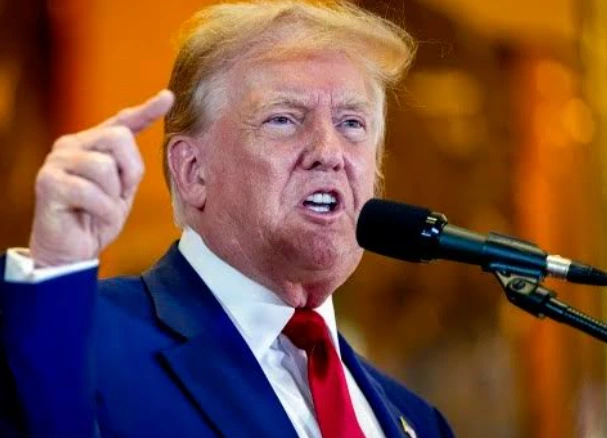
The escalating rhetoric surrounding the United States–Iran nuclear standoff has reached a new peak after Donald Trump issued a stark warning to Tehran. According to recent statements, Trump suggested that if diplomatic negotiations collapse, Iran’s nuclear materials could be taken “in a much more unfriendly form,” a phrase widely interpreted as a threat of forceful intervention. The remark underscores the fragile state of ongoing negotiations and signals a readiness to escalate beyond diplomacy.
 The warning comes at a time when tensions between United States and Iran remain dangerously high. Talks aimed at limiting Iran’s nuclear program have been ongoing, but progress has been inconsistent. Trump has repeatedly insisted that Iran must not be allowed to develop nuclear weapons under any circumstances, emphasizing that failure to reach a deal could trigger serious consequences, including renewed military action.
Central to the dispute is Iran’s stockpile of enriched uranium, which Western powers fear could be used to develop nuclear weapons. Trump has claimed that the U.S. is prepared to take control of this material if necessary, even suggesting it could be removed from Iran entirely. However, Iranian officials have strongly denied any agreement to surrender their nuclear resources, insisting that their program is for peaceful purposes and will remain under national control.
The phrase “unfriendly form” has sparked widespread debate among analysts, many of whom interpret it as a veiled reference to military force. Trump has previously warned that if negotiations fail, the U.S. could resume strikes on Iranian nuclear facilities or intensify its blockade strategy. These threats align with his broader approach of combining diplomatic pressure with the credible threat of overwhelming military power.
Complicating matters further is the ongoing geopolitical tension in the Middle East, particularly around strategic waterways like the Strait of Hormuz. Trump has linked progress in nuclear talks to broader regional stability, including shipping routes and economic sanctions. While he has expressed optimism about a potential deal, his warnings indicate that patience within his administration may be running out.
Iran, on the other hand, has pushed back against what it describes as coercive diplomacy. Officials in Tehran have rejected claims that they have agreed to U.S. demands, accusing Washington of misrepresenting the status of negotiations. They have also warned that continued pressure or military threats could derail any chance of a peaceful resolution, further increasing the risk of conflict.
International observers remain deeply concerned about the potential consequences of a breakdown in talks. European allies and other global powers have urged both sides to return to constructive dialogue, warning that any military escalation could have severe implications for global security and energy markets. The sharp drop in oil prices following recent developments highlights just how sensitive the situation has become.
Despite the tensions, there are still signs that diplomacy has not entirely collapsed. Back-channel negotiations and mediated talks continue, with some reports suggesting that a framework agreement may still be within reach. However, the gap between both sides remains significant, particularly on issues such as uranium enrichment limits and sanctions relief.
Ultimately, Trump’s warning reflects a high-stakes strategy aimed at forcing Iran to the negotiating table under maximum pressure. Whether this approach leads to a breakthrough or triggers further confrontation remains uncertain. What is clear, however, is that the future of the Iran nuclear issue hangs in the balance, with the next steps likely to shape not only regional stability but also global geopolitical dynamics for years to come.
About the Author