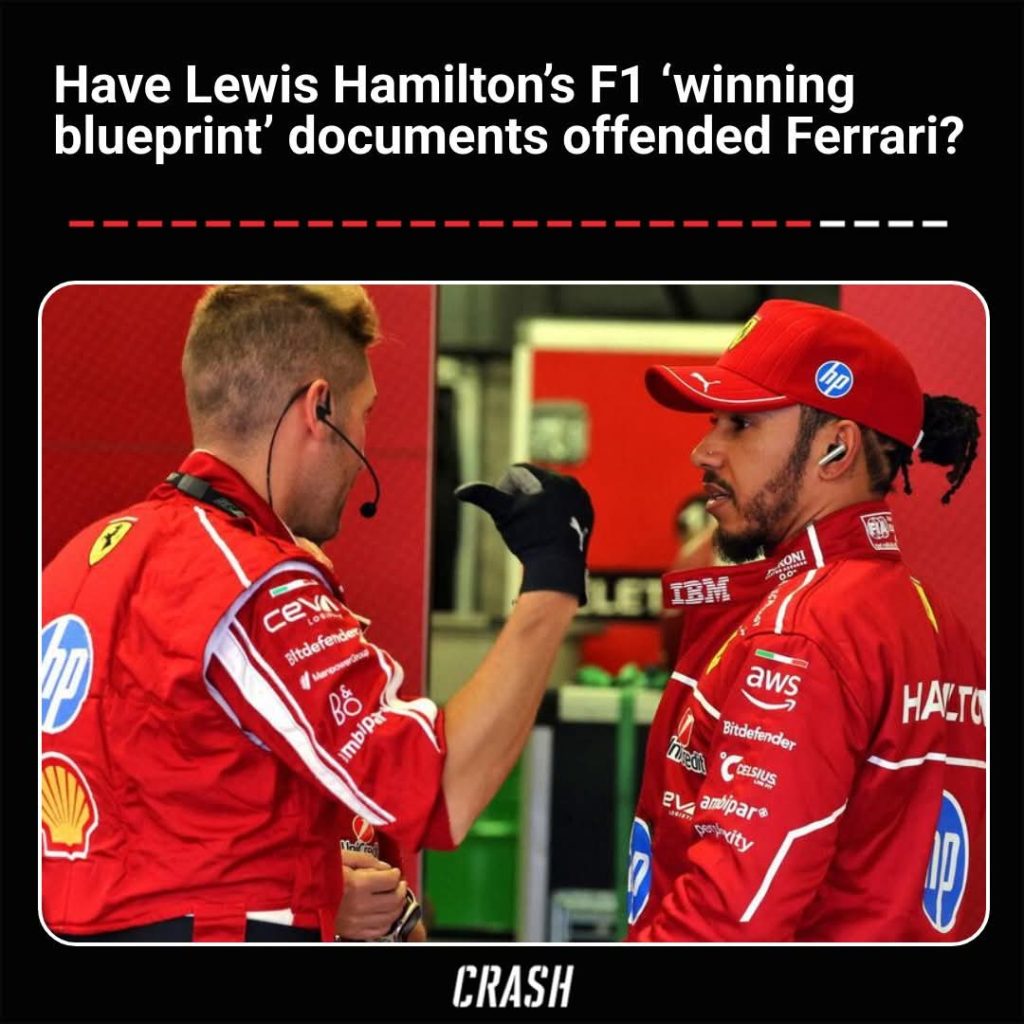
Lewis Hamilton’s early months at Ferrari have taken a strange, politically charged turn, with whispers swirling that his internal “improvement documents” may have rubbed Maranello’s old guard the wrong way. His transition from Mercedes superstar to Ferrari’s great red hope has not delivered the triumphant revival many anticipated. Instead, Hamilton’s debut season has been defined by underperformance, misfortune, and a widening gap between his ambitions and Ferrari’s enduring structural flaws—flaws he has apparently attempted to diagnose in writing.
The veteran driver confirmed he had authored detailed proposals outlining what Ferrari must change to claw its way back into championship contention after a 17-year drought. But Sky’s Ted Kravitz floated an uncomfortable possibility: that Hamilton’s well-intentioned “winning blueprint” was interpreted less as helpful counsel and more as a veiled critique. In a culture as proud—and prickly—as Ferrari’s, suggestions from an outsider, even a seven-time world champion, may feel less like guidance and more like an indictment.
The tension sharpened following Ferrari’s catastrophic weekend in São Paulo, where both Hamilton and Charles Leclerc retired. The team tumbled from second to fourth in the constructors’ standings, triggering a remarkably combative public rebuke from Ferrari president John Elkann. His comment that the drivers “need to focus on driving and talk less” landed like a slap, hinting at growing frustration behind the doors of Maranello’s labyrinthine hierarchy. It’s a criticism steeped in history: Alonso voiced similar concerns a decade ago, Vettel failed to turn the ship around, Leclerc’s early promise stagnated, and Ferrari’s chronic inertia outlived them all.
The pattern is unmistakable. For years, Ferrari has cycled through superstar drivers without addressing the deeper malaise—bureaucratic rigidity, strategic inconsistency, and a leadership structure notoriously reluctant to embrace external ideas. The past controversies, including the infamous 2019 fuel-flow investigation, illustrate how long-standing these systemic issues are. Against that backdrop, Hamilton’s documents may have landed as an unwelcome reminder that the team’s weaknesses are neither new nor easily excused.
As the season marches toward Las Vegas, the narrative grows heavier: Is Ferrari once again wasting elite talent, repeating the same mistakes that drove Alonso out and frustrated Vettel into decline? Hamilton may have arrived armed with championship pedigree and a fresh perspective, but Maranello’s resistance to reinvention appears as entrenched as ever. Whether his blueprint becomes a catalyst for change—or another chapter in the team’s cycle of squandered potential—remains the looming question of Ferrari’s troubled year.
About the Author