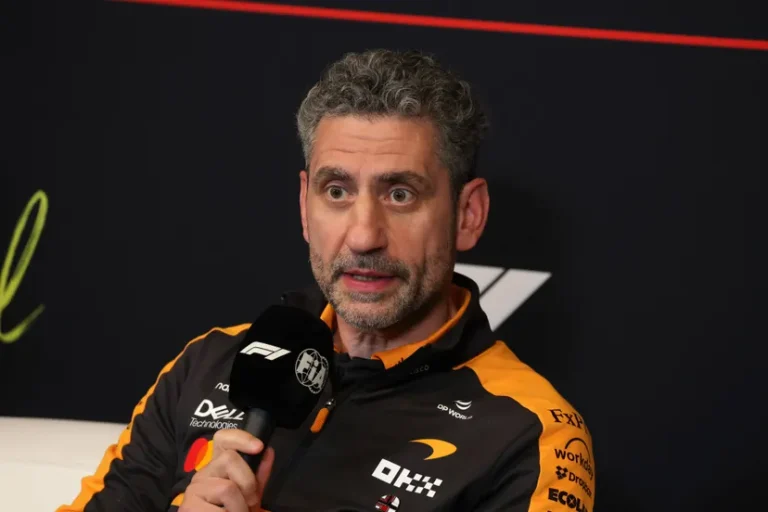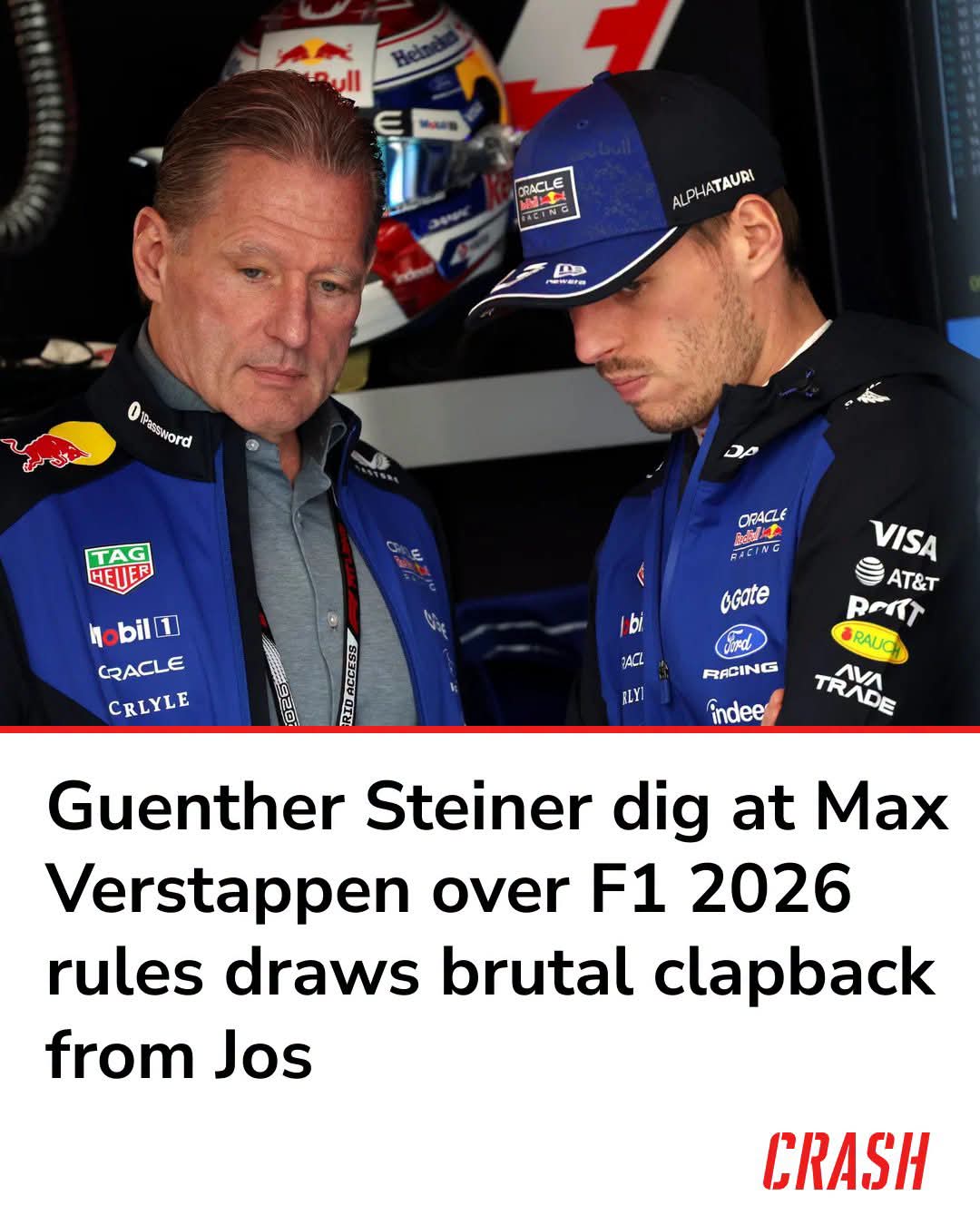
Formula 1’s ongoing debate over the controversial 2026 regulations has taken another dramatic turn, with former Haas team principal Guenther Steiner finding himself at the center of a heated exchange involving Max Verstappen and his father, Jos Verstappen.
As discussions continue over the future direction of Formula 1’s power units and technical regulations, tensions are rising among drivers, team personnel, and paddock insiders. Verstappen has been one of the most vocal critics of the current rules package, repeatedly expressing concerns about the heavy emphasis on energy management and the overall driving experience.
Following the Canadian Grand Prix, those concerns once again became a major talking point after Steiner suggested that Verstappen’s criticism of the regulations may be influenced as much by results as by genuine concerns about the sport’s future.
STEINER QUESTIONS VERSTAPPEN’S POSITION ON THE 2026 RULES
After Max Verstappen secured his first podium finish of the 2026 season with third place in Canada, Guenther Steiner offered a provocative assessment of the Dutch driver’s stance on the regulations.
Speaking on the Red Flags podcast, Steiner suggested that Verstappen’s mood toward the rules appeared closely linked to his on-track success. According to the former Haas boss, the four-time world champion seemed happier after reaching the podium, joking that a race victory might have suddenly transformed the regulations into the best Formula 1 had ever seen.
Steiner further argued that Verstappen’s continued criticism of the rules could be part of a broader effort to influence future engine regulation discussions. With manufacturers and teams divided over proposed changes to the power unit formula, Steiner implied that political maneuvering has become just as important as performance on track.
His comments immediately generated strong reactions across the Formula 1 community, especially given Verstappen’s repeated warnings about his future in the sport.
JOS VERSTAPPEN DELIVERS A BRUTAL RESPONSE
It did not take long for Jos Verstappen to respond publicly.
The former Formula 1 driver fired back at Steiner on social media with a blunt message that quickly attracted attention throughout the paddock. In a short but pointed response, Jos suggested Steiner’s comments demonstrated exactly why he is no longer serving as a Formula 1 team principal.
The exchange highlights how sensitive the current regulations debate has become. While criticism and disagreement are nothing new in Formula 1, personal responses from drivers’ family members often indicate that discussions have moved beyond technical disagreements and into more emotional territory.
For the Verstappen camp, the issue appears straightforward. They believe concerns about the regulations are genuine and based on the long-term health of the sport rather than short-term competitive frustrations.
WHY MAX VERSTAPPEN REMAINS FRUSTRATED WITH THE CURRENT RULES
Throughout the 2026 season, Verstappen has consistently voiced concerns about the new generation of Formula 1 cars.
The current regulations place a significant emphasis on electrical energy deployment and recovery, creating a near-even balance between combustion power and electrical power. While supporters argue that the system aligns Formula 1 with modern automotive technology, critics believe it has introduced excessive complexity and reduced the purity of racing.
Verstappen has repeatedly argued that drivers spend too much time managing energy rather than focusing purely on racing. His criticism has remained consistent regardless of race results, suggesting that his concerns run deeper than Red Bull’s competitive struggles.
The Dutchman has even hinted that Formula 1 could lose its appeal if the sport continues down its current path. Those comments have fueled speculation about his long-term future despite his contract with Red Bull running through the end of 2028.
FIA MOVES TOWARD SIGNIFICANT CHANGES FOR 2027
The controversy surrounding the regulations has already prompted action from Formula 1’s governing body.
The FIA has reportedly reached an agreement in principle to shift the balance between electrical and combustion power from approximately 50-50 to a 60-40 split. The proposed adjustment would reduce the amount of energy management required and potentially create a more traditional driving experience.
For many drivers, such a move could represent an important compromise between technological innovation and pure racing.
However, Verstappen has made it clear that even these proposed changes represent only the minimum level of reform required to satisfy his concerns. His comments in Canada painted a stark picture of his feelings toward the current direction of the sport, suggesting that continuing under the existing framework would be mentally exhausting.
Those remarks have intensified discussions about whether Formula 1 risks alienating some of its biggest stars if the regulations fail to strike the right balance.
RED BULL’S POSITION IN THE RULES BATTLE
Red Bull’s role in the debate cannot be ignored.
The Milton Keynes-based team has historically thrived during major regulation changes, but the 2026 era has presented challenges that few anticipated. The competitive order has shifted dramatically, and Red Bull is no longer enjoying the dominance it experienced during previous seasons.
Some critics believe Verstappen’s frustration stems partly from the team’s reduced competitiveness. Others argue that his concerns would exist regardless of results because they relate directly to the nature of the racing itself.
Steiner’s comments appear rooted in the first interpretation, while the Verstappen camp strongly supports the second.
The reality likely lies somewhere in the middle. Drivers naturally evaluate regulations through both competitive and sporting lenses, making it difficult to separate performance frustrations from genuine philosophical concerns.
WHAT THIS MEANS FOR FORMULA 1’S FUTURE
The public disagreement between Steiner and the Verstappens is ultimately a reflection of a much larger debate taking place within Formula 1.
The sport is currently trying to balance sustainability, manufacturer involvement, technological innovation, fan entertainment, and driver satisfaction. Achieving all of those objectives simultaneously is an enormous challenge.
As discussions continue regarding potential 2027 rule changes, the voices of leading drivers like Verstappen will carry significant influence. Formula 1’s leadership understands that maintaining strong competition while keeping its biggest stars engaged is essential for the championship’s long-term success.
The coming months could prove crucial as teams, manufacturers, and regulators negotiate the next evolution of the sport.
PREDICTION: THE RULES DEBATE IS FAR FROM OVER
Despite the FIA’s willingness to consider modifications, the controversy surrounding the 2026 regulations is unlikely to disappear anytime soon.
Verstappen appears determined to continue pushing for changes, while figures such as Steiner remain skeptical of the motivations behind some of the criticism. With manufacturers holding different priorities and competitive interests, reaching a consensus will not be easy.
What seems increasingly certain is that Formula 1’s future technical direction will remain one of the defining stories of the next two seasons. Whether Verstappen’s concerns ultimately drive meaningful reforms may determine not only Red Bull’s future competitiveness but also the long-term commitment of one of the sport’s biggest stars.
For now, the battle over Formula 1’s identity continues both on and off the track, and neither side appears ready to back down.
About the Author