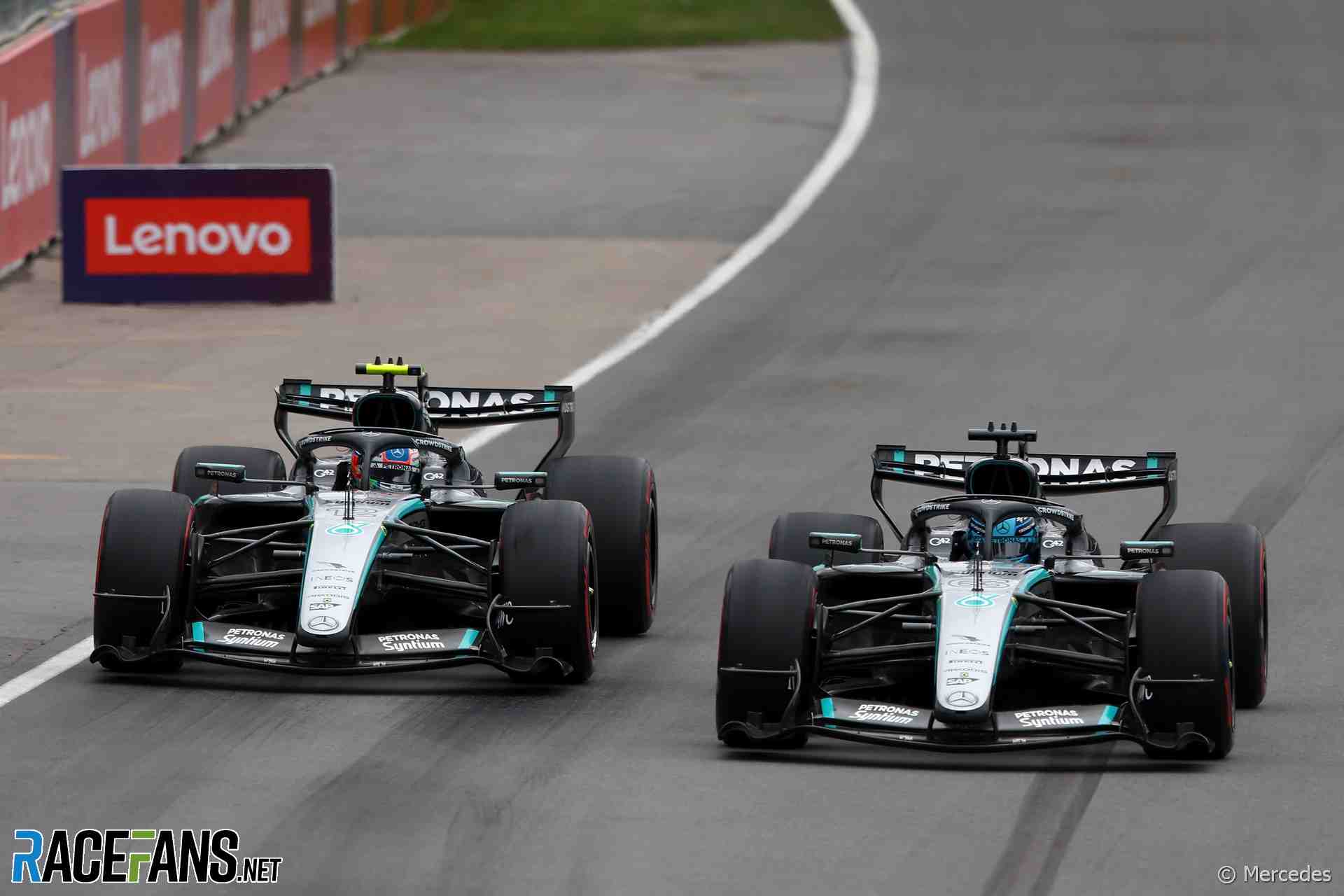
Canadian Grand Prix, Sunday, Getty Images MONTREAL, QUEBEC - MAY 24: Andrea Kimi Antonelli of Italy driving the (12) Mercedes AMG Petronas F1 Team W17 and George Russell of Great Britain driving the (63) Mercedes AMG Petronas F1 Team W17 battle for track position during the F1 Grand Prix of Canada at Circuit Gilles-Villeneuve on May 24, 2026 in Montreal, Quebec. (Photo by Andy Hone/LAT Images)
Formula 1’s new era has introduced a host of changes in 2026, from lighter and smaller cars to revised power units and the removal of the long-standing Drag Reduction System (DRS). One of the most significant innovations is the introduction of Overtake Mode, a feature designed to create more dynamic racing and increase overtaking opportunities.
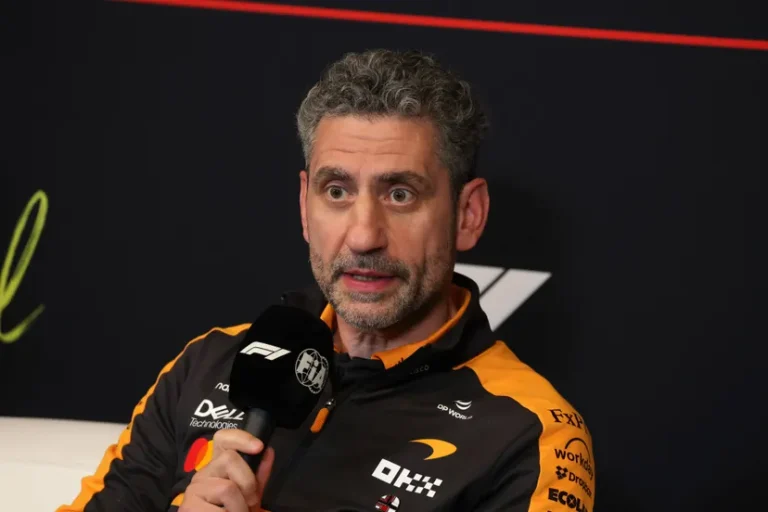
Following the Canadian Grand Prix, Mercedes Head of Trackside Operations Andrew Shovlin provided fresh insight into how the system influenced some of the race’s most intense battles. According to the Mercedes engineer, Overtake Mode played a major role in keeping rival cars closely matched, effectively “locking” them together during wheel-to-wheel fights.
The evidence was clear throughout the race in Montreal, particularly during the fierce battle between Mercedes teammates George Russell and Andrea Kimi Antonelli, as well as Lewis Hamilton’s late-race pursuit of Max Verstappen.
WHAT IS OVERTAKE MODE IN FORMULA 1?
Overtake Mode was introduced as Formula 1’s replacement for DRS under the 2026 regulations. Unlike DRS, which reduced aerodynamic drag by opening a rear wing flap, Overtake Mode focuses on energy deployment and power management.
The system activates when a driver is within one second of the car ahead. Once inside that range, the pursuing driver can harvest additional electrical energy and subsequently deploy more power, giving them an advantage when attempting an overtaking move.
While the concept may sound straightforward, the impact on racing is proving to be far more complex. Combined with the new generation of cars and revised power units, Overtake Mode has created a strategic layer that teams are still learning to exploit.
HOW OVERTAKE MODE KEPT DRIVERS TOGETHER IN CANADA
According to Shovlin, one of the most noticeable effects in Montreal was the inability of leading drivers to break away from their pursuers.
The combination of cool weather conditions, slow-speed corners, and the energy advantages provided by Overtake Mode allowed drivers to remain comfortably within striking distance of the car ahead.
Shovlin explained that once two drivers became engaged in a battle, they often remained connected for extended periods because the trailing car could harvest more energy and maintain pressure. Rather than seeing large gaps open after an overtake, drivers were frequently able to remain within range and launch another attack shortly afterward.
This dynamic was evident throughout the opening phase of the race when Russell and Antonelli exchanged positions. Even after overtakes were completed, neither driver could establish a decisive advantage, creating a prolonged battle that captivated fans.
THE RUSSELL-ANTONELLI DUEL SHOWED THE SYSTEM AT ITS BEST
One of the standout moments of the Canadian Grand Prix was the fight between Mercedes teammates George Russell and Andrea Kimi Antonelli.
Before Russell’s eventual retirement due to a power unit failure, the pair traded the lead multiple times while showcasing how Overtake Mode can influence modern Formula 1 racing.
Antonelli reportedly relied heavily on the system during the race and even used traffic strategically to maximize his opportunities. The Italian understood that maintaining proximity to other cars would allow him to access the additional energy benefits required to stay competitive.
For fans, the result was a prolonged and intense battle rather than the traditional pattern of one overtake followed by a rapid escape.
HAMILTON AND VERSTAPPEN PROVIDED ANOTHER PERFECT EXAMPLE
The effectiveness of Overtake Mode was also demonstrated later in the race when Lewis Hamilton caught and eventually passed Max Verstappen.
Under previous regulations, a successful overtake often allowed the faster car to quickly build a gap and remove itself from immediate danger. However, the new system changed that equation.
Although Hamilton successfully overtook Verstappen, the Red Bull driver remained within the critical one-second window. This meant Verstappen could continue benefiting from Overtake Mode, helping him remain close enough to apply pressure and potentially fight back.
The situation highlighted how the new regulations are designed not only to create overtaking opportunities but also to sustain battles after the pass has been completed.
WHY BREAKING AWAY HAS BECOME SO DIFFICULT
One of the unintended consequences of the new system appears to be the difficulty drivers face when attempting to escape from competitors once they gain track position.
Shovlin noted that Overtake Mode itself may only be worth around one to one-and-a-half tenths of a second per lap. However, its real strength lies in how it affects energy harvesting and deployment strategies.
Drivers with access to Overtake Mode can deploy more energy and, in some situations, achieve higher top speeds than the car ahead. This creates a scenario where overtaken drivers can remain competitive even after losing position.
As a result, Formula 1 races may increasingly feature extended battles rather than isolated overtaking moments.
THE FAN DEBATE OVER F1’S NEW DIRECTION
While many fans have welcomed the increased on-track action, not everyone is convinced.
Critics argue that Overtake Mode adds another layer of complexity to an already complicated sport. Some supporters believe DRS was easier to understand because its effect was visible and immediate. Overtake Mode, by contrast, operates largely through energy management systems that are not always obvious to viewers.
This debate is likely to continue throughout the season as teams, drivers, and fans gain a deeper understanding of how the system works in different racing environments.
However, the Canadian Grand Prix provided strong evidence that the new regulations are achieving one of their primary objectives: creating closer and more competitive racing.
WHAT THIS MEANS FOR THE REST OF THE 2026 SEASON
The implications of Overtake Mode could become even more significant as teams refine their understanding of the new regulations.
Tracks with long straights and heavy braking zones may produce even more dramatic battles than those seen in Montreal. Teams that master energy deployment strategies could gain a crucial competitive advantage, particularly in championship fights where overtaking opportunities are limited.
Mercedes appears to have quickly adapted to the new system, while rivals such as Red Bull, Ferrari, and McLaren continue to search for every possible advantage.
As the championship progresses, Overtake Mode may become one of the defining factors separating title contenders from the rest of the field.
FINAL THOUGHTS
The Canadian Grand Prix offered one of the clearest demonstrations yet of how Formula 1’s new Overtake Mode is reshaping racing. By allowing trailing drivers to harvest additional energy and remain within attacking range, the system helped create prolonged battles between Russell and Antonelli, as well as Hamilton and Verstappen.
While opinions remain divided over whether it is an improvement over DRS, the early evidence suggests the new system is succeeding in one key area: keeping drivers closer together and making overtakes harder to settle.
With the season still in its early stages, Formula 1 teams are only beginning to unlock the full potential of the 2026 regulations. If Canada is any indication, fans can expect plenty more intense wheel-to-wheel action as the championship battle continues to unfold.
About the Author