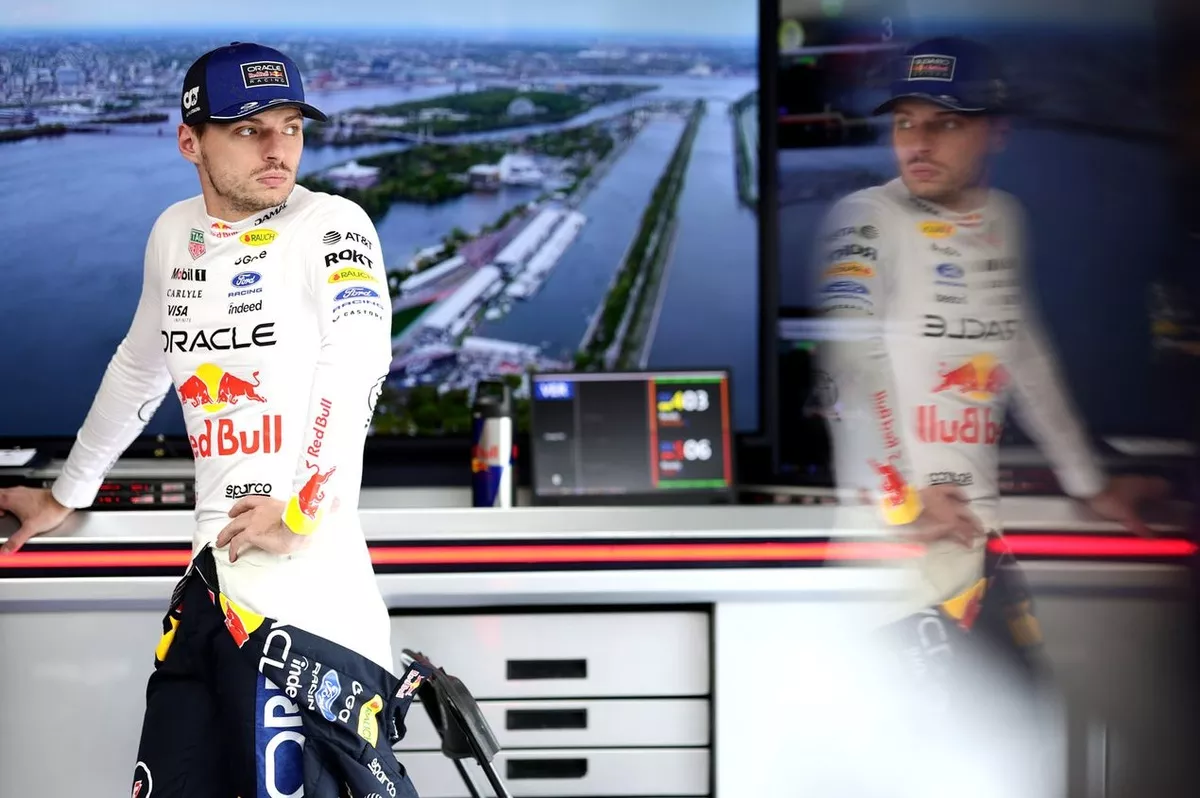
Red Bull star Max Verstappen has admitted he may need to “order a new back” ahead of the 2026 Monaco Grand Prix, highlighting a persistent weakness that continues to frustrate the Milton Keynes-based team despite Formula 1’s sweeping regulation changes.
The four-time world champion arrives in Monaco following his first podium finish of the season in Canada, but concerns remain over the RB22’s ability to handle bumps and aggressive kerbs. While Red Bull has made progress in several performance areas since the opening rounds of the championship, one long-standing issue continues to hold the team back at circuits where ride quality plays a critical role.
With Monaco’s unforgiving street circuit placing extreme demands on suspension performance and vehicle stability, Verstappen’s comments have raised fresh questions about Red Bull’s competitiveness heading into one of Formula 1’s most iconic weekends.
RED BULL’S ACHILLES’ HEEL REFUSES TO DISAPPEAR
For several years, Red Bull has struggled with how its cars react to bumps and kerbs, and the transition into Formula 1’s new 2026 regulations has not solved the problem.
Speaking after the Canadian Grand Prix, Verstappen openly acknowledged that rough circuits remain a major concern. According to the Dutchman, the issue stems from the fundamental philosophy behind the RB22 and the compromises required between downforce generation and ride comfort.
While smooth circuits allow engineers to optimize setup more easily, bumpy venues expose weaknesses that can significantly impact both driver confidence and outright performance. The challenge becomes even greater when drivers must aggressively attack kerbs to maximize lap time.
Although Red Bull found conditions more manageable in Miami earlier this season, Monaco presents a completely different scenario, making the issue impossible to ignore.
WHY MONACO COULD EXPOSE RED BULL’S BIGGEST WEAKNESS
The streets of Monte Carlo are unlike any other circuit on the Formula 1 calendar.
Drivers spend the weekend navigating narrow barriers, uneven surfaces, elevation changes, and constant low-speed corners. Unlike traditional racetracks, Monaco demands a car capable of absorbing bumps while maintaining maximum mechanical grip.
That reality explains Verstappen’s humorous but revealing remark about needing a “new back” for the race weekend.
While the comment generated laughter, it also reflected the physical demands drivers face when a car struggles over rough surfaces. Every bump, curb strike, and compression is transmitted directly through the chassis, increasing driver fatigue and reducing confidence.
If Red Bull cannot improve its ride characteristics, Monaco could become one of its most difficult races of the season despite Verstappen’s proven ability around street circuits.
VERSTAPPEN ADMITS RED BULL STILL DOESN’T HAVE ALL THE ANSWERS
Perhaps the most surprising aspect of Verstappen’s comments was his admission that Red Bull still has not fully identified the root cause of the problem.
The Dutchman revealed that while he has ideas about what may be contributing to the issue, there is no definitive explanation yet. That uncertainty highlights the complexity of modern Formula 1 engineering, where solving one problem can often create several others.
Finding the perfect balance between aerodynamics, suspension behavior, tire performance, and ride quality has become increasingly difficult under the current generation of regulations.
For a team accustomed to dominating championships, the fact that this weakness has persisted across multiple technical eras demonstrates just how challenging the problem has become.
LAURENT MEKIES REMAINS CONFIDENT OF A SOLUTION
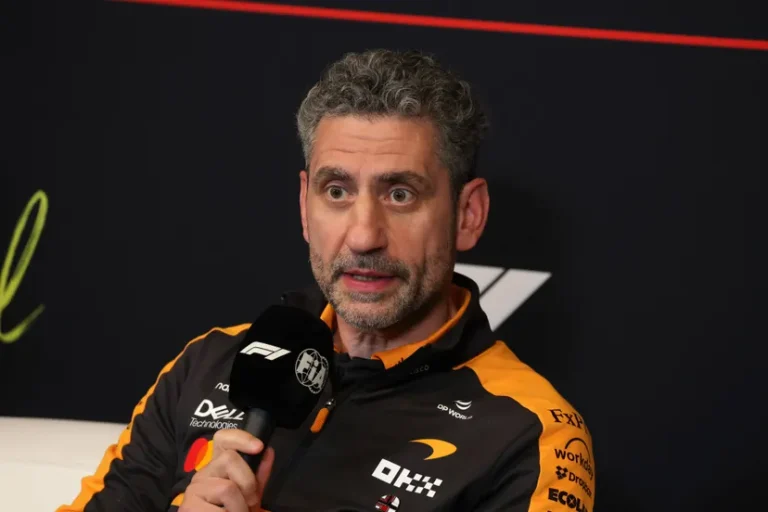
Despite Verstappen’s concerns, Red Bull team principal Laurent Mekies remains optimistic that the issue can be resolved before the end of the 2026 season.
Mekies rejected suggestions that the problem is so deeply embedded in the RB22’s design philosophy that it will have to wait until the 2027 car. Instead, he insisted that nothing discovered so far indicates the weakness is impossible to fix.
His confidence reflects the belief within Red Bull that the team’s engineering department can continue making meaningful progress throughout the season.
However, Mekies also acknowledged that solving the issue is not as straightforward as it may appear.
THE REAL CHALLENGE IS FINDING PERFORMANCE WITHOUT SACRIFICE
According to Mekies, Red Bull’s engineers could potentially reduce the bump and kerb sensitivity relatively quickly.
The real challenge lies in doing so without sacrificing lap time.
Formula 1 teams constantly face trade-offs when developing their cars. A solution that improves ride quality might reduce aerodynamic efficiency. A setup that makes the car more comfortable could compromise cornering performance or tire management.
This balancing act explains why the problem remains unsolved despite months of analysis.
Red Bull is not interested in simply masking the weakness. The objective is to eliminate the issue while simultaneously making the RB22 faster. Achieving both goals at once requires an extremely sophisticated engineering solution.
WHY THIS COULD IMPACT RED BULL’S ENTIRE SEASON
While Monaco brings immediate attention to the issue, several upcoming races could also expose the same weakness.
Street circuits such as Baku, Singapore, and Las Vegas feature uneven surfaces, aggressive kerbs, and unique setup requirements. Success at those venues often depends on how effectively a car handles bumps while maintaining aerodynamic efficiency.
If Red Bull can solve the problem during the current season, the benefits could extend far beyond Monaco and potentially strengthen Verstappen’s chances of climbing back into championship contention.
Conversely, if the issue persists, it may continue costing the team valuable performance whenever Formula 1 visits circuits with demanding surface characteristics.
WHAT THIS MEANS FOR VERSTAPPEN’S TITLE HOPES
The timing of this challenge could prove significant for Verstappen.
Although his podium finish in Canada marked an encouraging step forward, Red Bull remains behind Mercedes in overall competitiveness. Andrea Kimi Antonelli has won four consecutive races, while George Russell remains firmly in the title picture despite his recent retirement.
To consistently challenge for victories, Verstappen needs a car capable of performing across every type of circuit.
Monaco will serve as an important benchmark. If Red Bull can remain competitive despite its known weaknesses, it will provide encouragement for the races ahead. If the team struggles, it may reinforce concerns that the RB22 still has fundamental limitations preventing it from challenging Mercedes over a full championship campaign.
FINAL THOUGHTS
Max Verstappen’s joke about needing a new back may have generated smiles, but it also highlighted a serious challenge facing Red Bull in 2026.
The team’s ongoing struggles with bumps and kerbs continue to restrict the RB22’s potential, and Monaco’s demanding street circuit could expose that weakness more than any venue so far this season.
Nevertheless, Laurent Mekies remains confident that a solution can be found, and Red Bull’s history suggests it would be unwise to underestimate its ability to solve complex technical problems.
As Formula 1 heads to Monte Carlo, all eyes will be on whether Red Bull can finally tame one of its most stubborn weaknesses—or whether Monaco will expose just how much work remains to be done.
About the Author