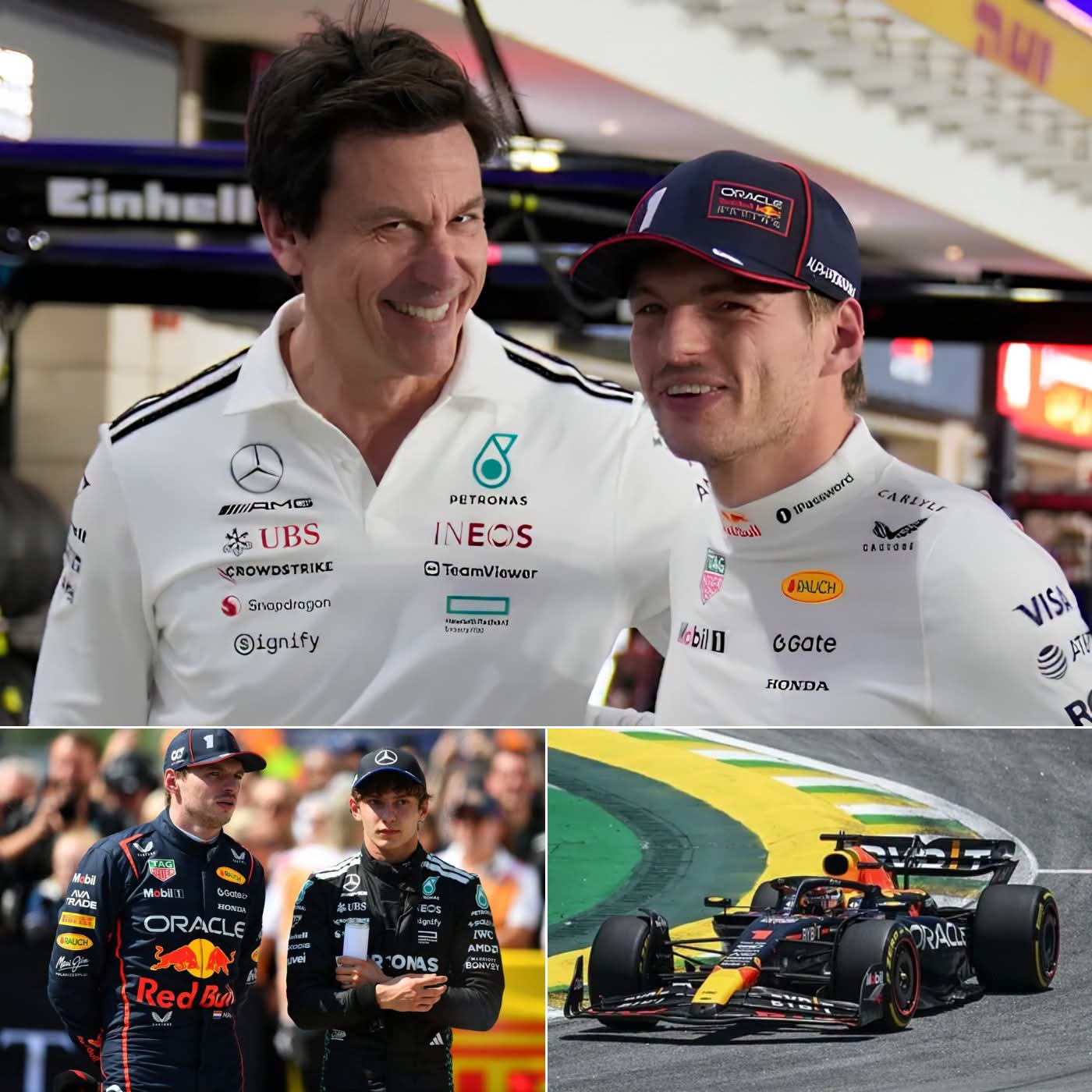
Formula 1 finds itself at a pivotal moment in 2026, and at the center of the storm is one question that refuses to go away: could Max Verstappen actually leave Red Bull Racing? What once seemed unthinkable is now being discussed across the paddock, with reports suggesting renewed contact between Verstappen and Mercedes as uncertainty surrounding the sport’s new regulations continues to grow.
The four-time world champion remains under contract with Red Bull, but the ongoing debate surrounding the future of Formula 1, combined with Red Bull’s early-season struggles under the new regulations, has created the perfect environment for speculation. Whether these rumors ultimately lead to a blockbuster move or not, they have already become one of the defining storylines of the 2026 season.
WHY THE 2026 REGULATIONS HAVE CHANGED EVERYTHING
The introduction of Formula 1’s 2026 regulations was intended to usher in a new era focused on sustainability, innovation, and efficiency. Instead, it has sparked widespread debate among drivers, teams, and fans.
The new power-unit formula places far greater emphasis on electrical energy deployment and battery management than previous generations of cars. While manufacturers have embraced the technological challenge, several drivers have voiced concerns that racing has become increasingly dependent on energy calculations rather than pure driving performance.
Verstappen has emerged as one of the most outspoken critics of the new regulations. Throughout the season, he has repeatedly expressed frustration with the amount of energy management required, suggesting that the current direction risks moving Formula 1 away from the racing principles that made it globally popular.
His criticism is significant because it reflects concerns shared by many within the paddock. When the sport’s biggest star openly questions the future direction of Formula 1, the entire industry pays attention.
THE GROWING MERCEDES CONNECTION
Few storylines would shake Formula 1 more than Verstappen joining Mercedes.
The rivalry between Verstappen and Mercedes defined an entire era of Formula 1, particularly during the fiercely contested 2021 championship battle. Yet motorsport history has repeatedly shown that former rivals often become future allies when circumstances change.
Mercedes team principal Toto Wolff has consistently praised Verstappen’s abilities while carefully avoiding definitive statements about the future. Although Wolff remains publicly supportive of George Russell and championship leader Kimi Antonelli, he has never fully dismissed the possibility of pursuing Verstappen if an opportunity presented itself.
That ambiguity continues to fuel speculation. Every public comment, every paddock interaction, and every report linking Verstappen with Mercedes becomes headline news because the possibility remains realistic enough to generate discussion.
RED BULL FACING ITS BIGGEST TEST IN YEARS
For more than a decade, Red Bull Racing has built its competitive structure around Verstappen’s extraordinary talent. His ability to consistently outperform rivals has often masked weaknesses that might have been exposed by less exceptional drivers.
However, the arrival of the 2026 regulations has created new challenges. Red Bull is simultaneously adapting to major technical changes while developing its long-term power-unit project. The team is also navigating organizational changes following several high-profile departures in recent years.
As a result, Verstappen’s future has become closely linked to Red Bull’s ability to prove that it can remain a championship-winning force under Formula 1’s new rulebook.
The Dutchman’s public criticism of certain aspects of the car should not simply be viewed as frustration. Instead, it serves as a warning that expectations inside the team remain extremely high. Verstappen wants evidence that Red Bull can continue delivering a package capable of fighting for championships.
THE SILENCE SURROUNDING VERSTAPPEN’S FUTURE
One aspect of the situation has attracted particular attention throughout the paddock: the unusual silence from Verstappen’s inner circle.
Historically, the Verstappen camp has been quick to dismiss rumors that lacked substance. This time, however, the responses have been noticeably more measured. Rather than issuing strong denials, those closest to Verstappen have largely avoided making definitive statements about his long-term future.
That approach has inevitably intensified speculation. In Formula 1, silence often generates as many headlines as direct comments.
While it would be premature to interpret that silence as confirmation of a future move, it does suggest that all options remain under consideration as the sport continues adapting to its new era.
WHAT A VERSTAPPEN EXIT WOULD MEAN FOR FORMULA 1
If Verstappen were to leave Red Bull, the consequences would extend far beyond a single team.
The driver market would immediately enter a period of unprecedented activity. Every major team would reassess its long-term plans, while younger drivers throughout the grid would suddenly find new opportunities opening up.
From a commercial perspective, Verstappen remains one of Formula 1’s most valuable assets. His global popularity, championship success, and passionate fanbase make him one of the sport’s biggest attractions. Any move involving Verstappen would instantly become one of the largest stories in modern Formula 1 history.
Such a transfer would also redefine competitive dynamics. A Verstappen-Mercedes partnership would create an entirely new balance of power and potentially trigger a domino effect across the paddock.
CAN THE FIA PREVENT A BIGGER CRISIS?
The FIA and Formula 1 leadership are aware of growing concerns regarding the 2026 regulations.
Discussions are already taking place about possible adjustments to future power-unit regulations, including proposals that would increase the role of internal combustion engines and reduce reliance on electrical energy deployment. The goal is to preserve technological innovation while addressing concerns raised by drivers and fans.
These conversations could play a major role in determining Verstappen’s long-term future. If Formula 1 succeeds in finding a balance between sustainability and traditional racing values, some of the concerns currently driving speculation may begin to fade.
However, if dissatisfaction continues to grow, pressure on both teams and governing bodies will only intensify.
WHY THE NEXT FEW MONTHS COULD DEFINE THE SPORT’S FUTURE
As Formula 1 enters the heart of the 2026 season, every race weekend carries additional significance.
Red Bull must demonstrate that it can close the gap to the front and provide Verstappen with a car capable of fighting consistently for victories. Mercedes, meanwhile, continues strengthening its position with Antonelli and Russell while remaining linked to the sport’s biggest superstar.
The uncertainty surrounding Verstappen’s future has become symbolic of a larger debate about where Formula 1 is heading. Questions surrounding regulations, competitiveness, sustainability, and driver satisfaction are all converging into one narrative.
PREDICTION: VERSTAPPEN HOLDS THE KEY TO F1’S NEXT ERA
At this stage, a Verstappen departure remains far from certain. Red Bull still possesses enormous resources, a proven winning culture, and a contract that runs through the end of 2028.
However, the speculation itself reveals how dramatically Formula 1 has changed in a short period. The fact that a move to Mercedes is being seriously discussed demonstrates the level of uncertainty surrounding the current regulations and competitive landscape.
My expectation is that Verstappen will carefully evaluate Red Bull’s progress throughout the remainder of 2026 before making any major decisions. If Red Bull proves capable of delivering a championship-contending package, staying may remain the most logical choice. But if concerns about performance and regulations persist, Formula 1 could be heading toward one of the most significant driver transfers in its history.
For now, the rumors continue, the paddock remains on edge, and the future of Formula 1’s biggest star remains one of the sport’s most fascinating unanswered questions.
About the Author